Post by : Saif Nasser
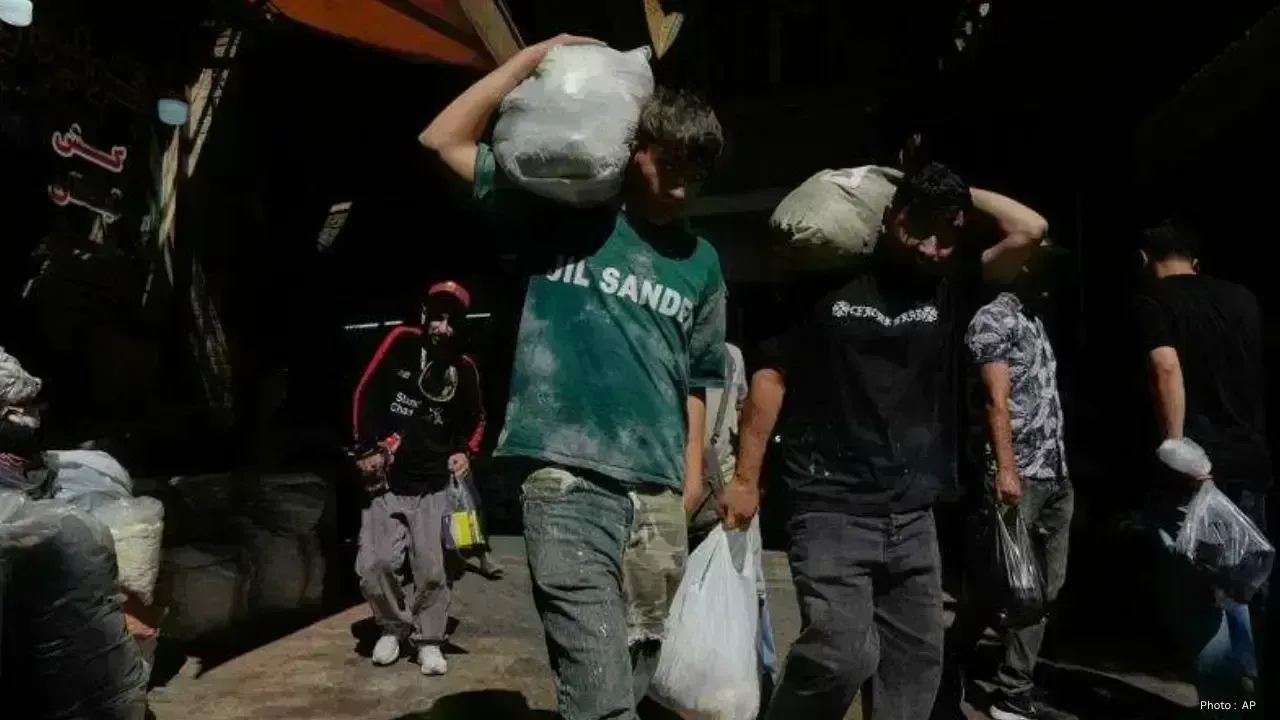
Iran is facing growing economic challenges as the ongoing conflict involving the United States and Israel continues to place pressure on the country's financial system. Rising prices, currency weakness, and uncertainty about the future have increased concerns among ordinary citizens, businesses, and policymakers. Recent developments have highlighted how geopolitical tensions can have a direct impact on everyday life, affecting everything from household expenses to national economic stability.
Inflation has become one of the most serious issues confronting the country. Reports indicate that consumer prices have risen sharply, making essential goods and services more expensive for millions of people. Costs related to transportation, communication, healthcare, and daily necessities have increased significantly, reducing the purchasing power of many households. Economic experts warn that continued instability could place even greater pressure on families already dealing with financial hardship.
The national currency has also experienced a substantial decline in value over recent years. A weaker currency makes imported goods more expensive and can contribute to further price increases across the economy. Businesses that depend on imported materials face higher operating costs, while consumers often pay more for products that rely on international supply chains. These challenges have added to public frustration and concerns about long-term economic prospects.
Alongside economic difficulties, diplomatic efforts are continuing in an attempt to reduce tensions and find a path toward stability. Negotiations involving Tehran and Washington have focused on possible arrangements that could ease pressure and prevent further escalation. While discussions have produced some signs of progress, major differences remain, and uncertainty continues to influence regional and global markets.
Energy markets remain particularly sensitive to developments in the region. The Strait of Hormuz, one of the world's most important oil shipping routes, continues to play a central role in international discussions. Any disruption to maritime trade through this corridor can affect global energy supplies and influence fuel prices worldwide. Governments and businesses are closely monitoring the situation because of its potential impact on economic growth and inflation.
The economic consequences extend beyond national borders. Higher energy prices can affect transportation, manufacturing, and consumer costs in many countries. As a result, developments involving Iran have become a matter of concern not only for regional governments but also for international markets and financial institutions. Investors often react quickly to geopolitical uncertainty, creating additional volatility in global economic conditions.
Within Iran, economic pressures are increasingly influencing public sentiment. Previous periods of high inflation and financial hardship have led to demonstrations and public dissatisfaction. Analysts note that maintaining economic stability remains a critical challenge for the government as it seeks to balance domestic concerns with broader geopolitical objectives.
Businesses across multiple sectors are also feeling the effects of uncertainty. Companies must adapt to changing costs, fluctuating currency values, and evolving market conditions. Investment decisions may be delayed as organizations wait for clearer signals regarding future economic and political developments.
Iran's current situation demonstrates how closely economics and geopolitics are connected. Financial pressures, diplomatic negotiations, and regional security concerns are shaping the country's outlook at a time of considerable uncertainty. The coming months will be important as leaders work to manage economic challenges, pursue diplomatic solutions, and address the concerns of citizens facing rising living costs. Whether stability improves will depend largely on developments both inside the country and across the wider region.








Achieve Radiant Skin with This Simple Rice Flour Treatment
Transform your skincare routine! Discover how a rice flour mix can restore your skin's glow without

Meta Unveils Subscription Plans for Instagram, Facebook, and WhatsApp
Meta introduces new subscription plans for users of Instagram, Facebook, and WhatsApp, featuring enh

Suvarna Joy on Education Leadership, Resilience, and Building Purpose Through Adversity in the UAE
Suvarna Joy shares her journey of education leadership, motherhood, faith, and resilience within the

Anticipated Dates for UAE Eid Al Adha 2026 Unveiled by Astronomical Experts
Experts predict Eid Al Adha 2026 in the UAE to start on May 27, prompting early holiday planning amo

DAE Achieves Remarkable Growth in Q1 2026 With Record Revenue
Dubai Aerospace Enterprise announces impressive financial results for Q1 2026, reflecting a surge in

Price Increase for Sony PS5 in Southeast Asia Effective May 1
Sony announces a price increase for the PS5 across Southeast Asia starting May 1, 2026, impacting ga




