Post by : Saif Nasser
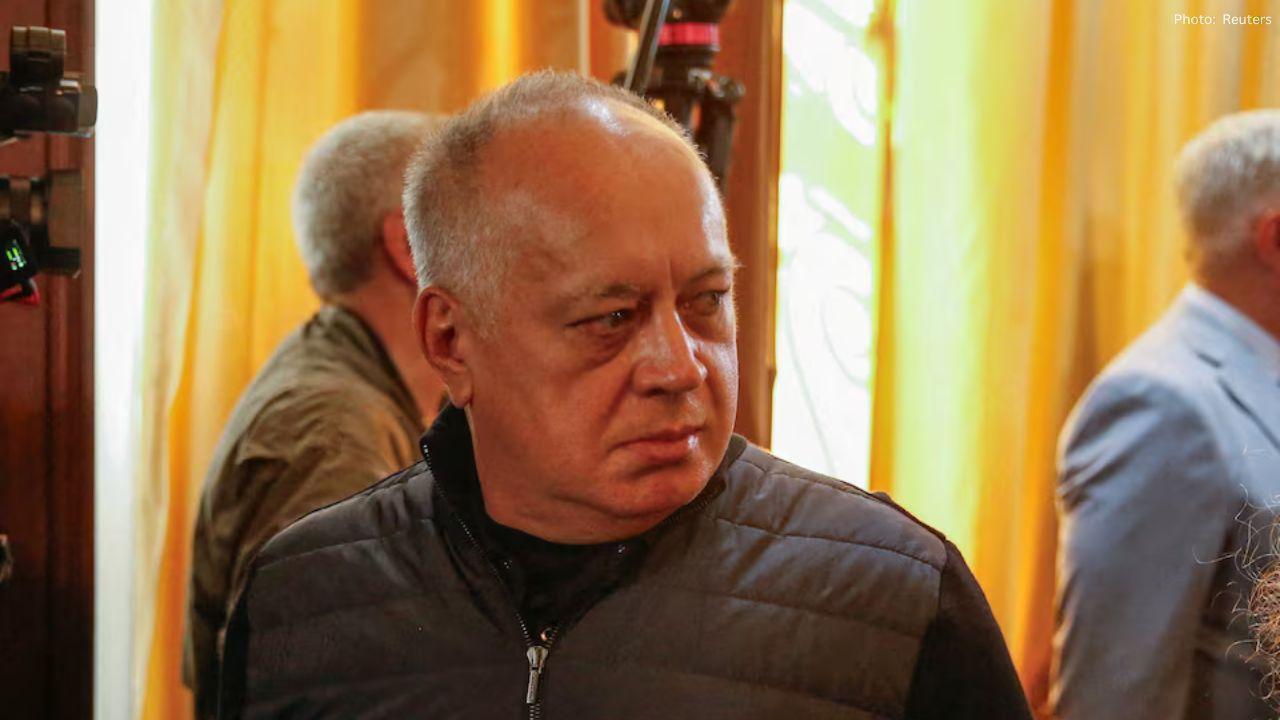
The United States is focusing on Venezuela’s security leadership after the capture of President Nicolas Maduro, according to sources familiar with internal U.S. strategy. The Trump administration has warned Interior Minister Diosdado Cabello that he could face serious consequences if he does not cooperate with Interim President Delcy Rodriguez and the demands of Washington.
Cabello, a powerful figure controlling Venezuela’s security forces, has a long history of human rights abuses and political enforcement under Maduro. U.S. officials see him as both a potential obstacle and a temporary ally to maintain stability while avoiding chaos in the country. Similarly, Defense Minister Vladimir Padrino, also under a U.S. drug trafficking indictment, is viewed as a key figure whose cooperation is essential to prevent a power vacuum.
The White House is pushing for quick progress in areas that benefit U.S. interests. These include securing Venezuela’s oil infrastructure, cracking down on drug trafficking, expelling Cuban security personnel, and reducing cooperation with Iran. Sources indicate that the administration is using both threats and financial leverage, including the potential seizure of offshore assets, to ensure compliance.
U.S. officials are cautious about deploying ground forces, fearing unrest from pro-government groups known as colectivos, who could respond violently if Cabello or Padrino were removed abruptly. Instead, Washington is relying on the remaining inner circle to stabilize the country temporarily.
Despite the rapid removal of Maduro, the situation in Venezuela remains fragile. Cabello and Rodriguez have historically been rivals within the ruling Socialist Party, raising questions about their ability to cooperate. The U.S. is betting that Rodriguez, seen as a technocrat willing to work with the United States, will act as a linchpin for managing the transition.
Experts warn that this approach carries risks. While it may provide short-term control and access to Venezuela’s oil reserves, critics argue that it risks being perceived as neo-colonialism and violates international law. The United Nations has previously documented crimes against humanity committed by Venezuelan security agencies, highlighting the challenges of relying on officials like Cabello to maintain order.
For now, the U.S. strategy emphasizes leverage and negotiation over direct military intervention, aiming to stabilize Venezuela while protecting its strategic interests. How effectively Washington can manage the delicate balance of coercion, cooperation, and oil access remains uncertain, but the administration has made clear that it views Rodriguez and key security officials as central to achieving its goals.






The Impact of Consistent Small Investments on Wealth Building
Discover how investing small amounts regularly can positively transform your financial future over t

7.5 Magnitude Earthquake Strikes Japan, Tsunami Alerts Issued
Japan experiences a hefty 7.5 quake, prompting tsunami alerts and safety measures. Stay updated on a

Reopening of the Strait of Hormuz: New Regulations to Impact Global Trade
Iran reopens the strategic Strait of Hormuz with new regulations affecting oil transport and global

Top 10 Must-See Attractions in NYC for First-Time Explorers
Discover essential experiences for first-time visitors to NYC, including attractions, culture, and i

Starbucks Engages Boyu Capital for Major Chinese Expansion
Starbucks teams up with Boyu Capital, selling a majority stake to boost growth and adapt to the Chin

Three Individuals Charged in Massive Meth Trafficking Case in Malaysia
In Malaysia, a married couple and another suspect are charged with trafficking 510kg of meth, facing