Post by : Saif Nasser
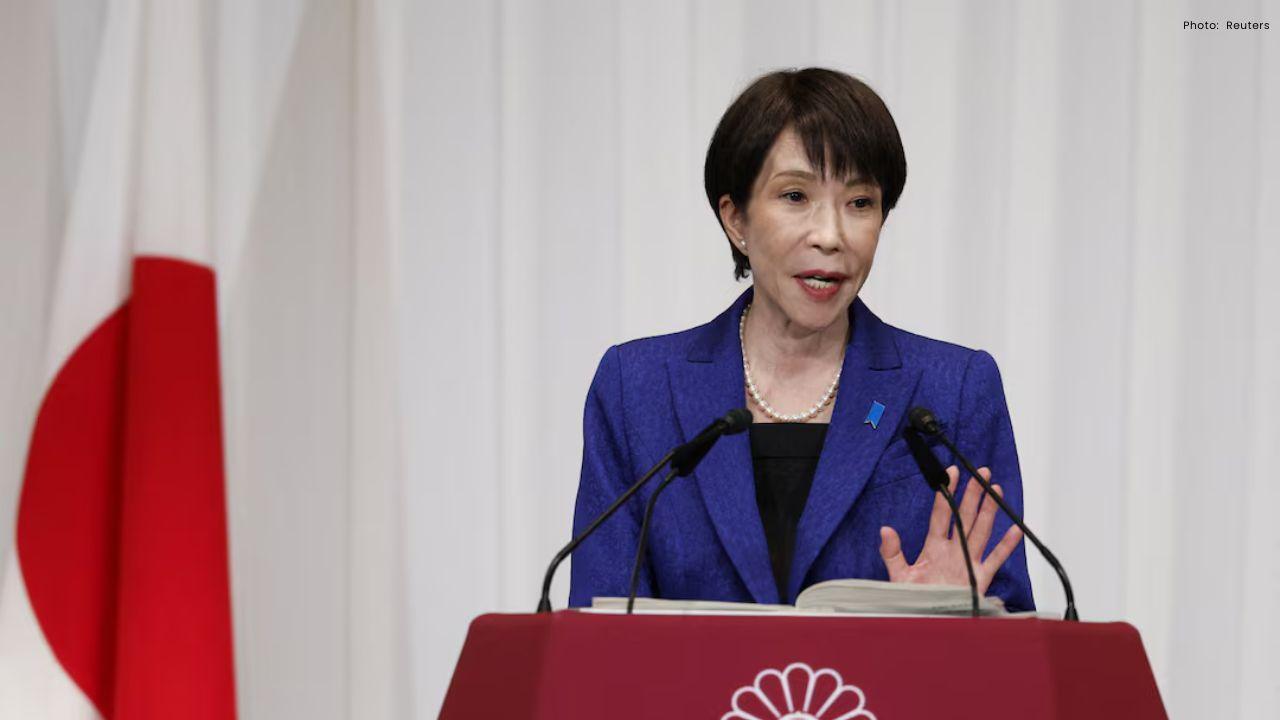
Japan’s new prime minister, Sanae Takaichi, has held her first formal meeting with Kazuo Ueda, the head of the Bank of Japan, after her party’s strong election victory. The meeting comes at a sensitive time for the country’s economy, with rising prices, currency movements, and growing market talk that interest rates may soon rise again. Even though both sides described the discussion as general, the timing has drawn strong attention from investors and policy watchers.
The prime minister recently secured a large mandate after her party, the Liberal Democratic Party, won a landslide in the national election. That result gives her more political strength to guide economic policy. Because of this, any meeting she holds with the central bank chief becomes important. Markets often look for signals about whether the government will support or resist higher interest rates.
After the talks, Ueda said the discussion covered broad economic and financial themes. He made it clear that the prime minister did not give any direct request about monetary policy. He also refused to share details when asked whether she supported possible future rate increases. This careful language shows how both sides want to protect the idea that the central bank should act independently, without political orders.
Interest rate policy matters to ordinary people as well as big investors. When rates rise, borrowing becomes more expensive. Home loans, business loans, and credit costs can go up. At the same time, higher rates can help slow inflation and support the national currency. Japan has struggled for years with very low inflation and slow growth, which is why rates stayed near zero for a long period. Now the situation is changing.
Inflation has stayed above the central bank’s 2% target for several years. The weak yen has made imports more costly, which pushes up prices for fuel, food, and daily goods. Because of this, the Bank of Japan has already lifted rates several times and ended many of its older stimulus programs. In December, it raised short-term rates to their highest level in decades. Markets now expect another increase could come within months.
Currency movement is another key factor. The yen recently recovered after falling close to very weak levels earlier this year. A stronger yen can reduce import costs and calm price pressure. Some analysts believe this rebound could make it easier for the central bank to raise rates again without causing panic in financial markets. Others warn that moving too fast could hurt growth.
There is also a long history behind these careful public statements. By law, Japan’s central bank operates independently. In practice, however, political pressure has sometimes played a role, especially when currency swings or economic weakness create public concern. That is why central bank leaders often speak cautiously after meetings with top politicians. Even small comments can move markets quickly.
Another important detail is that the prime minister will soon appoint new members to the central bank’s policy board as seats open up. Those choices can shape future debate inside the bank. Board members vote on rate decisions, so their views matter. This gives the government indirect influence, even when it does not give direct policy orders.
The latest meeting appears calm on the surface, but it carries deeper meaning. It shows that both the government and the central bank understand the need for coordination without control. Price stability, currency strength, and steady growth must be balanced together. Quick moves could shock the economy, while slow moves could allow inflation to stay too high.
For the public, the key message is stability and caution. Leaders are talking, watching the data, and moving step by step. The path ahead for interest rates will depend on inflation trends, wage growth, and currency behavior. This first meeting sets a professional tone, but the real test will come when the next rate decision arrives.










Starbucks Engages Boyu Capital for Major Chinese Expansion
Starbucks teams up with Boyu Capital, selling a majority stake to boost growth and adapt to the Chin

Three Individuals Charged in Massive Meth Trafficking Case in Malaysia
In Malaysia, a married couple and another suspect are charged with trafficking 510kg of meth, facing

Singapore Police Revisit Geylang Murder Scene with Suspect
In Geylang, police return a murder suspect to the scene of a crime involving the fatal stabbing of a

Mattel Revives Masters of the Universe Action Figures Ahead of Film Launch
Mattel is reintroducing Masters of the Universe figures in line with its upcoming film, tapping into

China Executes 11 Members of Criminal Clan Linked to Myanmar Scam
China has executed 11 criminals associated with the Ming family, known for major scams and human tra