Post by : Saif Nasser
A violent weather system has hit New Zealand, causing wide damage across the North Island and disrupting daily life for thousands of people. Strong winds and heavy rain shut down flights, blocked roads, stopped ferries and trains, and left more than 30,000 properties without electricity. The event has again raised serious questions about how prepared modern systems are for extreme weather.
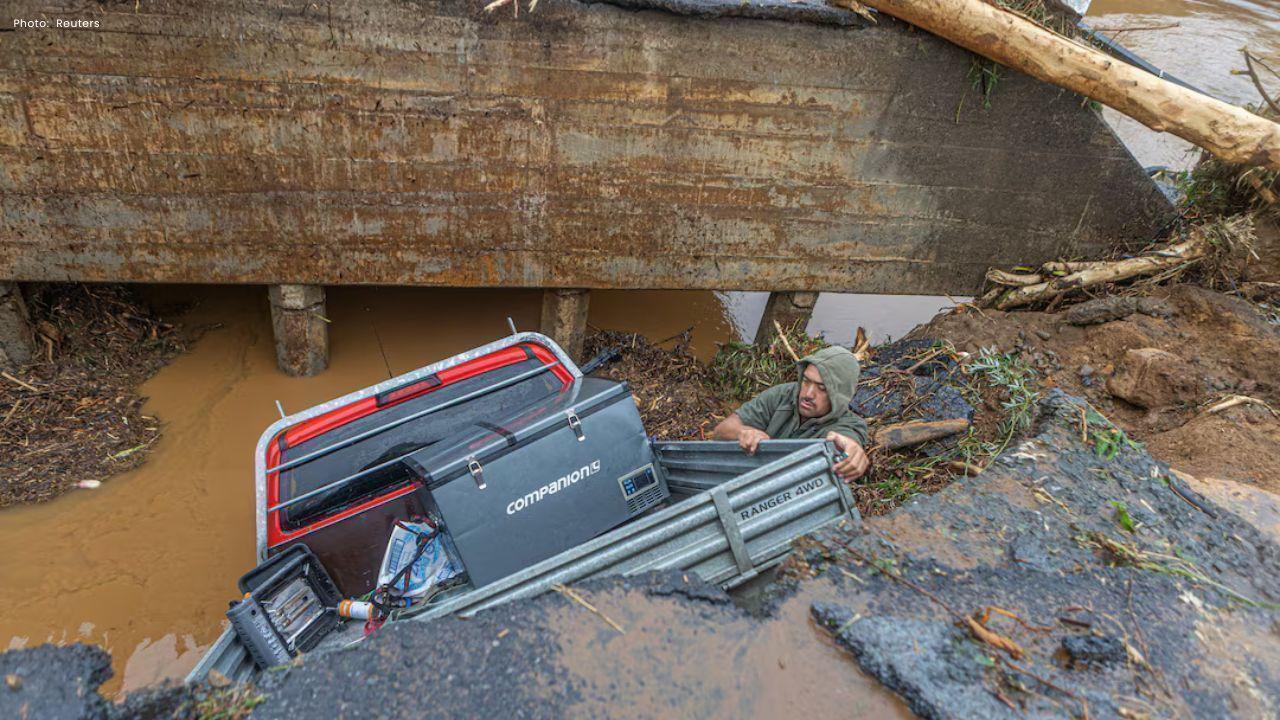
The storm moved quickly and with force. Rain fell heavily for hours while powerful wind gusts knocked down trees and power lines. Several highways were closed after flooding and road collapse. In some areas, the ground under roads gave way, leaving deep breaks that made travel dangerous. Emergency teams worked through the night answering calls from people facing damage to homes, vehicles, and public spaces.
Air travel faced major trouble as conditions worsened. Air New Zealand temporarily stopped services at multiple airports due to safety risks. Flights in and out of the capital area were cancelled or delayed. Although a small number of services later restarted, the schedule remained uncertain for many travelers. Weather remains one of the biggest uncontrollable risks for aviation, and this storm proved that again.
The worst disruption was reported around Wellington and nearby regions. Emergency services there received hundreds of requests for help in just one night. Crews cleared fallen trees, handled damaged buildings, and secured unsafe areas. Authorities advised residents to stay indoors and avoid travel unless it was necessary. Many schools closed as a safety step while repair and cleanup work continued.
Power failures created extra hardship. Without electricity, many households lost heating, lighting, and internet access. Small businesses also suffered losses after being forced to close. Repair teams moved from area to area, but dangerous weather slowed progress. Officials warned that full restoration in some places could take longer because lines and poles were badly damaged.
Photos shared by residents showed flooded neighborhoods, damaged cars, and broken infrastructure. Rural and semi-rural communities were hit especially hard because they often have fewer backup systems. Some people described the storm as one of the most frightening they had seen in years, with winds strong enough to move large trees and structures.
Weather authorities said the storm came from a deep low-pressure system that strengthened offshore before striking land. Forecasts show the system moving further south, bringing more heavy rain to other regions. Because the ground is already wet, experts warn that the risk of landslides and flash floods remains high.
Another concern came from wastewater overflow linked to earlier system failures. Stormwater pushed polluted material back toward coastal areas, creating health worries for residents. This shows how different weak points in infrastructure — drainage, treatment plants, and storm systems — can fail at the same time during extreme weather.
This event is part of a growing pattern. Stronger and less predictable storms are being recorded more often. That means transport networks, drainage systems, and power grids must be upgraded to handle tougher conditions. Old designs based on past weather patterns may no longer be enough.
Public investment in stronger roads, better water control, and more protected power systems is not just about comfort — it is about safety. Early warning systems, clear public guidance, and community readiness plans also matter. When people know what to do and where to go, damage and loss can be reduced.
Citizens can also prepare by keeping emergency supplies, backup lighting, and basic food and water ready. Checking on neighbors and sharing reliable information helps communities stay strong during crisis periods.
The latest storm is a clear warning. Nature is changing faster than many systems are adapting. Planning ahead, building smarter, and responding faster will decide how well societies handle the next big storm.










Achieve Radiant Skin with This Simple Rice Flour Treatment
Transform your skincare routine! Discover how a rice flour mix can restore your skin's glow without

Meta Unveils Subscription Plans for Instagram, Facebook, and WhatsApp
Meta introduces new subscription plans for users of Instagram, Facebook, and WhatsApp, featuring enh

Suvarna Joy on Education Leadership, Resilience, and Building Purpose Through Adversity in the UAE
Suvarna Joy shares her journey of education leadership, motherhood, faith, and resilience within the

Anticipated Dates for UAE Eid Al Adha 2026 Unveiled by Astronomical Experts
Experts predict Eid Al Adha 2026 in the UAE to start on May 27, prompting early holiday planning amo

DAE Achieves Remarkable Growth in Q1 2026 With Record Revenue
Dubai Aerospace Enterprise announces impressive financial results for Q1 2026, reflecting a surge in

Price Increase for Sony PS5 in Southeast Asia Effective May 1
Sony announces a price increase for the PS5 across Southeast Asia starting May 1, 2026, impacting ga




