Post by : Saif Nasser
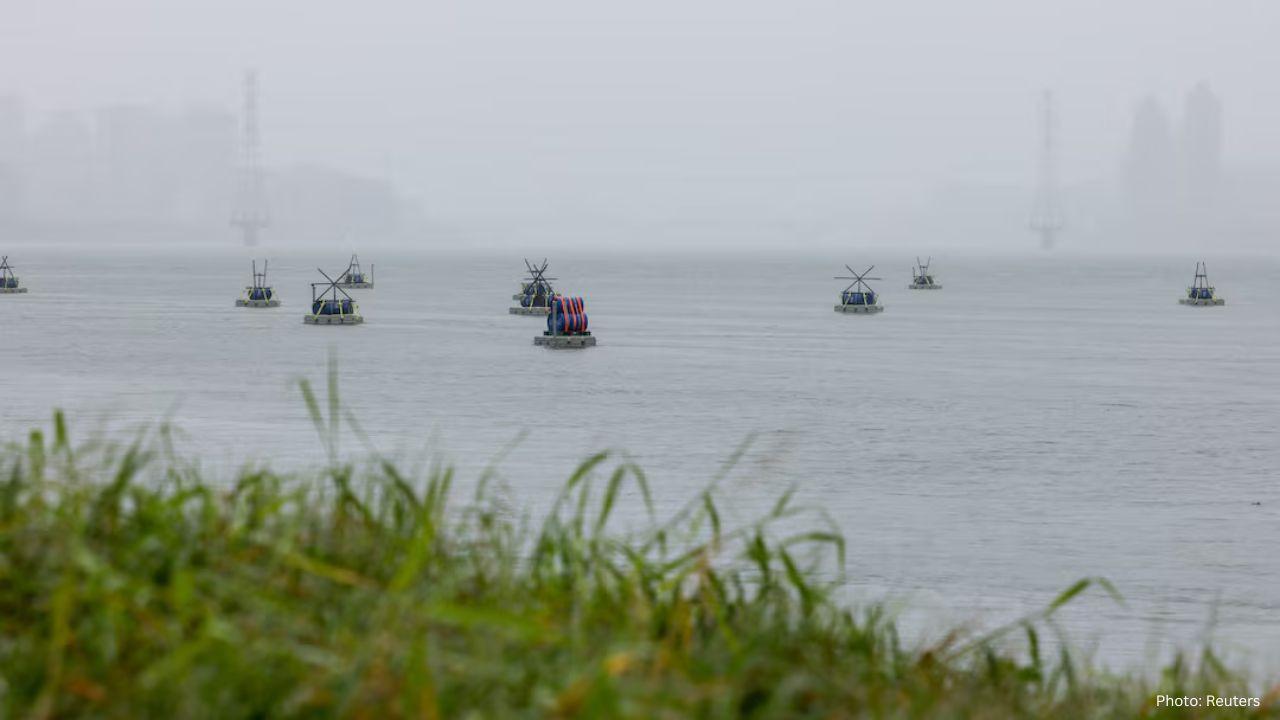
Taiwan remains on high alert even after Chinese warships and coast guard vessels began pulling back following one of the largest military exercises China has carried out around the island in recent years. The drills, named “Justice Mission 2025,” have raised serious concerns in Taiwan and across the wider region about peace and stability.
The Chinese exercises involved rockets, fighter jets, warships, and coast guard vessels operating close to Taiwan. At the height of the drills, more than 90 Chinese naval and coast guard ships were active in waters near Taiwan, the South China Sea, and the East China Sea. Taiwan’s defence ministry said that in just 24 hours, 77 Chinese military aircraft and 25 naval and coast guard vessels were detected around the island. At least 35 Chinese planes crossed the median line of the Taiwan Strait, an unofficial boundary meant to reduce tensions.
Although Chinese ships have now started to move away, Taiwan has not lowered its guard. Emergency response centres for Taiwan’s military and coast guard remain fully active. Authorities say this is necessary to ensure quick action if the situation changes again. Taiwan also carried out its own readiness drills, including setting up barriers and placing defensive equipment in key areas.
Taiwan’s government strongly criticised China’s actions, calling the drills a threat to regional security and a clear provocation. Officials said such military pressure only increases fear and uncertainty, not peace. Flights were cancelled, and people across Taiwan watched developments closely as the drills unfolded.
China, however, defended its actions. Beijing said the exercises were meant to protect national sovereignty and warned against what it calls “Taiwan independence forces” and foreign interference. Chinese officials described the drills as a serious warning, especially after the United States recently approved a record $11.1 billion arms package for Taiwan.
As tensions rose, ambassadors from the Quad nations — the United States, India, Japan, and Australia — met in Beijing. While details of their talks were not shared, the meeting itself showed growing international concern about security in the Indo-Pacific region.
Experts say that while China’s military displays are becoming larger and more intense, a full-scale war is still unlikely because the cost would be extremely high for all sides. Still, the situation remains fragile. China claims Taiwan as its own territory, while Taiwan rejects that claim and operates as a self-governed democracy.
For now, the pulling back of Chinese ships has brought some calm, but not relief. Taiwan’s continued high alert reflects a deeper reality: trust is low, tensions are high, and the risk of miscalculation remains. The coming days will show whether dialogue or further pressure shapes the next chapter in cross-strait relations.





Mattel Revives Masters of the Universe Action Figures Ahead of Film Launch
Mattel is reintroducing Masters of the Universe figures in line with its upcoming film, tapping into

China Executes 11 Members of Criminal Clan Linked to Myanmar Scam
China has executed 11 criminals associated with the Ming family, known for major scams and human tra
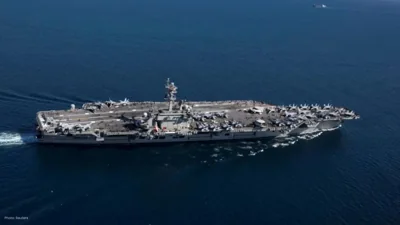
US Issues Alarm to Iran as Military Forces Deploy in Gulf Region
With a significant military presence in the Gulf, Trump urges Iran to negotiate a nuclear deal or fa

Copper Prices Reach Unprecedented Highs Amid Geopolitical Turmoil
Copper prices soar to all-time highs as geopolitical tensions and a weakening dollar boost investor

New Zealand Secures First Win Against India, Triumph by 50 Runs
New Zealand won the 4th T20I against India by 50 runs in Vizag. Despite Dube's impressive 65, India