Post by : Monika
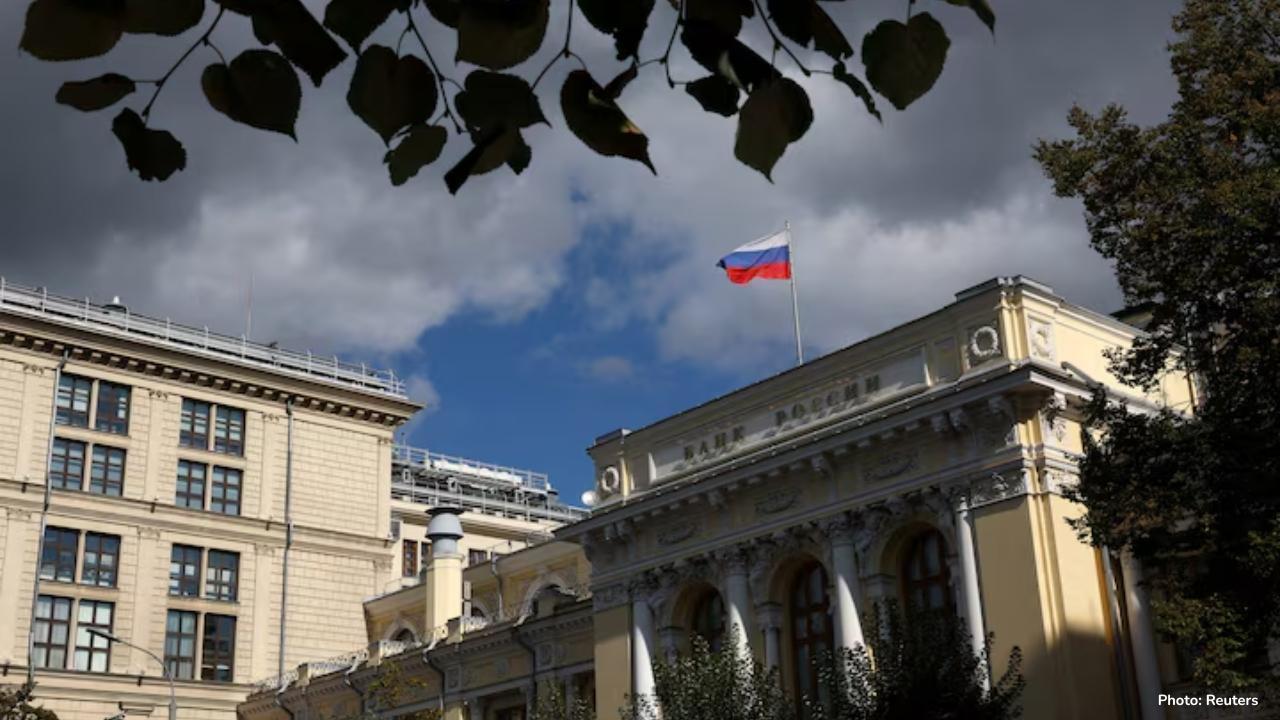
On October 8, 2025, Russia’s central bank publicly criticized the government for violating the rights of minority shareholders in recent state takeovers of companies. This move is unusual. It shows that some parts of Russia’s financial elite are uneasy about how the state is grabbing assets — a process that has affected many companies, including ones once owned by Russian billionaires and foreign investors.
What Happened?
The central bank said the state broke the law when it seized a majority stake in a gold mining company known as UGC. It claimed the government should have made a mandatory buyout offer to all shareholders, especially to minority ones, but failed to do so. According to the central bank, that omission violated shareholder protection laws.
In simple terms: when the state takes over control of a public company, it should pay fair value and follow legal steps that protect all shareholders. The central bank ruled that these steps were not followed in the UGC case.
Why This Matters
Property Rights at Risk
The central bank warns that state actions like this undermine even the faintest remaining safeguards for private property in Russia. People who bought shares in UGC on the stock market were not part of any legal case; they were ordinary investors. Yet the takeover de facto reduced the value of their shares without offering them fair compensation.
Investor Confidence Suffering
Such aggressive state moves scare away investors. If the government can seize assets without following the law, who would want to invest? This behavior contributes to what some people call a “Russian discount” — where Russian assets are valued lower by investors because of risk.
Legal Pushback from Within
Surprisingly, this criticism came from part of the establishment — market-friendly technocrats, central bank staff, and some finance ministry voices. These are people who see value in preserving market rules and sound financial systems. Their opposition signals internal tension over how nationalization is being handled.
The UGC Case: A Closer Look
One proposed workaround is to resell the seized shares quickly, shifting the responsibility to the new owner. A presidential decree aims to accelerate such sales. In UGC’s case, the UMMC group is seen as likely buyer. The Russian finance ministry wants to complete this sale by the end of October for 100 billion roubles (about $1.23 billion).
Voices Inside Russia Express Concern
Officials like Vladimir Chistyukhin, First Deputy Chairman of Russia’s central bank (overseeing financial markets), joined the criticism. He warned that the state’s approach endangers Russia’s ability to attract foreign investment after any conflict ends.
Broader Consequences
Delisting and Market Withdrawals
The uncertainty pushes companies to delist or stay private. Public listings become riskier in such an environment.
“Russian Discount” Intensifies
Investors will increasingly demand steep discounts to account for legal and political risk in Russia. This damages valuations and raises funding costs.
Foreign Investment Likely to Shrink
If foreign investors believe their assets may be seized without recourse, they will avoid Russia entirely.
Wider Asset Grab Strategy
This isn’t isolated. Over the past years, the state has seized stakes in banks, infrastructure, mining, and real estate under various legal or political pretenses. Critics see this as consolidation of control in strategic sectors.
A Balancing Act
The central bank is trying to walk a fine line:
The UGC Example in Context
Why It’s Unusual
It’s rare for Russia’s central bank to publicly criticize the government this way. Usually, central bank leadership is cautious and avoids confrontation. But rising concern over how rampant asset seizures may harm financial trust has pushed some voices to object.
This is not just business criticism — it’s about the future of Russia’s economic system: whether it continues under rule of law or moves toward more centralized control.
What Comes Next?
Russia’s central bank has issued a rare and significant warning: in its view, the state has violated shareholder protection laws in its seizure of UGC. By criticizing such asset grabs, the bank is pushing back against authoritarian trends and defending what remains of property rights in Russia’s financial system.
Whether this becomes more than a symbolic gesture depends on how the government responds — by backing down, partially complying, or doubling down. In any case, for investors, minority shareholders, and the future of Russia’s markets, this moment carries weight.








Anticipated Dates for UAE Eid Al Adha 2026 Unveiled by Astronomical Experts
Experts predict Eid Al Adha 2026 in the UAE to start on May 27, prompting early holiday planning amo

DAE Achieves Remarkable Growth in Q1 2026 With Record Revenue
Dubai Aerospace Enterprise announces impressive financial results for Q1 2026, reflecting a surge in

Price Increase for Sony PS5 in Southeast Asia Effective May 1
Sony announces a price increase for the PS5 across Southeast Asia starting May 1, 2026, impacting ga

Potential ‘Super El Niño’ in 2026: Understanding the Climate Risks
Could a Super El Niño emerge in 2026? Discover its implications and potential global climate impacts

Global Energy Crisis Intensifies: Markets React to Oil Supply Challenges
Markets are on edge as oil disruptions escalate, influencing prices and economic stability. Explore

Must-See Tourist Spots in London You Can't Overlook
Explore London's essential attractions, from royal landmarks to vibrant markets, ensuring an unforge




