Post by : Saif Nasser
A man who took part in the January 6 U.S. Capitol riot and later received a presidential pardon has now pleaded guilty to threatening a top Democratic leader. The case has renewed serious concerns about threats against elected officials and the growing problem of political violence in the United States.
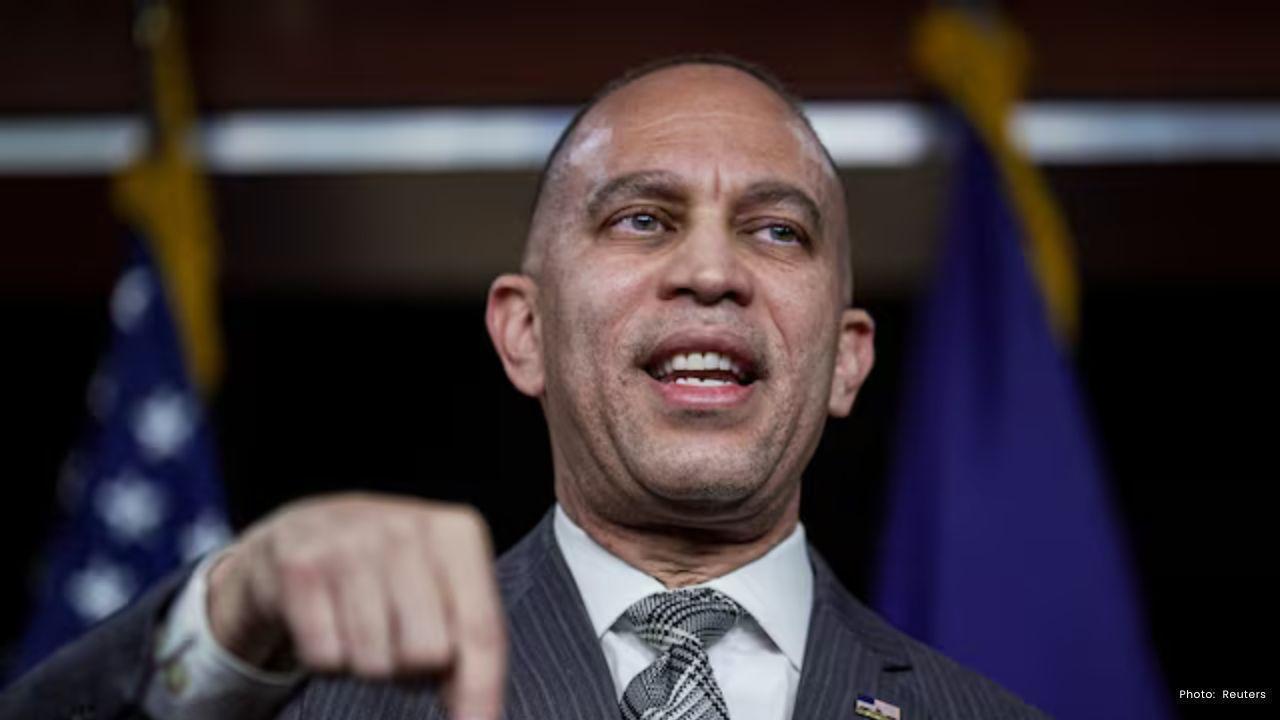
Christopher Moynihan, a New York resident, admitted in court that he sent threatening messages aimed at U.S. House Democratic Leader Hakeem Jeffries. Prosecutors said the messages included a clear threat to kill the lawmaker ahead of a planned public appearance. Moynihan pleaded guilty to a misdemeanor harassment charge and is expected to be sentenced in April.
According to court records, the messages were sent before one of Jeffries’ scheduled speeches in New York City. Investigators said the texts caused real fear and were specific enough to be treated as a serious threat. The local district attorney stated that threats against public officials are crimes, not protected political speech, and must be handled firmly.
This case stands out because Moynihan had already been convicted for his role in the January 6, 2021 Capitol riot. That attack involved supporters of then-former President Donald Trump who tried to stop Congress from confirming the 2020 election result. Moynihan had earlier received a prison sentence of nearly two years for charges that included obstruction of an official proceeding.
Later, he was among many January 6 defendants who received a presidential pardon after Trump returned to office. The pardon cleared his earlier federal conviction related to the Capitol attack. However, a pardon does not protect someone from future crimes. The new harassment charge is separate and comes from later actions.
This situation raises an important public question: what happens after pardons are granted in politically sensitive cases? A pardon forgives a past crime, but it does not erase behavior patterns or guarantee that a person will follow the law going forward. Critics argue that large group pardons can send the wrong message if not paired with strong warnings about future conduct.
Threats against political leaders have been rising in recent years. Members of both major parties have reported increased security risks. Experts say harsh language, online anger, and deep political division can sometimes push unstable individuals toward dangerous actions. Even when threats are not carried out, they force leaders to live under tighter security and limit public events.
In a democracy, people have the right to disagree strongly with politicians and policies. They can protest, speak out, and vote for change. But threats of violence cross a clear line. When threats become normal, it damages public trust and makes open political debate harder.
Law enforcement agencies across the country have been increasing their focus on threat monitoring. Digital messages, texts, and social media posts are now common sources of evidence in these cases. Officials say they must treat every serious threat as real until proven otherwise, because ignoring warning signs can lead to tragedy.
The guilty plea in this case avoids a longer trial, but it does not end the wider debate. Some will focus on the pardon angle. Others will focus on the danger of violent language in politics. Both issues connect to the same core idea: democracy depends on peaceful disagreement, not fear.
Courts will now decide Moynihan’s punishment for the harassment charge. Regardless of the sentence, the message from prosecutors is clear — political anger does not excuse criminal threats. Public safety and democratic order depend on keeping that boundary firm.







Reopening of the Strait of Hormuz: New Regulations to Impact Global Trade
Iran reopens the strategic Strait of Hormuz with new regulations affecting oil transport and global

Top 10 Must-See Attractions in NYC for First-Time Explorers
Discover essential experiences for first-time visitors to NYC, including attractions, culture, and i

Starbucks Engages Boyu Capital for Major Chinese Expansion
Starbucks teams up with Boyu Capital, selling a majority stake to boost growth and adapt to the Chin

Three Individuals Charged in Massive Meth Trafficking Case in Malaysia
In Malaysia, a married couple and another suspect are charged with trafficking 510kg of meth, facing

Singapore Police Revisit Geylang Murder Scene with Suspect
In Geylang, police return a murder suspect to the scene of a crime involving the fatal stabbing of a