Post by : Priya
Photo:AFP
Gaza, home to more than two million people, has been under blockade and facing conflict for many years. The ongoing violence and restrictions on goods have destroyed much of its economy and food supply system. The people of Gaza are suffering from severe shortages of basic necessities, including food, water, and medical supplies.
According to the World Health Organization (WHO) and other humanitarian agencies, malnutrition rates in Gaza have reached alarming levels, with many children and adults dying from hunger-related causes. The United Nations and aid groups have repeatedly warned that Gaza is on the verge of famine.
The Incident: A Deadly Quest for Food
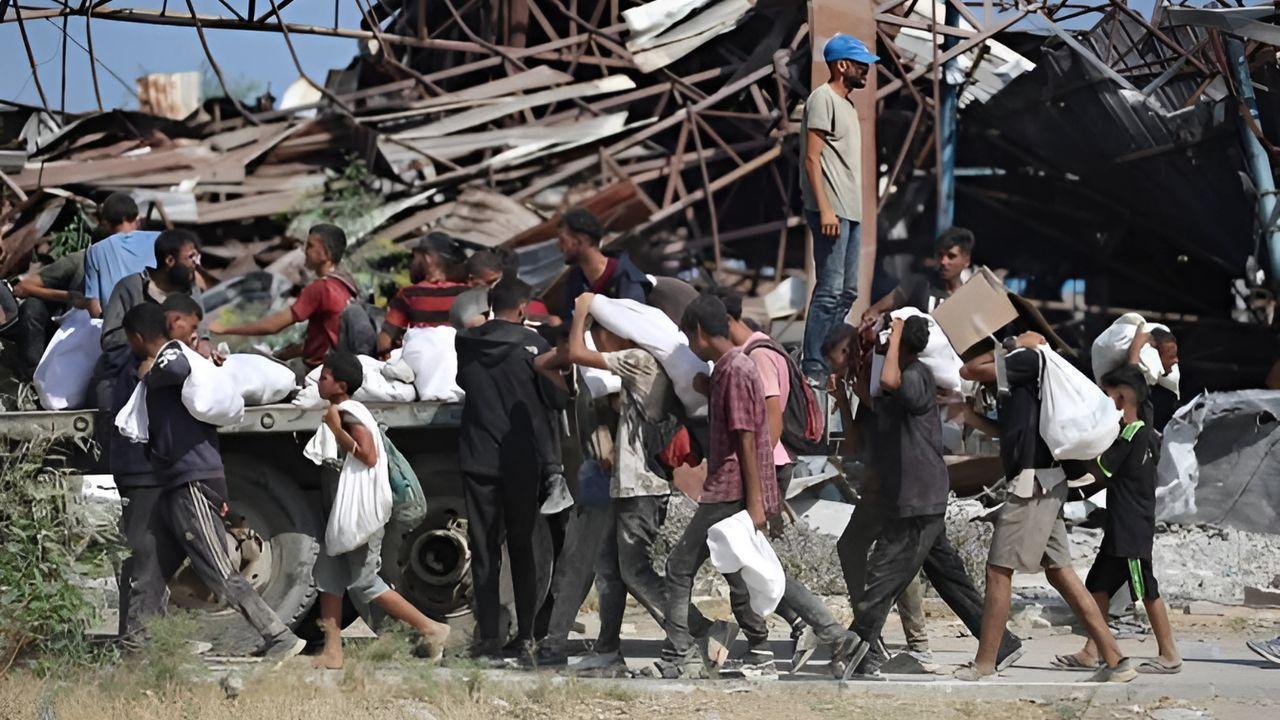
Since late May 2025, when a new aid distribution system was launched by the Gaza Humanitarian Foundation (GHF) and other groups, Palestinians have been forced to travel across dangerous, destroyed areas to reach food aid sites. These sites are often located in areas controlled or militarized by Israeli forces. Many Palestinians who tried to reach these aid centers or food convoys were shot and killed.
On several occasions, more than 20 people were killed as they sought and waited for food distributions. Survivors and witnesses describe scenes of chaos and fear. Some recall armed guards and Israeli military personnel firing live ammunition to control crowds desperate for survival. Reports suggest that many of those killed were unarmed civilians — including women and children — who posed no threat but were simply trying to feed themselves and their families.
One witness told Human Rights Watch that he saw men shot at close range and that armed guards opened fire on crowds inside aid distribution sites. Another survivor described bullets hitting people’s heads, arms, and legs as they tried to get food.
The Scale of the Crisis
Between late May and early August 2025, the United Nations Office of the High Commissioner for Human Rights (OHCHR) reported that nearly 1,400 Palestinians had been killed while trying to get food. Over 800 of these were near aid distribution sites, with the rest along food convoy routes. The vast majority of these killings were attributed to Israeli forces, although the complex conflict zone includes other armed parties.
Such high numbers reflect the intense suffering of the Gazan population—not only caught in war but made vulnerable by hunger and desperation.
Why Are These Killings Happening?
Several factors contribute to this tragic loss of life:
The Blockade and Restricted Movement: Israel's blockade restricts the flow of goods, including food and medicine, into Gaza. To obtain aid, Palestinians must cross controlled and often heavily militarized zones.
Aid Distribution Challenges: The humanitarian organizations operating food distribution sites face heavy security restrictions. Aid convoys and sites are sometimes targeted or involved in violent incidents, making it difficult to safely distribute food.
Military Operations: The ongoing military conflict creates dangerous conditions for civilians. Even declared “pause” periods for humanitarian aid often do not guarantee safety for people seeking food.
Crowd Control Measures: Reports indicate that live fire and forceful methods have been used by security personnel at food distribution sites to manage desperate crowds, resulting in civilian deaths.
The Human Cost
Behind these facts and figures lie heartbreaking human stories. Families who have lost fathers, mothers, brothers, and children face untold grief. Survivors carry injuries and trauma from witnessing extreme violence over basic survival needs.
Hospitals in Gaza struggle to cope with the influx of wounded civilians amid shortages of equipment and medicines. Malnutrition widens the health crisis, especially for children under five, many of whom show signs of severe wasting and immediate risk of death.
Human rights groups have called the killings of unarmed food seekers “war crimes” under international law. They urge immediate investigations and accountability from all parties to prevent further loss of civilian life.
International Response and the Way Forward
The global community has expressed growing concern over the situation in Gaza. The United Nations has repeatedly called for an end to the blockade and for Israel to allow humanitarian aid to flow freely into the territory.
Aid agencies continue to press for expanded food deliveries and safer distribution methods. Some proposals suggest establishing more accessible and secure food distribution points, while others advocate for international monitoring to ensure civilian protection.
Meanwhile, diplomatic efforts continue to seek a long-term resolution to the conflict between Israel and Palestinian groups. Peace and security must be restored so that normal life, including access to food, can be guaranteed for Gaza’s population.








Starbucks Engages Boyu Capital for Major Chinese Expansion
Starbucks teams up with Boyu Capital, selling a majority stake to boost growth and adapt to the Chin

Three Individuals Charged in Massive Meth Trafficking Case in Malaysia
In Malaysia, a married couple and another suspect are charged with trafficking 510kg of meth, facing

Singapore Police Revisit Geylang Murder Scene with Suspect
In Geylang, police return a murder suspect to the scene of a crime involving the fatal stabbing of a

Mattel Revives Masters of the Universe Action Figures Ahead of Film Launch
Mattel is reintroducing Masters of the Universe figures in line with its upcoming film, tapping into

China Executes 11 Members of Criminal Clan Linked to Myanmar Scam
China has executed 11 criminals associated with the Ming family, known for major scams and human tra