Post by : Priya
Photo:Reuters
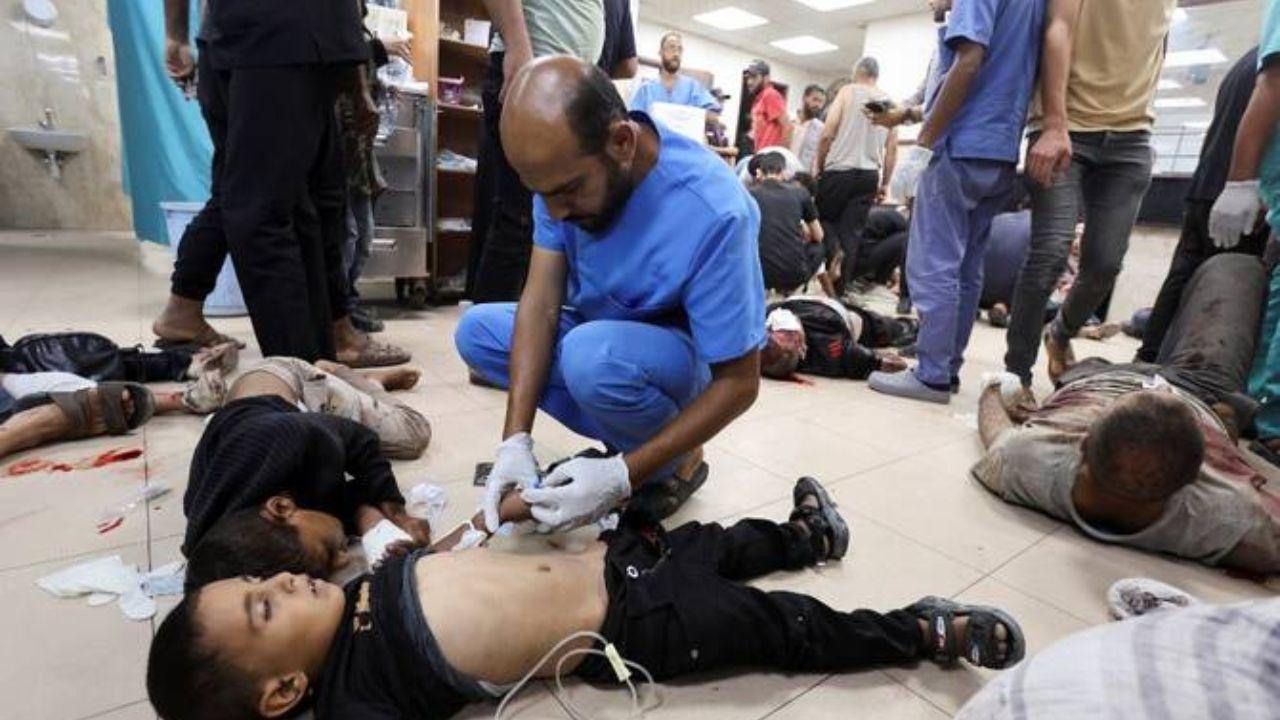
Gaza is facing a life-threatening emergency as hospitals across the region struggle to stay open due to a critical shortage of fuel. With no electricity and limited supplies, doctors are being forced to place several premature babies into a single incubator, risking their survival. The situation has reached a breaking point, and urgent international intervention is needed to prevent further tragedy.
1. A System in Collapse
Hospitals are supposed to be places of safety and healing. In Gaza, they are quickly becoming sites of fear and heartbreak. The healthcare system is collapsing under the weight of war, blockade, and a lack of resources. Electricity outages now last up to 20 hours a day. Most hospitals rely on backup generators to function—but even those are now silent due to fuel shortages.
Doctors warn that their ability to provide even the most basic care is being severely affected. Surgeries are being canceled. Life-saving machines are shutting down. Premature babies—who rely on incubators for warmth and oxygen—are the most at risk.
“We are losing lives not because we lack the skills, but because we don’t have fuel to keep machines running,” said Dr. Majed Abu Ramadan, a hospital director in Gaza City.
2. Shared Incubators: A Risky Last Resort
In a disturbing turn, some hospitals are now placing multiple premature infants into one incubator. These incubators are not designed for more than one baby, and this measure goes against all medical safety guidelines. However, with no other option, doctors are choosing the lesser of two evils: sharing machines or letting babies die without support.
At Al-Shifa Hospital, Gaza’s largest medical facility, nurses are working around the clock under extreme stress. A senior nurse, speaking anonymously, said they are rotating power between incubators—sometimes switching them off for 30 minutes at a time to save electricity.
“We are doing everything we can, but it's not enough,” she said. “Each night we pray that the power lasts until morning.”
3. Fuel Crisis Triggered by Blockade and Conflict
The root of the fuel crisis lies in Gaza’s long-standing blockade and the recent escalation in conflict. Fuel deliveries into the region have been severely limited due to border closures, road destruction, and security concerns. This blockade affects not only fuel but also food, medicine, and humanitarian aid.
Gaza’s main electricity plant stopped working weeks ago due to lack of fuel. Since then, hospitals and homes have relied entirely on generators. However, these too need diesel, which is now nearly impossible to obtain.
The Health Ministry in Gaza has called the situation “catastrophic.” Officials warn that the last fuel reserves could run out within hours unless immediate supplies are allowed in.
4. Impact on Patients Across All Age Groups
While newborns are the most visibly affected, the fuel crisis is hurting all patients. Dialysis machines for kidney patients have stopped functioning. Ventilators for those with respiratory issues are unreliable. Cancer patients are unable to receive treatments. Even storing medicines properly has become difficult as refrigerators shut down.
Emergency rooms are overflowing, and doctors are being forced to decide who gets help and who doesn’t. These decisions weigh heavily on medical staff, many of whom have not gone home in days.
Ambulance services are also limited. Some are being used only for the most extreme emergencies due to fuel rationing.
5. Human Stories: Voices from the Crisis
The crisis is not just a series of statistics—it’s a tragedy told through real lives. One mother, Amina, gave birth to twins last week. Her babies were born early and were placed into a shared incubator with two other infants.
“I couldn’t even hold them properly,” she said. “I saw wires everywhere, and nurses rushing around. They told me the power could go out any time. I’m afraid I will lose them.”
A doctor at the same hospital recalled a case where an infant died due to oxygen failure caused by a power cut. “It was preventable,” he said. “We did everything, but we couldn’t save him.”
These heartbreaking stories are becoming more common. Every day the fuel crisis continues, more lives are put at risk.
6. Global Response and International Outcry
The World Health Organization (WHO) and other humanitarian agencies have raised the alarm, calling the situation in Gaza a full-scale health emergency. WHO officials have requested immediate access to the region to deliver fuel and medical supplies.
However, progress has been slow. Political disagreements, border closures, and ongoing violence have made it difficult for aid to reach hospitals in time. The United Nations has urged all parties involved to allow safe humanitarian corridors for essential supplies.
In a statement, WHO Director-General Dr. Tedros Adhanom Ghebreyesus said, “Healthcare should never be a target. Hospitals must be protected. And fuel, as well as aid, must be allowed in. Lives are hanging in the balance.”
7. Appeals from Health Officials and Activists
Doctors and health activists in Gaza are pleading for help. They have issued statements urging the global community, international NGOs, and neighboring countries to provide emergency fuel and medical support.
In a joint appeal, hospital directors across Gaza wrote:
“We are not asking for luxuries. We are asking for the bare minimum to keep patients alive. Without fuel, there will be mass casualties. This is not an exaggeration. It is a reality we are living every hour.”
These calls have been echoed by Palestinian health groups, regional health ministries, and independent humanitarian organizations.
8. The Moral Responsibility of the World
The crisis in Gaza is more than a medical emergency—it is a test of humanity. Innocent civilians, especially infants, are suffering through no fault of their own. Political disagreements should not result in the death of babies.
The international community has the resources and ability to act. Delaying action is a decision. Inaction is a form of complicity.
The scenes coming out of Gaza—babies sharing incubators, surgeries performed under flashlight, mothers watching helplessly—should shock the conscience of the world.








Starbucks Engages Boyu Capital for Major Chinese Expansion
Starbucks teams up with Boyu Capital, selling a majority stake to boost growth and adapt to the Chin

Three Individuals Charged in Massive Meth Trafficking Case in Malaysia
In Malaysia, a married couple and another suspect are charged with trafficking 510kg of meth, facing

Singapore Police Revisit Geylang Murder Scene with Suspect
In Geylang, police return a murder suspect to the scene of a crime involving the fatal stabbing of a

Mattel Revives Masters of the Universe Action Figures Ahead of Film Launch
Mattel is reintroducing Masters of the Universe figures in line with its upcoming film, tapping into

China Executes 11 Members of Criminal Clan Linked to Myanmar Scam
China has executed 11 criminals associated with the Ming family, known for major scams and human tra