Post by : Saif Nasser
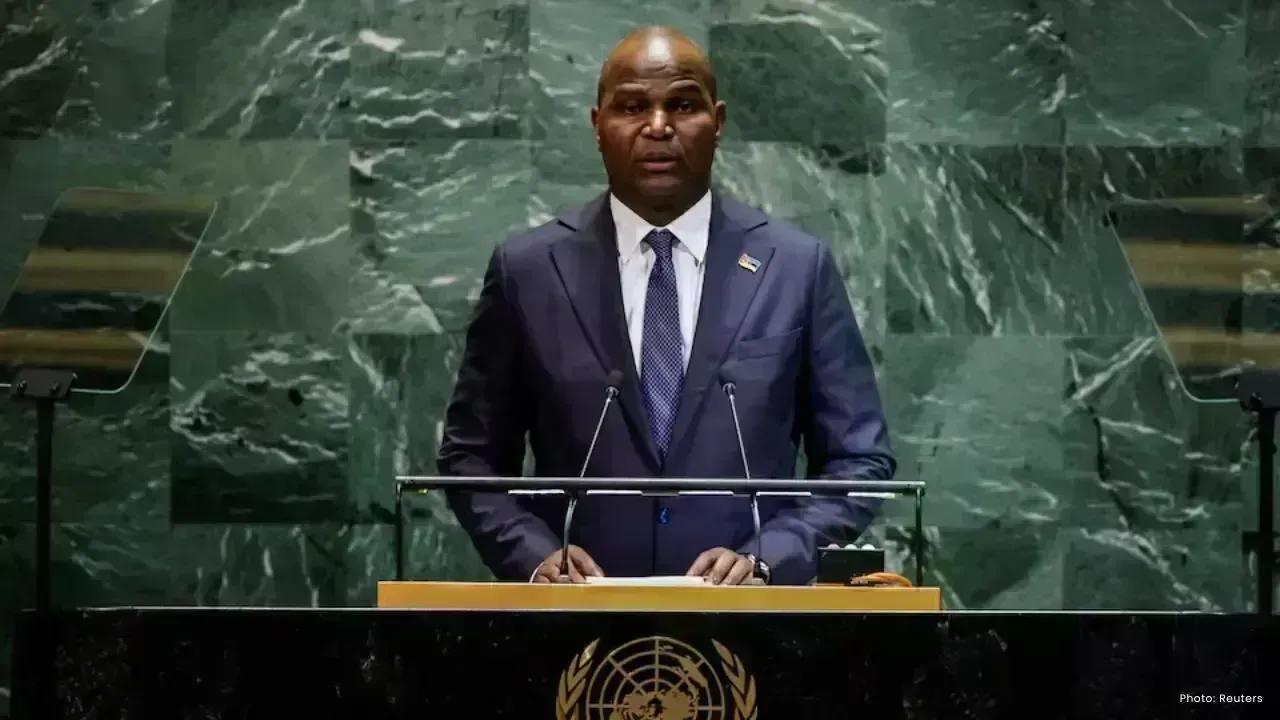
Mozambique is facing a serious national emergency as severe flooding spreads across large parts of the country, forcing President Daniel Chapo to cancel his planned visit to the World Economic Forum in Davos. The president said saving lives and helping affected citizens is now the country’s top priority.
In a public message shared on social media, President Chapo explained that Mozambique is going through a very difficult period. With thousands of families in danger and vital infrastructure damaged, he said it would be wrong to travel abroad at such a time. His decision reflects the growing scale of the disaster and the urgent need for leadership at home.
Heavy rainfall has battered Mozambique since mid-December. The floods have hit several provinces, including Gaza, Maputo, and Sofala. Rivers in these regions have overflowed, washing away roads, damaging homes, and cutting off access to essential services. Entire communities have been left stranded as water levels continue to rise.
According to estimates from humanitarian agencies, more than 400,000 people have already been affected by the floods. Many have lost their homes, crops, and livestock. Emergency shelters are filling quickly, and aid workers warn that the number of affected people could increase if the rains continue.
The situation has also drawn regional attention. Neighboring South Africa has sent a military helicopter to help with search and rescue operations in Mozambique. This support has been crucial in reaching isolated areas where people are trapped by floodwaters.
Flooding has not been limited to Mozambique alone. Parts of South Africa have also suffered from heavy rains, including areas near the famous Kruger National Park. Some sections of the park were temporarily closed due to safety concerns, though authorities have since allowed visitors to return.
Experts say that floods in southeastern Africa are becoming more frequent and more intense. Climate change is playing a major role, as warmer ocean waters in the Indian Ocean are creating stronger storms and heavier rainfall. These extreme weather events are putting poor and developing countries under severe pressure, especially where infrastructure is weak.
For Mozambique, the floods are not just a natural disaster but a social and economic crisis. Schools have closed, health services are under strain, and food supplies are at risk. The government now faces the challenge of both emergency response and long-term recovery.
President Chapo’s decision to stay in the country sends a strong message about responsibility during times of crisis. As Mozambique battles rising waters and growing human suffering, national focus has shifted from global meetings to local survival.





7.5 Magnitude Earthquake Strikes Japan, Tsunami Alerts Issued
Japan experiences a hefty 7.5 quake, prompting tsunami alerts and safety measures. Stay updated on a
Reopening of the Strait of Hormuz: New Regulations to Impact Global Trade
Iran reopens the strategic Strait of Hormuz with new regulations affecting oil transport and global

Top 10 Must-See Attractions in NYC for First-Time Explorers
Discover essential experiences for first-time visitors to NYC, including attractions, culture, and i

Starbucks Engages Boyu Capital for Major Chinese Expansion
Starbucks teams up with Boyu Capital, selling a majority stake to boost growth and adapt to the Chin

Three Individuals Charged in Massive Meth Trafficking Case in Malaysia
In Malaysia, a married couple and another suspect are charged with trafficking 510kg of meth, facing