Post by : Saif Nasser
Mexico is facing one of its most serious security crises in recent years after the army killed one of the country’s most feared drug lords, Nemesio Oseguera Cervantes, widely known as “El Mencho.” His death has triggered violent clashes across western Mexico, leaving dozens dead and placing the country on high alert.
Oseguera Cervantes was the leader of the powerful Jalisco New Generation Cartel, one of the fastest-growing and most dangerous criminal groups in the country. He was killed during a military operation in the mountain town of Tapalpa in the western state of Jalisco. What followed was a wave of violence that spread quickly across the region.
A day after the operation, Tapalpa appeared calm on the surface. Children played in the streets, and small shops opened in the town square. But the tension was clear. Gunshots echoed in the distance, and outside town, a man’s body lay beside a vehicle riddled with bullets. Soldiers and heavily armed security forces continued to patrol roads and highways, searching for cartel gunmen.
Authorities reported that more than 70 people died during the attempt to capture El Mencho and in the violence that followed. The dead included soldiers, members of the National Guard, suspected cartel members, and others whose identities were not immediately clear. Officials confirmed that 25 members of the Mexican National Guard were killed in six separate attacks. Around 30 suspected criminals were killed in Jalisco and four more in the neighboring state of Michoacan. A prison guard and a state prosecutor’s agent were also among the victims.
According to Mexico’s defense officials, security forces tracked one of El Mencho’s romantic partners to his hiding place. When troops moved in, he and two bodyguards fled into a wooded area. A fierce gun battle broke out. All three were seriously wounded and later died while being transported under custody. In a separate operation elsewhere in Jalisco, soldiers killed another senior cartel member who was believed to be coordinating attacks and offering money for every soldier killed.
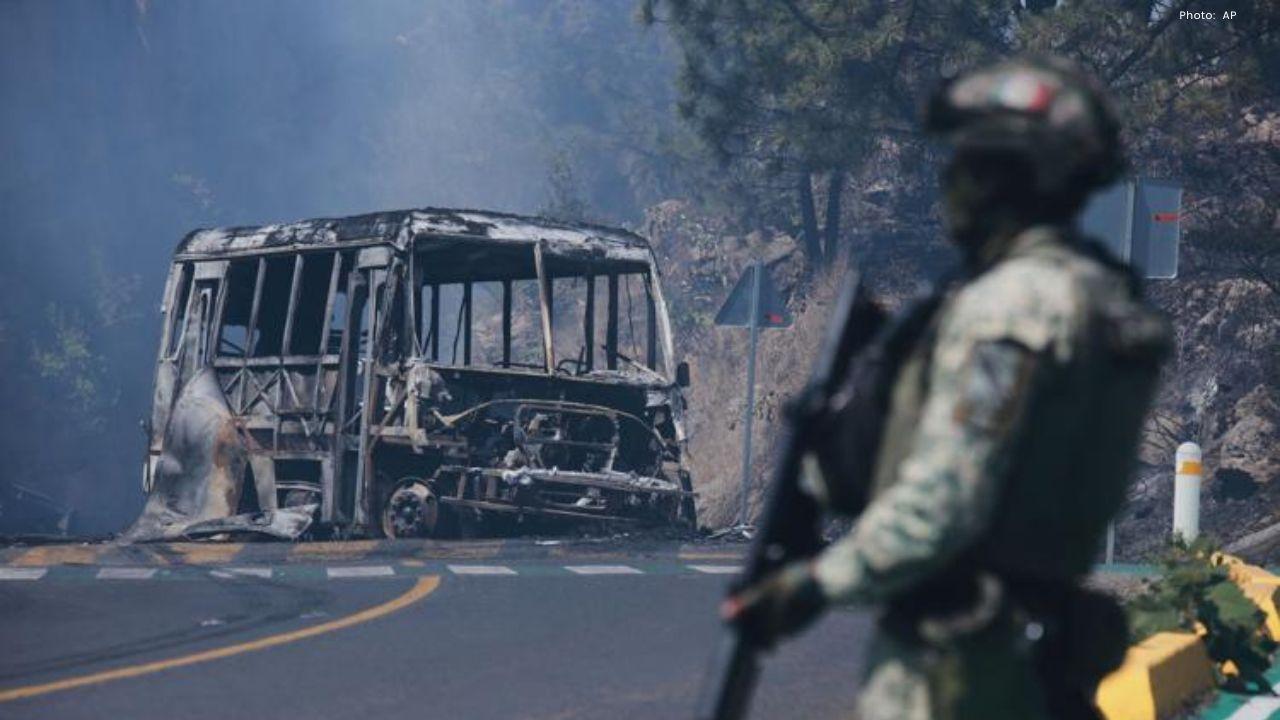
The killing of El Mencho sparked an immediate and violent reaction from the cartel. Criminal groups set up more than 250 roadblocks across 20 states. Vehicles were burned and used to block highways. Thick smoke rose over major cities. In Guadalajara, the state capital and Mexico’s second-largest city, many streets were empty as residents stayed inside their homes out of fear.
Schools in several states were closed for safety. Public transportation was limited. Local authorities urged people to remain indoors. The U.S. government confirmed it had provided intelligence support for the operation and praised Mexican forces for targeting one of the most wanted criminals in both countries. The U.S. State Department had previously offered a reward of up to $15 million for information leading to his capture.
Tourists also felt the impact of the violence. In Puerto Vallarta, visitors described hearing explosions and seeing black smoke in the sky. Some flights were canceled. In Guadalajara, more than 1,000 people were stranded overnight at the city zoo because it was too dangerous to travel. Families slept inside buses and buildings for safety.
Residents rushed to buy food, water, medicine, and baby supplies. Long lines formed outside pharmacies and grocery stores. Some businesses remained closed. Workers struggled to reach their jobs because buses were not running regularly. Many families chose to stay home, unsure of what might happen next.
The Jalisco New Generation Cartel began operating around 2009 and quickly expanded its power. Under El Mencho’s leadership, the group became deeply involved in trafficking fentanyl, methamphetamine, and cocaine to the United States. It also became known for attacking police, soldiers, and government officials directly. The cartel’s rapid growth made it one of the most powerful criminal organizations in Mexico.
The operation took place at a time when the United States has been pressuring Mexico to do more to stop the flow of fentanyl across the border. U.S. President Donald Trump has repeatedly called for stronger action against drug traffickers and warned of economic and political consequences if results were not seen. El Mencho was considered one of the world’s top fentanyl traffickers, and his death may be seen as a major step in Mexico’s efforts.
However, security experts warn that killing a cartel leader does not always end violence. In some cases, it can lead to power struggles within the group or encourage rival cartels to fight for control of territory. This can create even more instability in the short term.
For many ordinary citizens, the biggest concern is safety. Parents worry about sending children to school. Workers worry about traveling across the city. Small business owners fear more damage and losses. While the government has called the operation a major victory, people on the ground are waiting to see whether it will bring lasting peace.
For now, soldiers remain on patrol, and security forces continue searching for those responsible for the attacks. Burned vehicles still line some roads. The atmosphere remains tense. The death of El Mencho marks a turning point in Mexico’s long fight against organized crime, but whether it will weaken the cartel or lead to more bloodshed is still uncertain.







Reopening of the Strait of Hormuz: New Regulations to Impact Global Trade
Iran reopens the strategic Strait of Hormuz with new regulations affecting oil transport and global

Top 10 Must-See Attractions in NYC for First-Time Explorers
Discover essential experiences for first-time visitors to NYC, including attractions, culture, and i

Starbucks Engages Boyu Capital for Major Chinese Expansion
Starbucks teams up with Boyu Capital, selling a majority stake to boost growth and adapt to the Chin
Three Individuals Charged in Massive Meth Trafficking Case in Malaysia
In Malaysia, a married couple and another suspect are charged with trafficking 510kg of meth, facing
Singapore Police Revisit Geylang Murder Scene with Suspect
In Geylang, police return a murder suspect to the scene of a crime involving the fatal stabbing of a