Post by : Saif Nasser
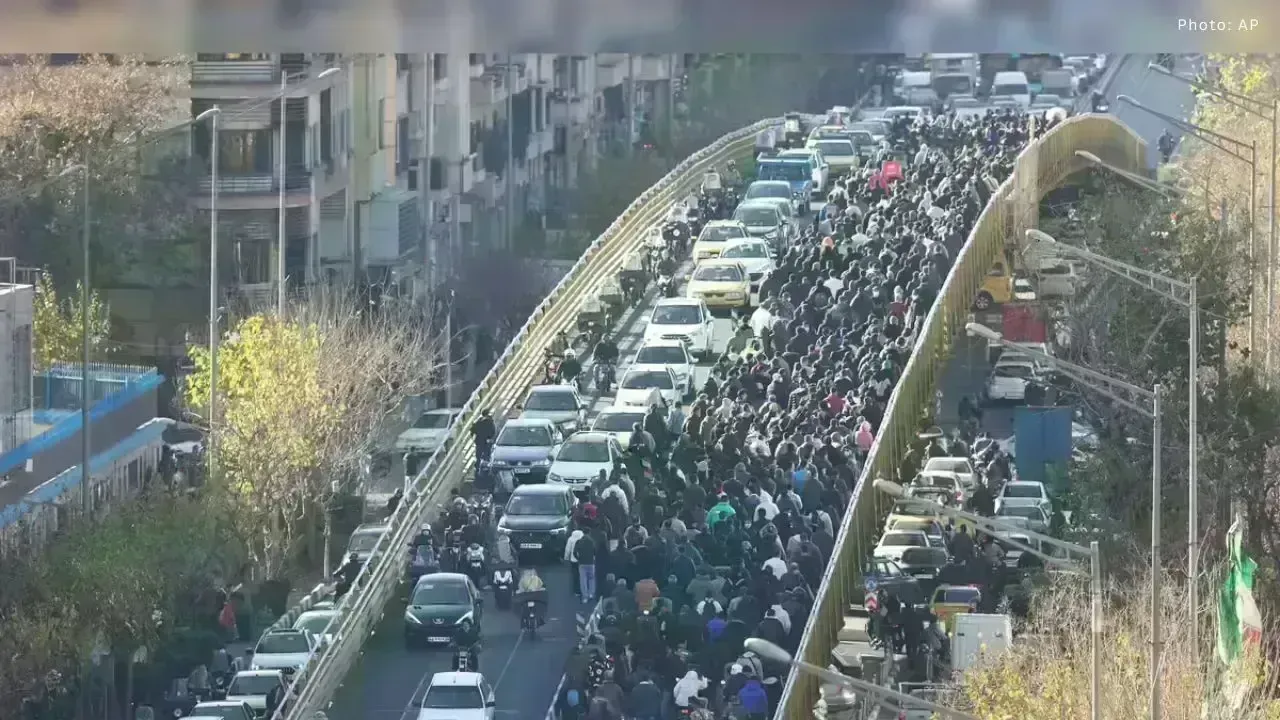
Over the past 50 years, Iran has witnessed repeated waves of protests that reflect a deep and ongoing struggle between the state and its people. These protests, though sparked by different events, share a common thread: public frustration over economic hardship, political limits, and lack of personal freedoms.
The story begins in the late 1970s, when large public demonstrations led to the fall of Shah Mohammad Reza Pahlavi. Students, workers, and religious groups took to the streets, demanding political freedom and an end to autocratic rule. These protests resulted in the 1979 Islamic Revolution, which brought Ayatollah Ruhollah Khomeini to power and reshaped Iran into a strict religious state. Soon after, executions, war with Iraq, and heavy security measures ended large-scale protests for many years.
In 1999, unrest returned when university students protested after the killing of writers and activists. A violent raid on a student dormitory in Tehran triggered wider demonstrations. Security forces cracked down harshly, leading to deaths and mass arrests. The protests showed rising anger among young people, especially over freedom of speech and political rights.
A decade later, Iran faced one of its largest protest movements after the 2009 presidential election. Many citizens believed the vote results were unfair and gathered in huge numbers across the country. This movement, often called the Green Movement, lasted for months. Security forces responded with force, resulting in many deaths and arrests. Though the protests were suppressed, public trust suffered lasting damage.
Economic pressure became the main trigger for protests in 2017 and 2018, when rising food prices and cuts in financial aid led people to the streets. These protests spread quickly and turned political in tone. In 2019, anger exploded again after the government raised fuel prices. Widespread violence followed, with hundreds reported killed and a nationwide internet shutdown imposed.
In 2022, the death of 22-year-old Mahsa Amini after her arrest by morality police sparked nationwide protests. Women played a central role, openly challenging strict dress rules. The crackdown was severe, with hundreds killed and thousands detained. Even today, many women continue to resist these rules quietly.
Most recently, protests in 2025 and early 2026 were driven by the collapse of Iran’s currency after tighter sanctions and conflict in the region. As the rial hit record lows, people protested rising living costs and poor economic conditions. Once again, authorities responded by limiting internet and phone access.
Together, these protests tell a clear story. While the causes have changed over time, public frustration in Iran has never fully disappeared. Each generation has found its own reason to speak out, showing that the gap between the rulers and the ruled remains wide. The past 50 years suggest that without meaningful change, unrest will continue to return in different forms.




The Impact of Consistent Small Investments on Wealth Building
Discover how investing small amounts regularly can positively transform your financial future over t

7.5 Magnitude Earthquake Strikes Japan, Tsunami Alerts Issued
Japan experiences a hefty 7.5 quake, prompting tsunami alerts and safety measures. Stay updated on a

Reopening of the Strait of Hormuz: New Regulations to Impact Global Trade
Iran reopens the strategic Strait of Hormuz with new regulations affecting oil transport and global

Top 10 Must-See Attractions in NYC for First-Time Explorers
Discover essential experiences for first-time visitors to NYC, including attractions, culture, and i

Starbucks Engages Boyu Capital for Major Chinese Expansion
Starbucks teams up with Boyu Capital, selling a majority stake to boost growth and adapt to the Chin

Three Individuals Charged in Massive Meth Trafficking Case in Malaysia
In Malaysia, a married couple and another suspect are charged with trafficking 510kg of meth, facing