Post by : Saif Nasser
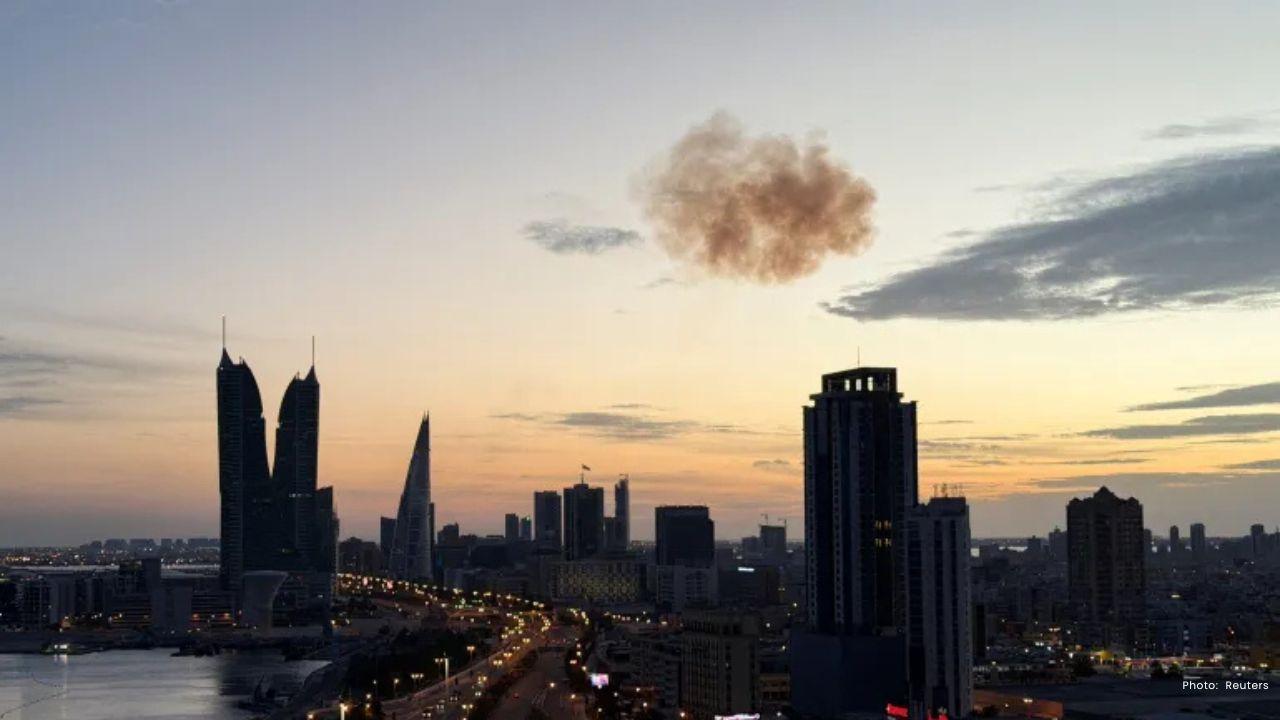
Tensions across the Middle East have risen sharply after Iran reportedly targeted the Israeli embassy in Bahrain, while Saudi Arabia said it intercepted a missile believed to be part of the same wave of attacks. The incident is the latest sign that the conflict between Iran, Israel, and their allies is spreading across the wider Gulf region.
According to reports, the attempted strike on the Israeli diplomatic mission in Bahrain came as Iran continued retaliatory attacks across the region. Saudi Arabia’s air defense systems intercepted at least one missile before it could cause damage, preventing what could have been a serious escalation.
The events come during a period of intense fighting and political tension in the Middle East. In recent days, Iran has launched missiles and drones toward several targets across the Gulf, including countries that host United States military bases or maintain strong relations with Israel.
These attacks are widely viewed as retaliation following a large military campaign carried out by the United States and Israel against Iran. That operation targeted key Iranian military facilities and leadership positions, triggering a strong response from Tehran and raising fears of a wider regional war.
Bahrain, a small island nation in the Persian Gulf, is strategically important in regional politics. The country hosts the headquarters of the United States Navy’s Fifth Fleet and maintains diplomatic relations with Israel. Because of these factors, it has become a potential target in the broader conflict involving Iran and Western-aligned countries in the region.
Reports suggest that Iran’s missile campaign has not been limited to a single location. Missiles and drones have also been directed toward other Gulf states such as Kuwait, Qatar, the United Arab Emirates, and Saudi Arabia itself. Many of these countries host American military facilities or cooperate closely with Western powers.
Air defense systems in several countries have been working intensively to intercept these attacks. In many cases, missiles and drones have been destroyed before reaching their targets, though falling debris has sometimes caused fires, damage to buildings, or injuries to civilians.
Saudi Arabia’s interception of the missile aimed toward Bahrain or nearby areas demonstrates how regional defense networks are working together during the crisis. The kingdom has repeatedly reported shooting down drones and missiles during the current conflict, including attacks aimed at airports, military bases, and energy facilities.
The attempted strike on the Israeli embassy carries strong symbolic meaning. Embassies are considered sovereign diplomatic sites and attacks on them can trigger severe international reactions. Even if the missile did not reach the building, the attempt itself sends a message about the widening scope of the conflict.
For Bahrain, the incident adds new pressure to an already tense situation. The country has previously intercepted dozens of Iranian missiles and drones since the conflict began, highlighting the scale of the threat facing Gulf states.
Residents across the Gulf region have reported hearing explosions and air defense systems in action as missiles are intercepted in the sky. In several cities, emergency sirens have sounded, and authorities have urged people to stay indoors during attack alerts.
Governments across the region have strongly condemned the attacks and warned that continued escalation could threaten stability across the Middle East. Gulf countries fear that a prolonged conflict could damage their economies, disrupt oil shipments, and create risks for civilian populations.
The Strait of Hormuz, one of the world’s most important oil shipping routes, also lies at the center of these concerns. Any expansion of military activity near this area could affect global energy markets and international trade.
International leaders are calling for restraint as tensions grow. Diplomats from several countries have urged all sides to avoid further escalation and to seek diplomatic solutions before the conflict spreads further across the region.
Despite these appeals, the situation remains unpredictable. The combination of missile attacks, air defense interceptions, and retaliatory strikes has created a highly unstable security environment across the Gulf.
Experts warn that attacks on diplomatic sites, military bases, or major infrastructure could quickly draw additional countries into the conflict. If that happens, the crisis could turn into a much broader regional war involving multiple governments and armed groups.
For now, the attempted strike on the Israeli embassy in Bahrain and the interception of a missile by Saudi Arabia serve as another reminder that the conflict is no longer limited to a few locations. Instead, it is spreading across the Gulf region, placing several countries directly in the line of fire.
As the situation continues to develop, governments, airlines, shipping companies, and civilians across the Middle East remain on high alert, watching closely for signs of either further escalation or possible diplomatic efforts to calm the crisis.










DAE Achieves Remarkable Growth in Q1 2026 With Record Revenue
Dubai Aerospace Enterprise announces impressive financial results for Q1 2026, reflecting a surge in

Price Increase for Sony PS5 in Southeast Asia Effective May 1
Sony announces a price increase for the PS5 across Southeast Asia starting May 1, 2026, impacting ga

Potential ‘Super El Niño’ in 2026: Understanding the Climate Risks
Could a Super El Niño emerge in 2026? Discover its implications and potential global climate impacts

Global Energy Crisis Intensifies: Markets React to Oil Supply Challenges
Markets are on edge as oil disruptions escalate, influencing prices and economic stability. Explore

Must-See Tourist Spots in London You Can't Overlook
Explore London's essential attractions, from royal landmarks to vibrant markets, ensuring an unforge

Ultimate Guide to Snagging Cheap Flights in 2026
Unlock the secrets to booking affordable flights in 2026 with insightful tips and strategies tailore




