Post by : Saif Nasser
The long war between Russia and Ukraine has created many new military lessons, especially in the use of drones. Now those lessons are drawing attention from countries far beyond Europe. The United States and several Middle Eastern nations are looking to Ukraine for help in defending against Iranian-made drones that are appearing in multiple conflicts.
For more than four years, Ukraine has faced constant attacks from drones supplied by Iran and used by Russia during the invasion. Ukrainian cities, power stations, and infrastructure have often been targeted by these unmanned aircraft. Because of this experience, Ukraine has developed new ways to detect and destroy them.
Ukrainian President Volodymyr Zelenskyy recently said that several countries have approached Ukraine to share its knowledge about defending against these drones. The United States, along with Middle Eastern countries such as the United Arab Emirates, Qatar, Bahrain, Jordan, and Kuwait, are among those interested in cooperation.
These countries are worried about the growing use of Iranian drones in regional conflicts. Iran has developed several models of attack drones, including the well-known Shahed series. These drones are often called “kamikaze drones” because they are designed to crash into targets and explode.
The Shahed drones have become an important weapon in modern warfare. They are much cheaper than missiles, which makes it possible to launch them in large numbers. A single drone may cost only tens of thousands of dollars, while advanced missiles can cost millions. This price difference allows attackers to send large waves of drones that can overwhelm air defenses.
Russia has used thousands of these drones during its invasion of Ukraine. In some attacks, hundreds of drones were launched at once in nighttime strikes aimed at damaging energy systems and civilian infrastructure. Ukrainian air defenses have had to adapt quickly to deal with these threats.
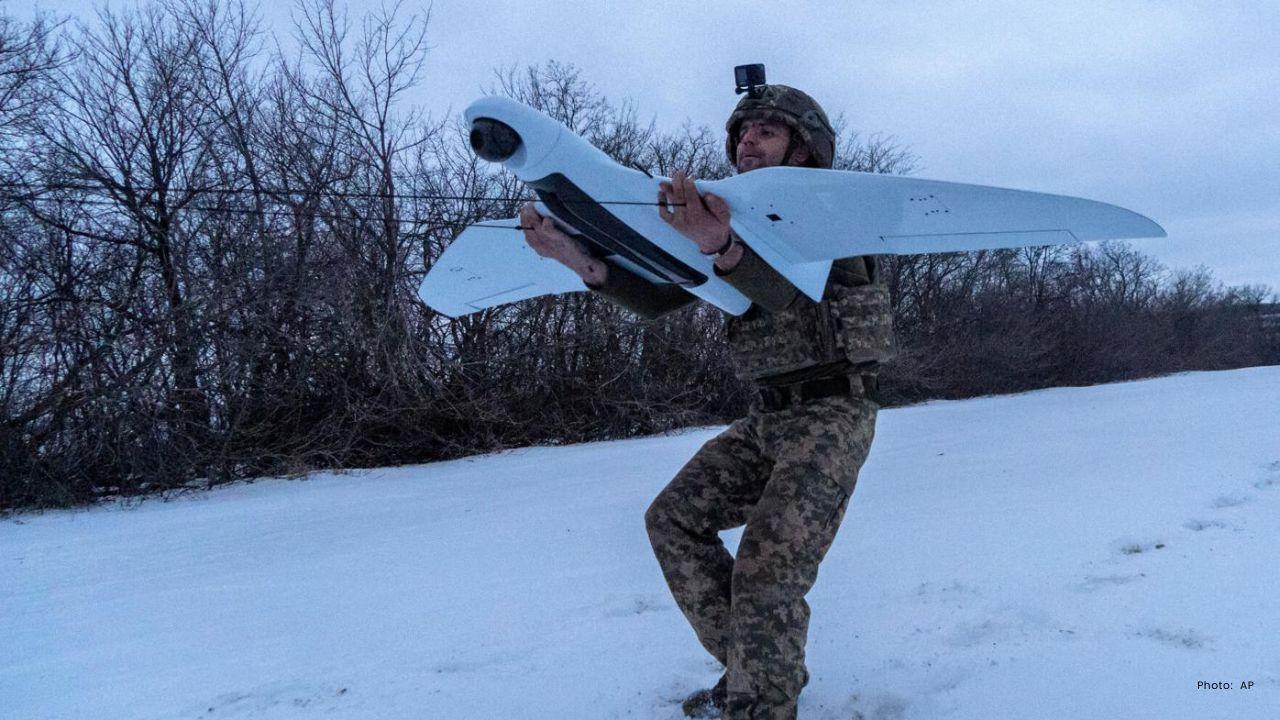
Over time, Ukraine developed new defensive strategies. Instead of relying only on expensive missile systems, Ukrainian forces began using cheaper methods to stop drones. These include electronic warfare systems that interfere with drone signals, mobile defense teams that shoot them down, and even interceptor drones designed to hunt enemy drones in the sky.
Because these systems are less expensive, they allow Ukraine to defend its cities without using extremely costly missiles for every target. This experience has now become valuable knowledge for other countries that may face the same type of threat.
Zelenskyy said Ukraine is willing to share its expertise, but only if it does not weaken the country’s own defenses. Ukraine remains in an active war with Russia and must ensure that its own security needs come first.
The interest from other nations shows how the war in Ukraine is shaping global military thinking. Many defense experts believe that drones will play an even bigger role in future conflicts. Compared with traditional weapons, drones are easier to produce and can be deployed quickly.
In recent months, Iranian drones have appeared in conflicts outside Europe as well. Attacks using these drones have been reported in the Middle East, where tensions between Iran and other regional powers have increased. These developments have made many governments more concerned about the spread of drone technology.
Some analysts say the relationship between Russia and Iran has helped accelerate this trend. Iran has supplied drones to Russia during the war, while Russia has reportedly helped expand production capabilities. This cooperation has made the drones more widely available and more advanced.
Ukrainian officials argue that the wars in Europe and the Middle East are connected through these military partnerships. Some leaders believe that a coordinated international response may be needed to deal with the growing threat of drone warfare.
Meanwhile, diplomatic efforts to end the Russia-Ukraine war continue but have made little progress. Talks supported by the United States have produced some prisoner exchanges between the two sides, but a broader peace agreement remains distant.
The war has already caused massive destruction and loss of life. Hundreds of thousands of people have been killed or injured, and millions have been displaced since Russia launched its full-scale invasion in 2022.
Despite the ongoing fighting, Ukraine has managed to build a strong domestic drone industry. Local manufacturers are producing interceptor drones and other defensive technologies. Some of these systems may soon be exported to friendly countries seeking better protection against drone attacks.
For Ukraine, sharing its expertise could strengthen diplomatic ties with allies while also helping address a growing global security problem.
The rise of drones is changing the nature of warfare. Small, inexpensive machines can now threaten large military systems and major cities. As more countries adopt this technology, the need for effective defense methods becomes more urgent.
Ukraine’s experience shows how quickly military technology can evolve during wartime. Lessons learned on the battlefield are now shaping how countries around the world prepare for future threats.
As conflicts continue to unfold in different regions, the fight against drones may become one of the defining security challenges of the modern era.










DAE Achieves Remarkable Growth in Q1 2026 With Record Revenue
Dubai Aerospace Enterprise announces impressive financial results for Q1 2026, reflecting a surge in

Price Increase for Sony PS5 in Southeast Asia Effective May 1
Sony announces a price increase for the PS5 across Southeast Asia starting May 1, 2026, impacting ga

Potential ‘Super El Niño’ in 2026: Understanding the Climate Risks
Could a Super El Niño emerge in 2026? Discover its implications and potential global climate impacts

Global Energy Crisis Intensifies: Markets React to Oil Supply Challenges
Markets are on edge as oil disruptions escalate, influencing prices and economic stability. Explore

Must-See Tourist Spots in London You Can't Overlook
Explore London's essential attractions, from royal landmarks to vibrant markets, ensuring an unforge

Ultimate Guide to Snagging Cheap Flights in 2026
Unlock the secrets to booking affordable flights in 2026 with insightful tips and strategies tailore




