Post by : Saif Nasser
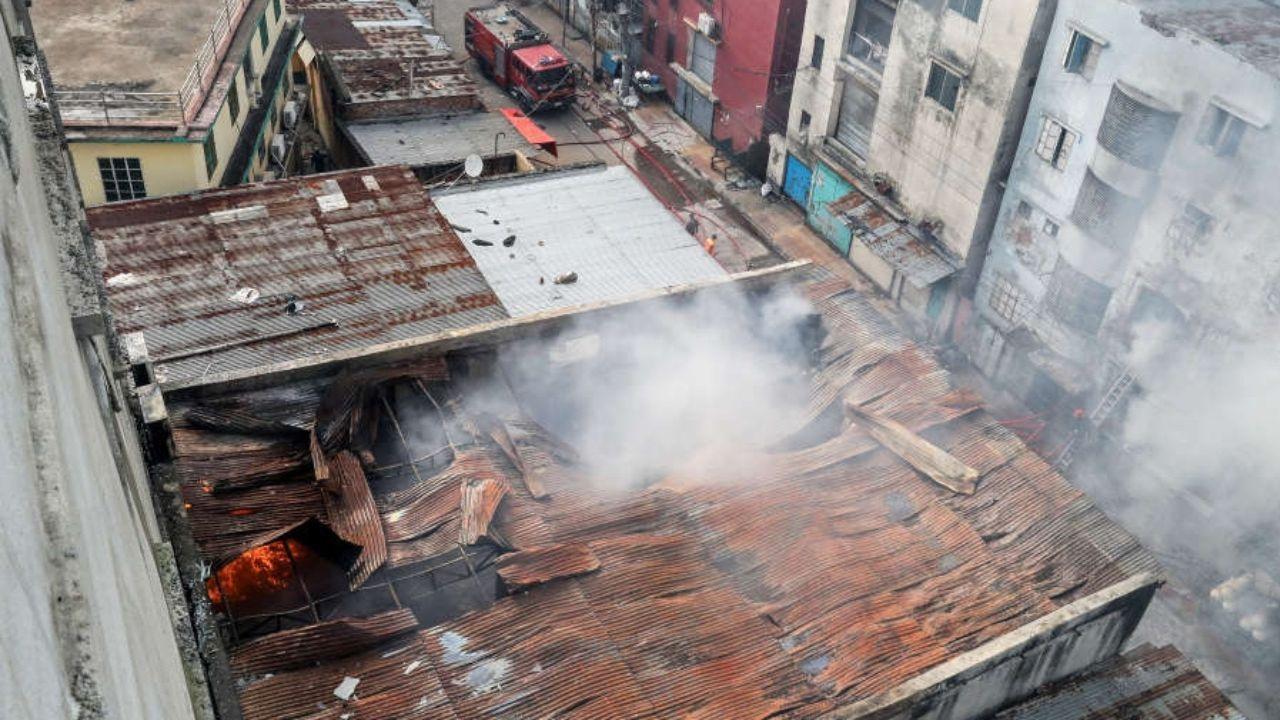
A deadly fire in a garment factory and a connected chemical warehouse in Dhaka, Bangladesh, has claimed 16 lives and left several workers critically injured. Fire officials said toxic gas and a locked door that blocked access to the roof were the main reasons for the high death toll.
How the Fire Happened
The fire broke out on the third floor of a four-story building in the Mirpur area of Dhaka. The blaze quickly spread to a warehouse storing plastic and chemicals. Thick smoke rose from the structure, making it difficult for firefighters to control the fire.
Fire service official Talha Bin Jashim said, "The victims could not escape because the roof door was locked. Most of them died from inhaling toxic gas, rather than burns."
The fire also affected nearby factories, and dozens of workers suffered from smoke inhalation. Authorities ordered all surrounding factories to close temporarily as a safety precaution.
Families and Investigation
Relatives of the victims gathered outside the charred building, some holding photographs of those missing. Identification of the bodies is ongoing at Dhaka Medical College Hospital. The Bangladesh government has launched an inquiry to find out the exact cause of the fire and identify who is responsible for the safety lapses.
Industrial Safety in Bangladesh
Bangladesh has a history of industrial accidents, particularly in garment factories. Large-scale tragedies like the Tazreen Fashions fire in 2012 and the Rana Plaza collapse in 2013 drew worldwide attention to unsafe working conditions. Since then, some safety measures have improved, but many small factories and warehouses still operate with minimal oversight.
The country is the world’s second-largest apparel exporter, supplying major retailers such as Walmart, Gap, and H&M. The garment industry employs around 4 million people and generates about $40 billion annually, making up more than a tenth of Bangladesh's GDP.
The Bigger Picture
This latest fire highlights ongoing risks in Bangladesh’s industrial sector. Locked exits, poor fire safety standards, and the storage of toxic chemicals in crowded factories create dangerous conditions for workers. Experts say stronger safety regulations, regular inspections, and proper emergency exits are needed to prevent similar tragedies in the future.
Bangladesh has made some progress in factory safety, but incidents like this show that much more needs to be done to protect workers and ensure safe working environments across the country.





Mattel Revives Masters of the Universe Action Figures Ahead of Film Launch
Mattel is reintroducing Masters of the Universe figures in line with its upcoming film, tapping into

China Executes 11 Members of Criminal Clan Linked to Myanmar Scam
China has executed 11 criminals associated with the Ming family, known for major scams and human tra

US Issues Alarm to Iran as Military Forces Deploy in Gulf Region
With a significant military presence in the Gulf, Trump urges Iran to negotiate a nuclear deal or fa

Copper Prices Reach Unprecedented Highs Amid Geopolitical Turmoil
Copper prices soar to all-time highs as geopolitical tensions and a weakening dollar boost investor

New Zealand Secures First Win Against India, Triumph by 50 Runs
New Zealand won the 4th T20I against India by 50 runs in Vizag. Despite Dube's impressive 65, India