Post by : Saif Nasser
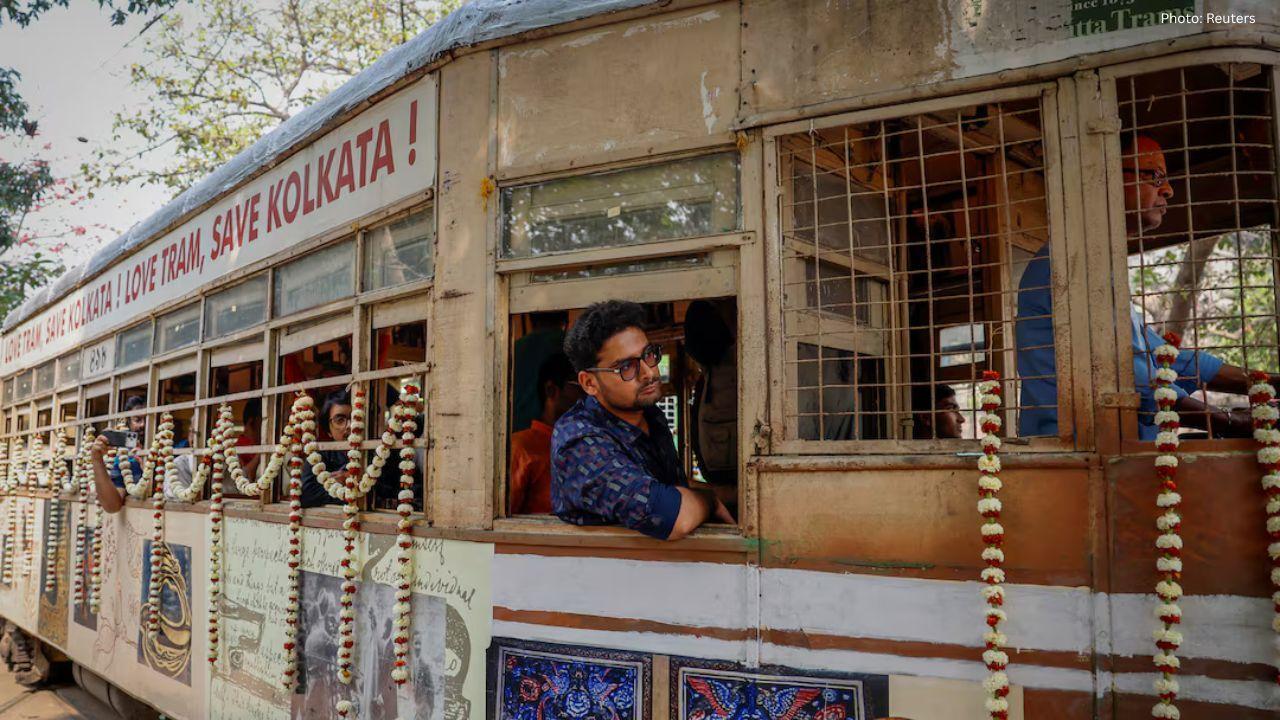
For over 150 years, trams have been a distinctive feature of Kolkata’s streets, their rhythmic chimes marking the passage of generations of commuters. Introduced in 1873 as horse-drawn carriages and electrified in 1902, these trams became a vital part of daily life in the city, weaving through colonial facades and bustling neighborhoods. Today, however, Kolkata’s iconic tram network is facing a dramatic decline, with authorities planning to shut down most routes in favor of modern transportation.
At its peak, the network had more than 340 trams serving the entire city. Now, only about 10 trams run on two remaining routes. The government has begun selling depots and scrapping older cars, citing the need to modernize infrastructure and ease traffic congestion. Kolkata’s roads are increasingly crowded, with trams struggling to compete with buses, taxis, and expanding metro lines.
“The trams were part of our lives from childhood,” said Abha Maity, 44, recalling rides to school and college. “I can’t imagine Kolkata without them.” Many residents feel a deep emotional connection to the trams, viewing them as symbols of the city’s history and culture.
Conductor Bacchu Sidda, who has worked with the trams for 36 years, noted the dramatic decline. “When I joined, more than 340 trams were running. Now it’s down to seven or eight,” he said, showing the roster pinned at the last functioning depot in Gariahat.
Citizens and heritage advocates have fought to preserve the network. The Calcutta Tram Users Association (CTUA), active since 2016, has taken legal action to protect the remaining routes. “I love my trams more than myself,” said Deep Das, 19, a journalism student and CTUA member. “If they disappear, it will feel like a part of me is gone.”
Despite public resistance, the West Bengal government is investing heavily in metro expansion, wider roads, and new highways to support faster, more efficient transport. These upgrades reflect the city’s push toward modernization and its need to handle growing traffic demands.
Currently, the fate of Kolkata’s aging trams is in the hands of the courts. Until a final decision is made, the remaining trams continue to carry passengers, serving not only as a mode of transport but as living reminders of the city’s rich heritage.
The potential closure of Kolkata’s tram system marks the end of an era. While modernization is necessary to meet contemporary demands, residents hope that the city can preserve at least a small heritage route, keeping a tangible connection to the past alive for future generations.








Anticipated Dates for UAE Eid Al Adha 2026 Unveiled by Astronomical Experts
Experts predict Eid Al Adha 2026 in the UAE to start on May 27, prompting early holiday planning amo

DAE Achieves Remarkable Growth in Q1 2026 With Record Revenue
Dubai Aerospace Enterprise announces impressive financial results for Q1 2026, reflecting a surge in

Price Increase for Sony PS5 in Southeast Asia Effective May 1
Sony announces a price increase for the PS5 across Southeast Asia starting May 1, 2026, impacting ga

Potential ‘Super El Niño’ in 2026: Understanding the Climate Risks
Could a Super El Niño emerge in 2026? Discover its implications and potential global climate impacts

Global Energy Crisis Intensifies: Markets React to Oil Supply Challenges
Markets are on edge as oil disruptions escalate, influencing prices and economic stability. Explore

Must-See Tourist Spots in London You Can't Overlook
Explore London's essential attractions, from royal landmarks to vibrant markets, ensuring an unforge




