Post by : Mina Rahman
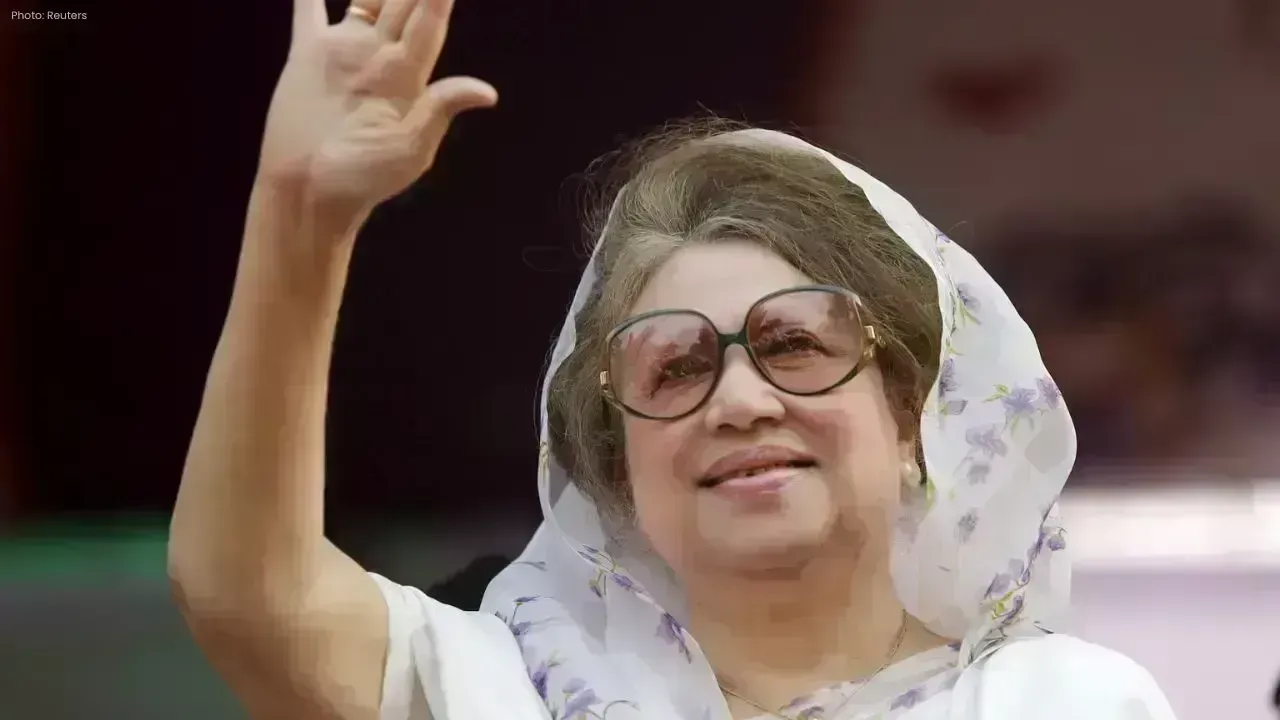
Khaleda Zia, Bangladesh's first female prime minister and a monumental presence in the nation's political saga, has died at the age of 80 following a lengthy struggle with severe health problems including kidney failure, heart disease, and pneumonia. Despite receiving extensive medical attention, her condition deteriorated, leading to her passing after weeks of hospitalization.
Zia's entry into politics was marked by tragedy, stepping into the spotlight after the assassination of her husband, former President Ziaur Rahman, in a military coup during 1981. Initially recognized primarily as the first lady, Zia swiftly morphed into a formidable political force, leading the Bangladesh Nationalist Party (BNP).
She made headlines in 1991 by becoming Bangladesh's first female prime minister after her party clinched a historic democratic election win, heralding a crucial return to parliamentary governance. This groundbreaking achievement shattered the male-dominated political framework in Bangladesh and served as an inspiration for numerous women across the country.
Khaleda Zia’s political narrative was intricately linked to her rival, Sheikh Hasina, leader of the Awami League. Their competition shaped the political landscape of Bangladesh for many years, with governance frequently alternating between their parties, thus establishing a polarized yet democratic sphere.
During her leadership, Zia dedicated efforts to advancing women's education and social development initiatives. Her governance sought to bolster parliamentary democracy through promoting collaborations and enacting constitutional amendments, stabilizing the nation’s democratic institutions post years of military rule.
However, her political tenure was also marked by turbulence. Her brief second term in 1996 was engulfed in disputes over election integrity. Subsequent allegations of corruption shadowed her administration, leading to a conviction she contended was politically charged against her and her party.
Despite facing adversity and health complications, Zia retained her stature as a key player in Bangladesh's opposition politics. Even amidst ongoing legal troubles and personal health issues, she remained a beacon of resistance against the ruling Awami League, energizing her supporters and maintaining her party's relevance in the national discourse.
Recently, her son, Tarique Rahman, returned to Bangladesh after years of exile in London, seemingly positioned as a future leader of the BNP, injecting fresh energy into the party's ambitions for revival.
In her final moments, Khaleda Zia was surrounded by family, including Tarique and his wife and daughter. Tributes have poured in from supporters and political colleagues honoring her legacy as a pioneering female leader and a steadfast advocate for democracy in Bangladesh.
Political figures and citizens alike have shared their condolences, commemorating Khaleda Zia as a vital protector of democracy whose contributions to the political framework of the nation will be etched in memory.








Anticipated Dates for UAE Eid Al Adha 2026 Unveiled by Astronomical Experts
Experts predict Eid Al Adha 2026 in the UAE to start on May 27, prompting early holiday planning amo

DAE Achieves Remarkable Growth in Q1 2026 With Record Revenue
Dubai Aerospace Enterprise announces impressive financial results for Q1 2026, reflecting a surge in

Price Increase for Sony PS5 in Southeast Asia Effective May 1
Sony announces a price increase for the PS5 across Southeast Asia starting May 1, 2026, impacting ga

Potential ‘Super El Niño’ in 2026: Understanding the Climate Risks
Could a Super El Niño emerge in 2026? Discover its implications and potential global climate impacts

Global Energy Crisis Intensifies: Markets React to Oil Supply Challenges
Markets are on edge as oil disruptions escalate, influencing prices and economic stability. Explore

Must-See Tourist Spots in London You Can't Overlook
Explore London's essential attractions, from royal landmarks to vibrant markets, ensuring an unforge




