Post by : Bianca Suleiman
The president of the John F. Kennedy Center for the Performing Arts has issued a staunch condemnation of jazz musician Chuck Redd's last-minute cancellation of a Christmas Eve concert, asserting it led to significant financial and reputational damage to the venue.
In a strongly worded correspondence shared with the Associated Press, Kennedy Center President Richard Grenell indicated he will seek up to $1 million in damages from Redd, who withdrew from the performance mere days before it was set to occur.
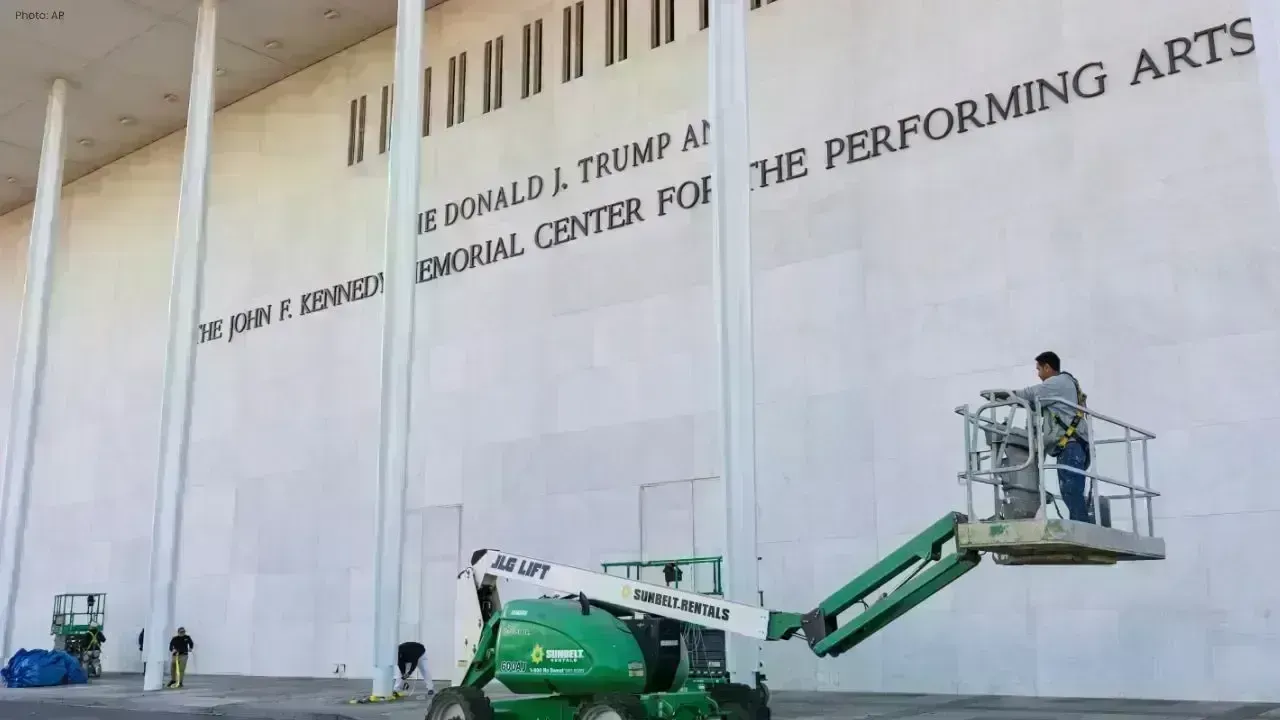
Grenell pointed fingers at Redd for cancelling “at the last moment” in direct reaction to the announcement made by the White House earlier this month regarding the addition of Donald Trump's name to the Kennedy Center building.
“Your decision to withdraw at the last moment—explicitly in response to the Center’s recent renaming—is pure intolerance and it severely impacts a non-profit arts organization,” Grenell expressed. He further classified the cancellation as a “political stunt” that disrupted a cherished holiday tradition, affecting the audiences, staff, and performers involved.
Redd had not provided an immediate response to Grenell’s assertions following the release of the correspondence.
End of a Holiday Tradition
Chuck Redd, a prominent drummer and vibraphone artist, has been integral to the Kennedy Center’s annual Christmas Eve “Jazz Jams” for almost two decades, starting the series in 2006 after succeeding late bassist William “Keter” Betts.
This beloved annual event has grown into a central feature of the Kennedy Center's holiday calendar, attracting large audiences and showcasing a collaboration between student musicians and experienced jazz artists.
Earlier this week, Redd acknowledged that the choice to cancel was closely linked to the controversy surrounding the naming.
“Upon seeing the name change on the Kennedy Center website and subsequently on the building, I made the decision to withdraw from the concert,” Redd shared, expressing sorrow regarding the cancellation due to its long-standing significance.
“It was heartbreaking because of the event's history and its significance to both audiences and emerging musicians,” he articulated.
Legal and Historical Controversy Over Renaming
Congress established the Kennedy Center as a living tribute to John F. Kennedy, who was assassinated in 1963. Legislation enacted the following year recognized it as such and imposed strict regulations on its naming.
Legal experts and historians have expressed concerns that adding another name to the building breaches these regulations. The statutes explicitly prevent the board of trustees from transforming the center into a memorial for any other individual.
Despite these concerns, the White House announced that a board appointed by Trump approved the changes. Grenell, a confidant of Trump, recently assumed his role after dismissing previous leaders.
Critics argue that only Congress holds the power to ratify such modifications.
Reactions from the Kennedy Family and Scholars
The decision has faced sharp backlash from members of the Kennedy family as well as historians.
Kerry Kennedy, President Kennedy's niece, has promised to work towards removing Trump’s name from the building once he exits office. Many, including her, assert that the renaming undermines the center's foundational mission as a nonpartisan national memorial.
Former House historian Ray Smock has echoed this, stating any modifications to the Kennedy Center’s name would necessitate explicit approval from Congress.
Scholars warn that allowing political figures to inscribe their names onto national cultural venues could create a worrying precedent and provoke future issues.
Cultural Institution at the Center of Political Tensions
This conflict showcases the growing tensions within one of the country’s leading arts establishments, as political actions increasingly invade cultural spaces typically viewed as neutral.
For the Kennedy Center, the cancellation of a beloved holiday performance coupled with impending legal action emphasizes both the financial and symbolic implications tied to this controversy. For artists like Redd, the episode poses broader questions regarding artistic freedom and the right to protest.
As discussions unfold, the clash places the Kennedy Center at the forefront of a national discourse centered on legality, legacy, and the intersection of politics and cultural institutions in America.





Mattel Revives Masters of the Universe Action Figures Ahead of Film Launch
Mattel is reintroducing Masters of the Universe figures in line with its upcoming film, tapping into
China Executes 11 Members of Criminal Clan Linked to Myanmar Scam
China has executed 11 criminals associated with the Ming family, known for major scams and human tra

US Issues Alarm to Iran as Military Forces Deploy in Gulf Region
With a significant military presence in the Gulf, Trump urges Iran to negotiate a nuclear deal or fa

Copper Prices Reach Unprecedented Highs Amid Geopolitical Turmoil
Copper prices soar to all-time highs as geopolitical tensions and a weakening dollar boost investor

New Zealand Secures First Win Against India, Triumph by 50 Runs
New Zealand won the 4th T20I against India by 50 runs in Vizag. Despite Dube's impressive 65, India