Post by : Saif Nasser
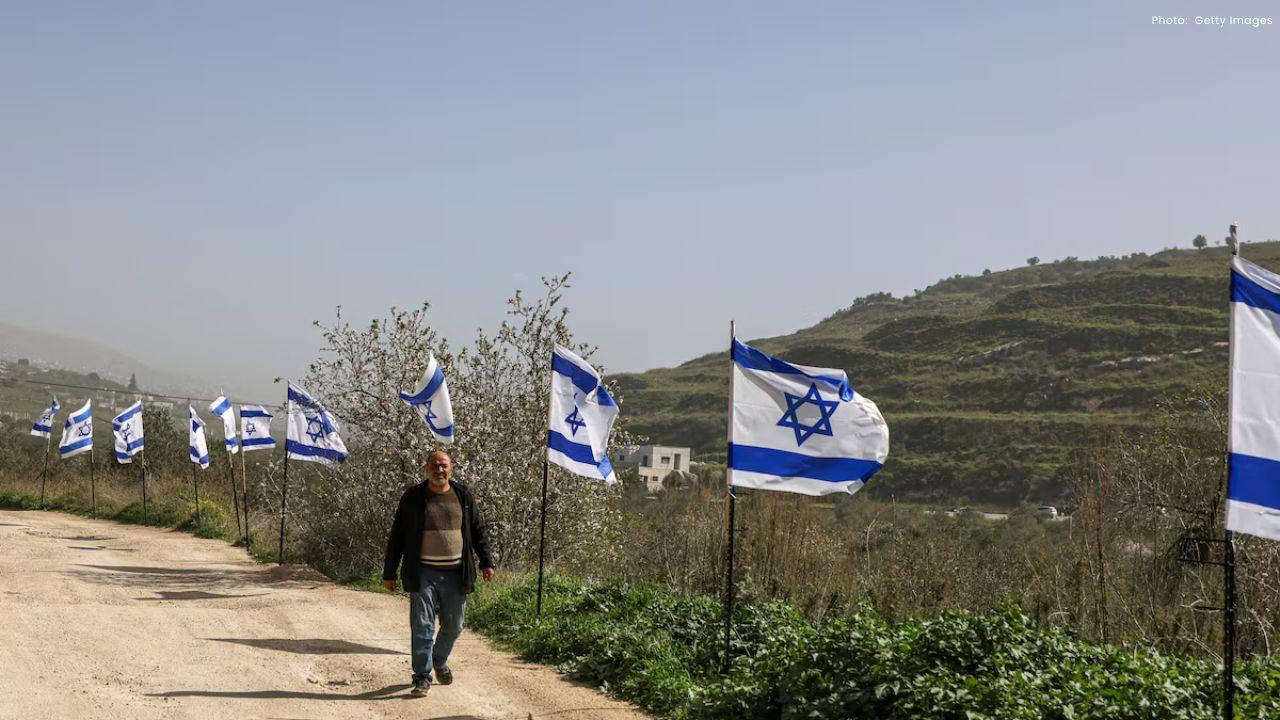
Israel’s decision to begin a new land registration process in the occupied West Bank has created strong debate and deep concern among Palestinians, legal experts, and many international observers. The move is presented by Israeli authorities as an administrative step to organize land records. But critics argue it could lead to systematic loss of Palestinian land and make the conflict even harder to resolve.
The registration plan allows the government to formally record large areas of West Bank land under state control if private ownership cannot be fully proven through official documents. On paper, this may look like a technical legal process. In reality, it carries serious consequences for people who live on and depend on that land.
Many Palestinian families have farmed, lived on, and passed down land for generations without modern paperwork. Over decades of conflict, war, and changing administrations, proper land documents were often never completed or were lost. If written proof is now required as the main test of ownership, many people risk losing property they believe is rightfully theirs.
Supporters of the plan say a proper land registry brings order and clarity. They argue that clear records reduce disputes and improve governance. From their point of view, land that cannot be proven as privately owned should be recorded as state land so it can be managed legally.
However, this argument does not fully consider the history and conditions under which Palestinians have lived. Land systems in the area have passed through different empires and authorities. Rules changed many times. Access to legal registration offices was not always available. Travel limits and conflict conditions often made formal registration impossible. Because of this, using strict modern standards today may unfairly punish long-time residents.
Human rights groups warn that once land is recorded as state property, it can later be used for settlement growth or restricted zones. That would further reduce the space available for Palestinian towns, farms, and future development. Critics say this turns a paperwork process into a political tool.
Another major concern is the effect on peace efforts. The West Bank is widely seen as a central part of any future Palestinian state under a two-state solution. Any step that increases permanent outside control over land there makes that outcome more difficult. When territory becomes locked into new legal categories, reversing those changes later becomes very hard.
The timing of the move also matters. Tensions are already high due to ongoing violence, settlement disputes, and distrust between communities. In such a climate, even administrative actions are viewed through a political lens. A land policy that might be routine in a peaceful country becomes explosive in a disputed territory.
There is also a fairness question. A land registration drive in a conflict zone should include special protections for vulnerable communities. It should allow flexible proof standards, community testimony, historical tax records, and long use as evidence. Without such safeguards, the system may favor those with stronger legal access and resources while hurting poorer rural families.
From an editorial standpoint, land policy cannot be separated from human impact. Land is not just a legal asset. It is shelter, income, identity, and heritage. A system that risks removing people from ancestral property must meet the highest standards of fairness and transparency. Otherwise, it will be seen not as reform, but as dispossession.
Good governance requires trust. Trust grows when people believe rules are applied equally and with understanding of real conditions. In disputed regions, extra care is needed, not less. Legal clarity is valuable, but justice and balance are more important.
If the registration process goes forward, independent oversight, appeals systems, and broad proof options will be essential. Without these, the policy may deepen grievance and widen division. And when division grows, peace moves further away.








Reopening of the Strait of Hormuz: New Regulations to Impact Global Trade
Iran reopens the strategic Strait of Hormuz with new regulations affecting oil transport and global

Top 10 Must-See Attractions in NYC for First-Time Explorers
Discover essential experiences for first-time visitors to NYC, including attractions, culture, and i

Starbucks Engages Boyu Capital for Major Chinese Expansion
Starbucks teams up with Boyu Capital, selling a majority stake to boost growth and adapt to the Chin

Three Individuals Charged in Massive Meth Trafficking Case in Malaysia
In Malaysia, a married couple and another suspect are charged with trafficking 510kg of meth, facing

Singapore Police Revisit Geylang Murder Scene with Suspect
In Geylang, police return a murder suspect to the scene of a crime involving the fatal stabbing of a