Post by : Saif Nasser
The conflict in the Middle East took another dangerous turn after Iran launched a new wave of missiles toward Israel while political leaders in the United States debated whether American military strikes should continue. The events show how the crisis is expanding both on the battlefield and in political discussions far from the region.
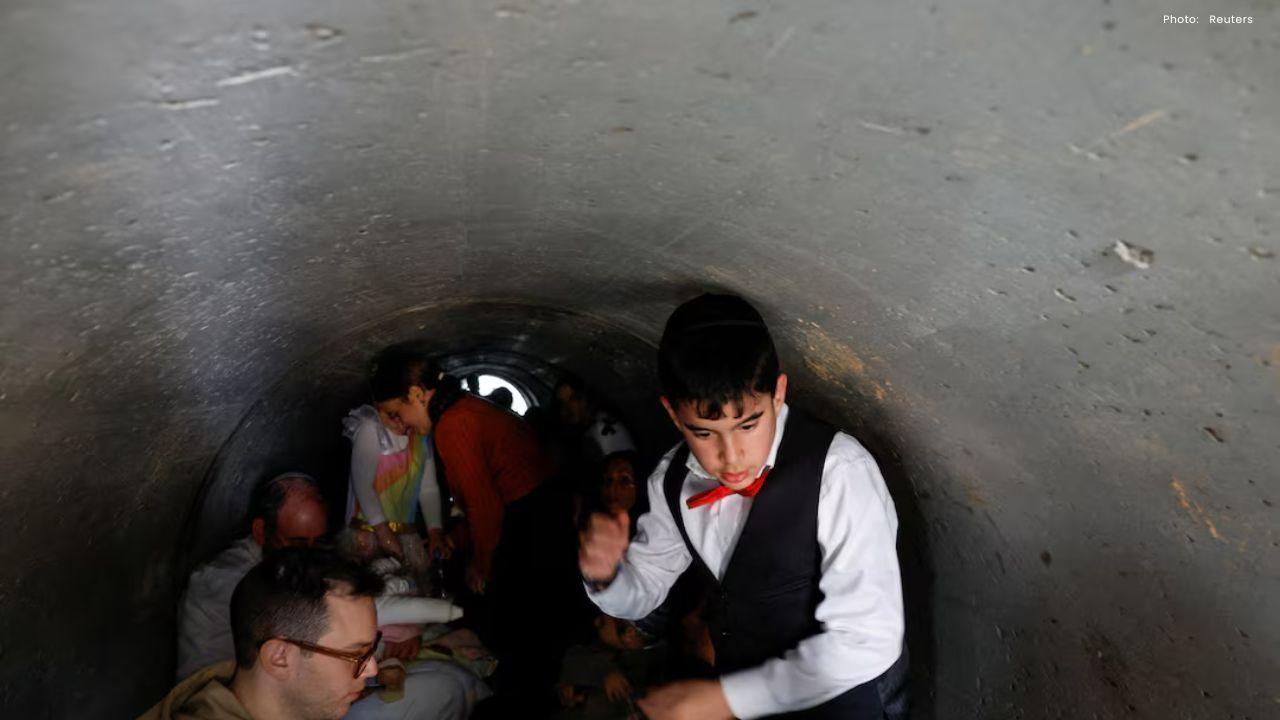
Early on Thursday, Iran fired several missiles toward Israeli territory. Air-raid sirens sounded across many cities, forcing millions of people to rush into bomb shelters for safety. Residents in different parts of Israel reported hearing explosions as air-defense systems tried to intercept the incoming missiles.
The missile launches came as the war between Iran and a coalition led by the United States and Israel entered its sixth day. Fighting has intensified quickly since the first major strikes began, and both sides have continued to exchange attacks across the region.
At the same time that the missiles were launched, lawmakers in Washington were holding an important vote about the United States’ role in the conflict. Some members of the U.S. Senate had proposed a measure that would force the president to seek approval from Congress before continuing the air campaign against Iran.
However, the proposal did not pass. In a vote of 53 to 47, Republican senators blocked the measure, allowing the U.S. military campaign to continue without new restrictions.
The vote showed a clear political divide. Most Republican senators supported continuing the strikes, arguing that the president has the authority as commander-in-chief to direct military action when national security is at risk. Meanwhile, many Democrats supported the proposal because they believe Congress should play a stronger role in decisions about war.
Supporters of the measure said it was important to ensure that the United States does not enter a prolonged war without proper debate and approval. Critics warned that allowing the president to act without limits could lead to a larger and more dangerous conflict.
Opponents of the proposal argued that stopping the military campaign suddenly could weaken the United States and its allies during a critical moment. They said strong military action is necessary to counter what they describe as threats from Iran.
The vote in Washington happened just hours after the latest missile attacks, showing how closely military actions and political decisions are linked in the current crisis.
The wider conflict began when Israel and the United States launched major strikes on Iranian targets earlier in the week. The operation targeted military facilities and other strategic locations in Iran.
Iran has responded with a series of missile and drone attacks aimed at Israel and other targets connected to the United States. Some of these attacks have also affected nearby countries and important global shipping routes.
The crisis has already spread beyond the original battlefield. A U.S. submarine recently sank an Iranian warship near Sri Lanka, and NATO forces reportedly intercepted an Iranian missile heading toward Turkey. These incidents show how the conflict is expanding across different regions.
There are also growing economic concerns. The Strait of Hormuz, one of the world’s most important routes for oil shipments, has been affected by the conflict. Shipping activity has slowed, and markets around the world are watching the situation closely because any disruption could affect global energy supplies.
Another factor making the situation more complicated is political change inside Iran. The country is dealing with leadership uncertainty after the death of Supreme Leader Ayatollah Ali Khamenei in a recent air strike. Discussions about who will succeed him have added further tension to the already unstable situation.
For civilians in Israel and other nearby countries, the most immediate concern is safety. Missile attacks and air-raid warnings have become a regular part of daily life since the conflict began. Families often rush to shelters within minutes of warning sirens.
Military analysts say both sides appear determined to continue fighting for now. Iran has warned that it will keep responding to attacks, while the United States and Israel say their operations will continue until their security goals are achieved.
International leaders and organizations have called for restraint and diplomacy, fearing that the conflict could spread into a larger regional war involving more countries.
For now, the situation remains uncertain. The latest missile barrage and the political decision in Washington both show that the crisis is still escalating. As military operations continue and political debates intensify, the world is watching closely to see whether the conflict will calm down or grow even more dangerous in the coming days.







Reopening of the Strait of Hormuz: New Regulations to Impact Global Trade
Iran reopens the strategic Strait of Hormuz with new regulations affecting oil transport and global

Top 10 Must-See Attractions in NYC for First-Time Explorers
Discover essential experiences for first-time visitors to NYC, including attractions, culture, and i

Starbucks Engages Boyu Capital for Major Chinese Expansion
Starbucks teams up with Boyu Capital, selling a majority stake to boost growth and adapt to the Chin

Three Individuals Charged in Massive Meth Trafficking Case in Malaysia
In Malaysia, a married couple and another suspect are charged with trafficking 510kg of meth, facing

Singapore Police Revisit Geylang Murder Scene with Suspect
In Geylang, police return a murder suspect to the scene of a crime involving the fatal stabbing of a