Post by : Saif Nasser
Iran is going through one of the most serious moments in its modern history after the death of its Supreme Leader, Ali Khamenei. For more than three decades, he was the highest authority in the country. His decisions shaped Iran’s politics, military strategy, and foreign policy. Now, his sudden absence has created deep uncertainty inside the nation and across the Middle East.
Khamenei had led Iran since 1989. During his rule, he controlled the armed forces, influenced the judiciary, and had the final say on major national matters. He stood firmly against the United States and Israel, often blaming them for regional tension. His leadership style was strict, and he worked to protect the ideals of the Islamic Revolution, which transformed Iran into an Islamic republic.
His death has left a powerful vacuum at the top of the system. In Iran’s political structure, the Supreme Leader holds more power than the president. Without that central figure, many questions have risen about who will take control and how the transition will unfold.
According to Iran’s constitution, a temporary leadership group steps in when a Supreme Leader dies. This council includes the president, the head of the judiciary, and a senior religious scholar. Their job is to manage state affairs until a new Supreme Leader is chosen. The responsibility of selecting the next leader belongs to the Assembly of Experts, a group of senior clerics elected to oversee this process. They must meet and agree on one person who they believe can guide the country.
The selection is not simple. The next Supreme Leader must be a high-ranking religious scholar and someone trusted by powerful political and military groups. Behind the scenes, discussions are likely intense. Different groups may have different ideas about who should lead.
One key force in this moment is the Islamic Revolutionary Guard Corps. This military organization has grown very powerful over the years. It controls strong security networks and has influence in business and politics. Its support will likely play a major role in shaping the future leadership. Many experts believe no candidate can succeed without at least quiet approval from this group.
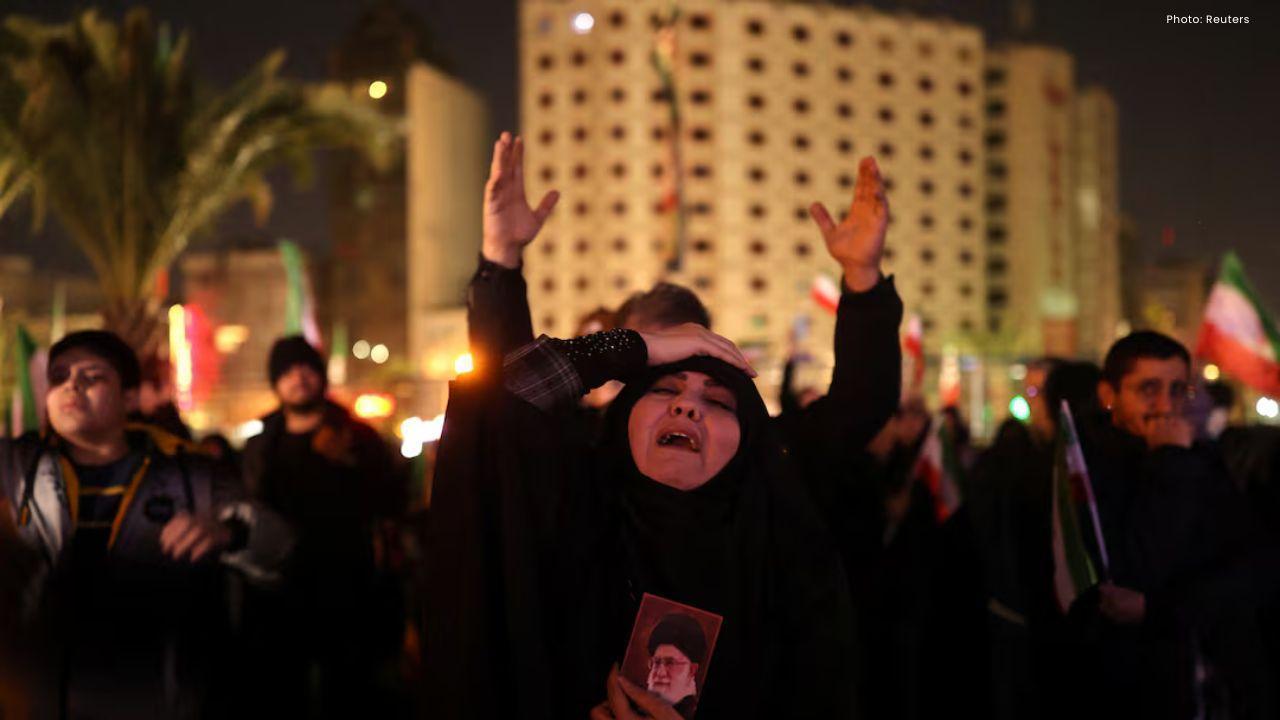
Inside Iran, emotions are mixed. Many supporters of the government have expressed sadness and gathered in public places to mourn. In cities like Tehran, large crowds have attended ceremonies to honor the late leader. At the same time, others in the country are watching carefully to see whether change might follow. Iran has faced economic pressure, protests, and international isolation in recent years. Some citizens hope a new leader could bring reforms, while others fear stricter control.
Beyond Iran’s borders, governments around the world are observing closely. Iran plays a major role in regional conflicts and global energy markets. Any instability could affect oil prices, security alliances, and diplomatic efforts. Neighboring countries are concerned that internal power struggles might weaken stability or increase tensions.
The coming weeks are critical. The Assembly of Experts is expected to move carefully but quickly. A long delay could create uncertainty and unrest. A fast decision, however, must still be accepted by the public and key institutions.
Iran’s system was built to survive difficult times. It has faced wars, sanctions, and protests before. Yet this moment feels different because it touches the highest level of power. The next Supreme Leader will inherit serious challenges. He must deal with economic problems, strained foreign relations, and a young population that is more connected to the world than ever before.
Leadership transitions are always sensitive, but in Iran, the stakes are especially high. The Supreme Leader is not just a political head; he is also a religious authority. His words carry both legal and spiritual weight. That makes the choice deeply important for the nation’s identity and direction.
As Iran moves forward, the world waits to see whether this change will bring stability or deeper tension. The decision made in the coming days will shape the country’s path for many years. For now, Iran stands at a crossroads, facing uncertainty but also the possibility of a new chapter in its long and complex history.



Reopening of the Strait of Hormuz: New Regulations to Impact Global Trade
Iran reopens the strategic Strait of Hormuz with new regulations affecting oil transport and global

Top 10 Must-See Attractions in NYC for First-Time Explorers
Discover essential experiences for first-time visitors to NYC, including attractions, culture, and i

Starbucks Engages Boyu Capital for Major Chinese Expansion
Starbucks teams up with Boyu Capital, selling a majority stake to boost growth and adapt to the Chin
Three Individuals Charged in Massive Meth Trafficking Case in Malaysia
In Malaysia, a married couple and another suspect are charged with trafficking 510kg of meth, facing
Singapore Police Revisit Geylang Murder Scene with Suspect
In Geylang, police return a murder suspect to the scene of a crime involving the fatal stabbing of a