Post by : Saif Nasser
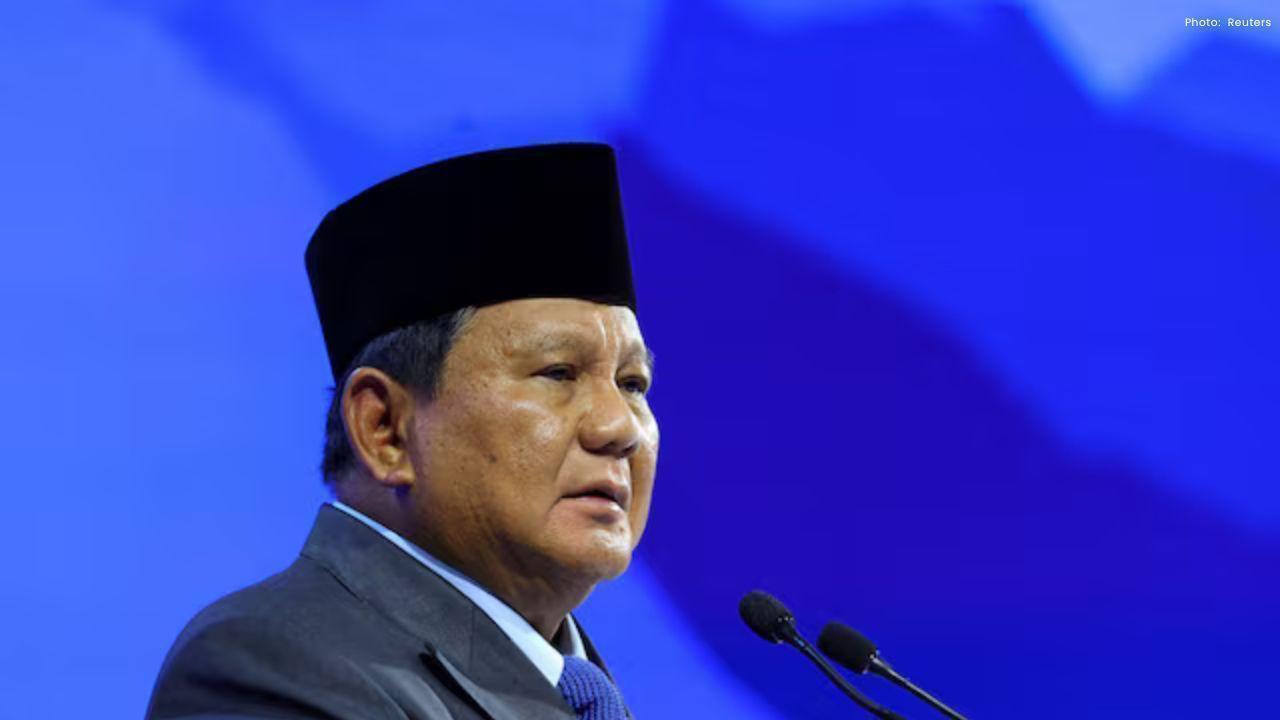
Indonesia is moving forward with one of its most ambitious economic plans in decades. President Prabowo Subianto and his team are standing firm on a bold promise: to lift national growth to 8% and expand social spending across the country. But global investors and financial agencies are growing nervous. Markets have shaken, outlook ratings have been cut, and critics warn that the country may be taking on more risk than it can safely manage.
At the center of the debate is the government’s decision to increase spending on large social and development programs. One of the most talked-about projects is a free meals program worth about $20 billion, aimed at helping children and families. There are also plans to boost rural economies, expand housing, and support cooperatives. These programs are popular with many voters and are designed to create faster growth and more jobs.
However, investors are worried about how all this spending will be paid for.
Indonesia has built a reputation over the past 25 years for careful money management. After the Asian financial crisis in the late 1990s, the country followed strict fiscal rules. Budget deficits were kept under control, and debt levels were watched closely. This helped build trust with global markets and made Indonesia attractive to foreign investors.
Now, some experts believe that discipline is weakening.
The planned fiscal deficit for 2025 is close to 3% of GDP, the highest level in over twenty years if pandemic years are excluded. While still within the legal limit, it is near the ceiling. Moody’s recently changed its outlook on Indonesia’s credit rating from stable to negative. That does not mean a downgrade yet, but it is a warning sign. It suggests that risks are rising.
Market reactions have already been sharp. A recent move by a major global index provider led to a heavy sell-off in Indonesian stocks, wiping out large amounts of market value. Banks and investment firms have also released cautious notes, saying they are unsure whether Indonesia can both raise spending and keep deficits under control.
Inside the government, though, the message is clear: the growth target comes first.
Officials close to the administration say the main programs will not be cut. They argue that Indonesia needs faster growth to create enough jobs for its large and young population. Growth around 5% per year, which has been common for some time, is seen as not enough. From their view, stronger state spending is a necessary push to break out of slow growth.
Supporters of the plan say public spending can act like an engine. When the government spends more on food programs, housing, and rural projects, money flows into local businesses. That can increase demand, raise incomes, and encourage private investment later. They also note that the deficit is still below the legal limit and that the government can raise more revenue or shift spending if needed.
Critics are not convinced.
Some economists say rapid spending without deep reforms could hurt long-term growth instead of helping it. They argue that handing out benefits and launching big programs may be politically attractive but financially heavy. If tax collection does not improve and waste is not reduced, deficits could grow further. That may weaken the currency, raise borrowing costs, and push investors away.
Another concern is policy direction. Observers note that past governments focused strongly on financial discipline and gradual reform. The current approach looks more aggressive and more populist. The replacement of well-known finance leaders with more pro-growth voices has added to the sense of change. For markets, sudden shifts in style can create uncertainty, and uncertainty often leads to caution or capital outflow.
There is also a timing issue. Global money is starting to move more actively into emerging markets as interest rates in the United States fall. This could be a big chance for countries like Indonesia to attract funds. But that only happens if investors feel safe and confident. Any sign of weak fiscal control or unpredictable policy could push money toward other countries instead.
An editorial view must recognize both sides. Indonesia’s need for faster growth is real. It is a large country with rising needs in education, food security, and jobs. Careful, targeted spending can support development and social stability. At the same time, fiscal trust, once lost, is hard to rebuild. Markets do not just look at goals; they look at discipline, transparency, and credible funding plans.
The best path forward is balance. The government should keep its growth vision but match it with clear revenue plans, strong oversight, and honest reporting. Social programs should be measured for results, not just size. Deficit limits should be treated as guardrails, not flexible suggestions.
Indonesia is not yet in crisis. But it is at a turning point. The success or failure of this high-spending growth strategy will shape investor trust and economic stability for years to come.










Starbucks Engages Boyu Capital for Major Chinese Expansion
Starbucks teams up with Boyu Capital, selling a majority stake to boost growth and adapt to the Chin

Three Individuals Charged in Massive Meth Trafficking Case in Malaysia
In Malaysia, a married couple and another suspect are charged with trafficking 510kg of meth, facing

Singapore Police Revisit Geylang Murder Scene with Suspect
In Geylang, police return a murder suspect to the scene of a crime involving the fatal stabbing of a

Mattel Revives Masters of the Universe Action Figures Ahead of Film Launch
Mattel is reintroducing Masters of the Universe figures in line with its upcoming film, tapping into

China Executes 11 Members of Criminal Clan Linked to Myanmar Scam
China has executed 11 criminals associated with the Ming family, known for major scams and human tra