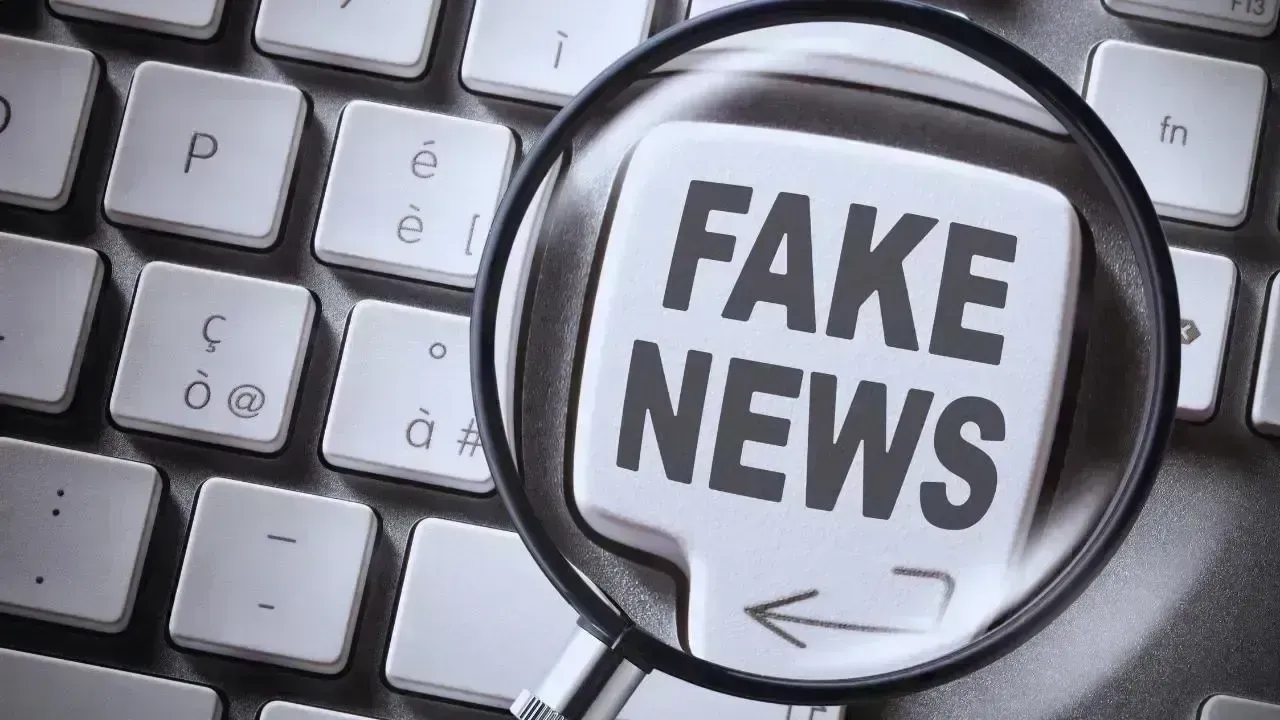
Post by : Anees Nasser
In the current era where news arrives faster than ever, we find ourselves bombarded by headlines. With the constant refresh of social media and the unending publication of news articles, we are exposed to an unprecedented amount of information. However, this avalanche of content brings significant challenges, including the rise of misinformation, misleading narratives, and subtle biases in media that shape public opinion.
Recognizing fake news has evolved from being a basic skill to a vital necessity. Whether regarding political events or health issues, misleading information often circulates more rapidly than verified facts. Moreover, the bias that permeates media outlets can skew public understanding without anyone realizing. Thus, learning to distinguish trustworthy information from misleading content is crucial for every consumer of news.
This article provides insights into recognizing misinformation, identifying media biases, and equipping you with the techniques needed to navigate today's complex information landscape.
In a world where social media allows instant sharing, erroneous headlines can spread rapidly. The emotional nature of shocking claims fuels the viral spread of misinformation far more effectively than accurate reporting.
Fake news often distills complex issues into digestible tidbits. Real news requires depth, research, and nuance, but amidst relentless content flow, audiences often prefer simpler, albeit misleading, narratives.
Platforms showcase sensational content over accurate news to maintain engagement. Articles that provoke strong emotions receive more visibility and thus gain unwarranted credibility.
Each news outlet follows different editorial guidelines and aims to cater to specific audiences. Their framing of events can significantly affect reader interpretation while the actual facts remain unchanged. It is possible for two different outlets to depict the same event in contrasting lights.
Journalists may unknowingly carry latent biases shaped by their backgrounds and environments. These biases affect language, tone, and emphasis in news reporting.
Media bias manifests not just through misinformation but also through selective coverage. When certain voices or issues are highlighted over others, audiences receive a skewed perception of reality.
Before trusting any headline, consider the following:
Who is behind this publication?
Do they have a history of reliable reporting?
Is this source known for sensationalism or satire?
Fake news outlets often mimic legitimate news websites with slight alterations or odd domain endings.
Reputable news organizations typically share their mission, ethics, and editorial guidelines. In contrast, fake news sites often lack information about their writers or accountability measures.
Misinformation may often rehash old stories to fit new narratives. Always confirm whether the information is current and relevant.
Headlines employing extreme terms like "outrageous," "unbelievable," or "the shocking truth" are typically designed to evoke emotions rather than inform.
Authentic news should consist of:
Statistical evidence
Expert quotations
Background information
Conversely, fake news may rely on vague claims like "experts believe" or "reports suggest" without naming sources.
Credible news sources adhere to high writing standards. Therefore, errors in punctuation, erratic font styles, capitalized headlines, or excessive emojis are often signs of misinformation.
If only one platform reports a sensational story while leading news sources do not, it's likely that the narrative is exaggerated or false.
Reliable stories cite:
Official communications
Government announcements
Academic articles
Recorded statements
Fake stories seldom provide factual sources.
Many misleading posts may use outdated or unrelated images to distort narratives. Employ reverse image search to trace the original contexts of the photos used.
Some fake articles stem from satire websites meant to poke fun at news. While entertaining, they can be misinterpreted when shared without proper context.
Consider the effect of these sentences:
"Demonstrators faced off with law enforcement."
"Citizens were demanding accountability."
Each sentence conveys a unique emotional tone despite describing the same event.
What appears on the homepage, in breaking news sections, or as push notifications signals the outlet’s priorities. Conversely, important stories can be buried, receiving minimal attention.
Occasionally, headlines evoke sensationalism while the content is rather neutral. Many people only skim headlines, missing the entire context.
If a piece cites a single political viewpoint or type of authority, it could reflect unintentional bias.
Individuals tend to accept information that supports their existing beliefs, even if false. This propensity amplifies the reach of fake news.
Alarming headlines provoke emotional reactions, prompting users to share warnings hastily.
When users follow only aligned voices, they become insulated from differing perspectives, cultivating a warped understanding of truth.
Posts that go viral often carry sensational claims designed to elicit strong reactions. Proceed with caution.
Comment sections may contain debunking insights, but they can also propagate more misinformation. Treat them as clues rather than conclusions.
Screenshots can easily be manipulated; always seek the original sources to verify the information's authenticity.
Many social media personalities circulate news without verification. Popularity does not equate to reliability.
Media outlets often prioritize topics that resonate emotionally with their audiences, which can yield an unbalanced view of pressing issues.
Some narratives may portray certain groups or individuals as heroes or villains, subtly influencing public opinion.
Images can evoke nuanced reactions before audiences even read a line of text. Media choices shape perceptions powerfully.
Data presentations can be misleading. A headline claiming "crime rate doubled" could be seen in light of a previously low statistic, causing unwarranted panic.
Limiting yourself to a few news outlets fosters a biased perspective. A varied mix ensures well-rounded understanding.
Constant exposure can lead to confusion and anxiety. A balanced approach mitigates this and enhances clarity.
Self-awareness aids in maintaining fairness during information evaluation.
Encouraging dialogue across differing viewpoints enhances critical assessment and diminishes susceptibility to misinformation.
From technological advancements to economic upheavals, today’s news encompasses a myriad of emotionally charged issues.
Educational initiatives in media literacy are vital for young users, who face an unprecedented influx of misinformation.
The impact of fake news extends beyond personal beliefs, affecting elections, international relations, and economic policies.
In an environment rife with falsehoods and biases, the most astute question to ask is simple:
Who gains if I accept this narrative?
By applying critical analysis, checking facts thoroughly, and understanding personal reactions, readers can effectively navigate the turbulent world of news, ensuring greater clarity and control over their perceptions.
This piece serves as a primer on media literacy and should not serve as a substitute for official training in journalism. Readers must use discretion in evaluating news sources.








Anticipated Dates for UAE Eid Al Adha 2026 Unveiled by Astronomical Experts
Experts predict Eid Al Adha 2026 in the UAE to start on May 27, prompting early holiday planning amo

DAE Achieves Remarkable Growth in Q1 2026 With Record Revenue
Dubai Aerospace Enterprise announces impressive financial results for Q1 2026, reflecting a surge in

Price Increase for Sony PS5 in Southeast Asia Effective May 1
Sony announces a price increase for the PS5 across Southeast Asia starting May 1, 2026, impacting ga

Potential ‘Super El Niño’ in 2026: Understanding the Climate Risks
Could a Super El Niño emerge in 2026? Discover its implications and potential global climate impacts

Global Energy Crisis Intensifies: Markets React to Oil Supply Challenges
Markets are on edge as oil disruptions escalate, influencing prices and economic stability. Explore

Must-See Tourist Spots in London You Can't Overlook
Explore London's essential attractions, from royal landmarks to vibrant markets, ensuring an unforge




