Post by : Saif Nasser
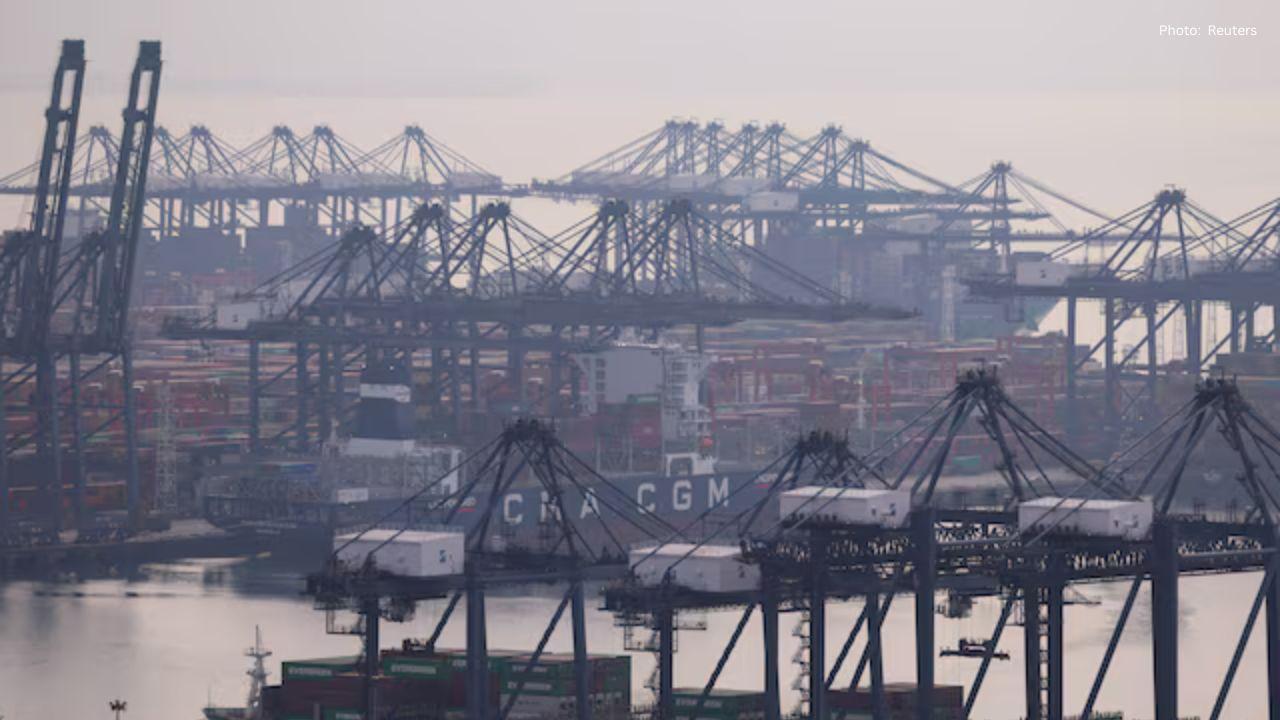
China’s growing use of export controls is now forcing many European companies to rethink how and where they manage their supply chains. A new flash survey by the European Union Chamber of Commerce in China shows that these tighter rules are creating delays, uncertainty, and fears of sudden disruptions, pushing firms to search for safer options outside China. The findings reveal a clear shift in how European businesses view their future in the world’s second-largest economy, especially during a period of intense trade tensions between Beijing and Washington.
According to the survey, one in three European companies is now considering moving their sourcing away from China because export licences are taking longer than the promised timeline. In fact, 40% of respondents said that China’s commerce ministry is processing export licences more slowly than before. This has added to fears of production delays or even temporary shutdowns, which can be very costly for industries that depend on steady supply.
The chamber’s president, Jens Eskelund, explained that export controls have increased uncertainty for companies still operating in China. Many firms are now worried that their supply of important materials or parts could stop at any moment. He added that these new restrictions have placed more pressure on an already stressed global trade system, which has been struggling because of the broader U.S.-China trade war.
The survey included more than 130 companies, including major European names such as BMW, Volkswagen, Nokia, and TotalEnergies. Their concerns are linked to recent actions by Beijing, including an October announcement threatening tighter export controls on rare earths. These minerals are extremely important for manufacturing electric vehicles, defence equipment, electronics, and renewable energy technology. Earlier this year, China had suspended exports of several rare-earth products, which led to global shortages and even forced some European carmakers to halt production lines.
This background makes the survey’s results more worrying for businesses. Although the recent U.S.–China summit in Busan brought temporary relief and hopes of cooperation, analysts say the situation remains uncertain. Alfredo Montufar-Helu of Ankura Consulting pointed out that many companies do not fully trust the post-summit optimism. He said that the two sides are still debating the details of their agreements, and Europe is pushing hard to be included, which means that major policy changes will take time. During this delay, global supply chains continue to suffer.
Nearly 70% of the surveyed companies said that their international factories depend on Chinese components that fall under export controls. Half of the exporting firms said either their suppliers or their customers are dealing with products that may soon be restricted. Many companies also said the licence application process lacks transparency, takes too long, and carries risks such as forced disclosure of sensitive information, raising concerns about possible intellectual property theft.
Some firms included in the survey reported large financial losses. One company estimated that delays caused by the export controls would cost it 20% of its global revenue this year. Another company expects losses exceeding 250 million euros. These figures show how deeply these export rules can affect multinational operations.
Still, not all firms felt the same level of impact. More than 50 companies said the new controls would not affect them, suggesting that some industries remain shielded or are less dependent on the restricted materials.
The situation highlights a rapidly changing business environment. As China uses export controls to increase its leverage in trade negotiations, foreign companies are being forced to plan for a future where China may no longer be the world’s most reliable supply hub. With trade tensions likely to continue between Beijing and Washington, European firms are trying to avoid the risk of sudden disruptions by diversifying their supply chains. This could gradually reduce China’s central role in global manufacturing.
For now, European companies remain cautious, balancing their dependence on China’s giant industrial network with the growing need to protect their businesses from unpredictable political decisions. The coming months will show whether these firms begin to move production out of China in large numbers or continue to wait for clarity in global trade agreements.








Mattel Revives Masters of the Universe Action Figures Ahead of Film Launch
Mattel is reintroducing Masters of the Universe figures in line with its upcoming film, tapping into
China Executes 11 Members of Criminal Clan Linked to Myanmar Scam
China has executed 11 criminals associated with the Ming family, known for major scams and human tra
US Issues Alarm to Iran as Military Forces Deploy in Gulf Region
With a significant military presence in the Gulf, Trump urges Iran to negotiate a nuclear deal or fa

Copper Prices Reach Unprecedented Highs Amid Geopolitical Turmoil
Copper prices soar to all-time highs as geopolitical tensions and a weakening dollar boost investor

New Zealand Secures First Win Against India, Triumph by 50 Runs
New Zealand won the 4th T20I against India by 50 runs in Vizag. Despite Dube's impressive 65, India