Post by : Mara Rahim
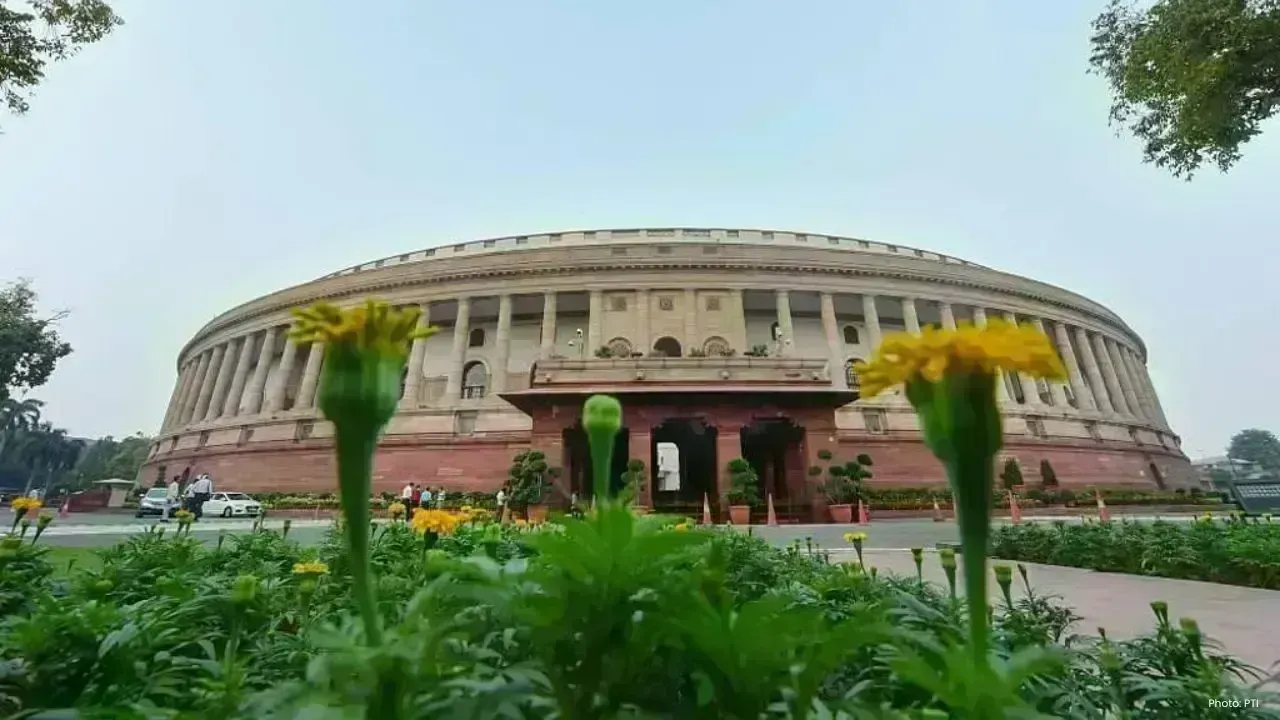
During the recent Winter Session, India's Parliament made notable progress by enacting eight significant bills despite a backdrop of intense debates and protests. Both the opposition and the government engaged in strong discussions, particularly around electoral reforms, which contributed to maintaining order throughout the session. This contrasted sharply with the prior Monsoon Session that was marked by frequent adjournments over electoral roll revision demands.
The productivity levels were exceptionally high, with the Lok Sabha achieving 110 percent and the Rajya Sabha reaching 121 percent productivity. Key discussions unfolded, including those surrounding electoral reforms and the celebration of the 150th anniversary of Vande Mataram. This session was particularly notable as it marked the inaugural meeting chaired by CP Radhakrishnan as Rajya Sabha Chairman.
Among the most fiercely debated pieces of legislation was the Viksit Bharat G RAM G Bill, designed to supersede the MGNREGA scheme. Opposition parties vocally opposed the bill and insisted it be reviewed by a Standing Committee, which led to heated protests and disruptions. Parliamentary Affairs Minister Kiren Rijiju condemned the actions of the opposition, asserting such conduct was unacceptable within the parliamentary setting.
Key areas of focus during the Winter Session included various financial matters. Several crucial bills gained approval, such as amendments to insurance regulations, Appropriation Bills, and taxation-related legislation. The SHANTI Bill, allowing private sector involvement in the nuclear energy domain, received approval after extensive discussions in both Houses.
A significant piece of legislation was the Sabka Bima Sabki Raksha (Amendment of Insurance Laws) Bill, 2025, which raises the limit for foreign direct investment in insurance sectors from 74 percent to 100 percent. The government lauded this change as a strategic move to draw long-term capital from abroad, facilitate technology transfers, and enhance insurance accessibility and social security nationwide.
Additionally, the Central Excise (Amendment) Bill, 2025, which modifies excise duties on tobacco products post-GST compensation cess, was passed. The Manipur Goods and Services Tax (Second Amendment) Bill, 2025, was also approved to enact GST Council decisions aimed at simplifying GST processes in the region.
Throughout the session, the Lok Sabha introduced 10 new bills while Parliament passed eight bills across 15 sittings. The Securities Markets Code Bill, 2025, tabled by Finance Minister Nirmala Sitharaman, will undergo review by a Standing Committee, intending to modernize India's capital market laws by consolidating three existing laws into a comprehensive framework.
Kiren Rijiju highlighted the government's intent to conduct an exhaustive discussion on air pollution; however, this was thwarted due to opposition disruptions amidst the passage of the G RAM G Bill. He expressed regret that this important issue was not thoroughly debated during the session.
The Winter Session of Parliament, which commenced on December 1, concluded sine die on Friday. Despite the backdrop of protests and discord, the session's completion with the passage of numerous critical bills demonstrated a significant legislative achievement and active political engagement.









Meta Unveils Subscription Plans for Instagram, Facebook, and WhatsApp
Meta introduces new subscription plans for users of Instagram, Facebook, and WhatsApp, featuring enh

Suvarna Joy on Education Leadership, Resilience, and Building Purpose Through Adversity in the UAE
Suvarna Joy shares her journey of education leadership, motherhood, faith, and resilience within the

Anticipated Dates for UAE Eid Al Adha 2026 Unveiled by Astronomical Experts
Experts predict Eid Al Adha 2026 in the UAE to start on May 27, prompting early holiday planning amo

DAE Achieves Remarkable Growth in Q1 2026 With Record Revenue
Dubai Aerospace Enterprise announces impressive financial results for Q1 2026, reflecting a surge in

Price Increase for Sony PS5 in Southeast Asia Effective May 1
Sony announces a price increase for the PS5 across Southeast Asia starting May 1, 2026, impacting ga

Potential ‘Super El Niño’ in 2026: Understanding the Climate Risks
Could a Super El Niño emerge in 2026? Discover its implications and potential global climate impacts




