Post by : Saif Nasser
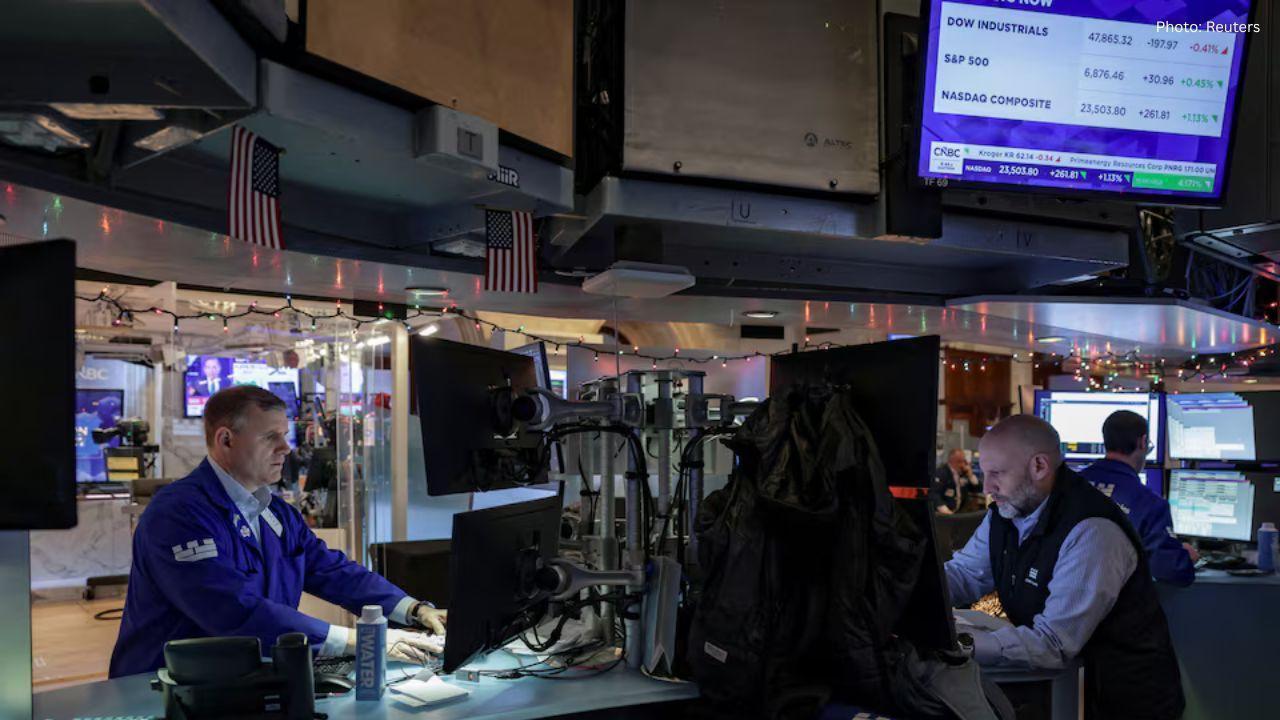
The U.S. stock market began the year 2026 on a positive note, with the Dow Jones Industrial Average closing higher on the first trading day. This gain helped end a four-day losing streak. However, investors did not see the much-talked-about “Santa Claus rally,” a period when stocks often rise at the end of December and early January.
On Friday, the Dow rose by 319 points, or 0.66%, to finish at 48,382. The S&P 500 also moved up slightly, gaining 0.19%. In contrast, the Nasdaq ended almost flat, slipping just a little by 0.03%. The mixed results showed that while some sectors performed well, others held the market back.
Chip-making companies played a key role in lifting the market. Shares of Nvidia and Intel rose strongly and helped improve investor confidence after a brief drop earlier in the day. The semiconductor sector as a whole jumped by about 4%, making it one of the best-performing groups of the session.
Industrial and utility stocks also posted solid gains. Big companies like Boeing and Caterpillar rose sharply, adding strength to the Dow. These gains helped balance out losses in other parts of the market.
Not all major companies had a good day. Some large technology firms, including Apple and Microsoft, saw their shares fall. Consumer-focused companies also struggled. Amazon shares declined, and Tesla dropped 2.6% after reporting that its yearly sales fell for the second year in a row. These losses limited gains in the S&P 500 and Nasdaq.
Smaller companies showed signs of recovery as well. The Russell 2000 index, which tracks small-cap stocks, rose 1.1% after four straight days of losses. This suggested that investors were willing to take some risks again after recent selling.
Market experts said trading behavior shows that investors are buying stocks when prices fall and selling when they rise quickly. Some also warned that prices of artificial intelligence-related stocks may already be high. Still, many investors continue to buy during dips, believing the long-term outlook remains positive.
Another important factor for 2026 will be the direction of U.S. interest rates. Investors expect the Federal Reserve to cut rates later in the year, especially if the next Fed chair supports easier policy. Lower interest rates usually help stocks by making borrowing cheaper for companies.
Attention is now turning to next week’s U.S. jobs data, which could influence future decisions by the Federal Reserve. Trade policy is also on the radar, especially after President Donald Trump delayed planned tariff increases on some furniture products. This move helped furniture retailers, whose shares rose sharply.
In summary, Wall Street started 2026 with cautious optimism. While the Dow showed strength, the lack of a Santa Claus rally and mixed performance across sectors remind investors that the year ahead may still bring ups and downs.










Mattel Revives Masters of the Universe Action Figures Ahead of Film Launch
Mattel is reintroducing Masters of the Universe figures in line with its upcoming film, tapping into

China Executes 11 Members of Criminal Clan Linked to Myanmar Scam
China has executed 11 criminals associated with the Ming family, known for major scams and human tra

US Issues Alarm to Iran as Military Forces Deploy in Gulf Region
With a significant military presence in the Gulf, Trump urges Iran to negotiate a nuclear deal or fa

Copper Prices Reach Unprecedented Highs Amid Geopolitical Turmoil
Copper prices soar to all-time highs as geopolitical tensions and a weakening dollar boost investor

New Zealand Secures First Win Against India, Triumph by 50 Runs
New Zealand won the 4th T20I against India by 50 runs in Vizag. Despite Dube's impressive 65, India