Post by : Saif Nasser
China is expected to expand its role in Bangladesh as political changes and strained relations with India reshape the country’s foreign partnerships. With national elections taking place this week and the former ruling party no longer in power, many experts believe Dhaka’s next government will move closer to Beijing in trade, defense, and infrastructure. At the same time, analysts also say that Bangladesh cannot afford to distance itself fully from India because of geography, security, and economic needs.
For many years, Bangladesh maintained close ties with India under former Prime Minister Sheikh Hasina, who ruled from 2009 until she was removed from power in 2024. Her government worked closely with New Delhi on security and regional projects. Now the political landscape has changed. Her party has been banned, and she is living in exile in India. This has created anger among many political groups in Bangladesh and has added tension between the two countries.
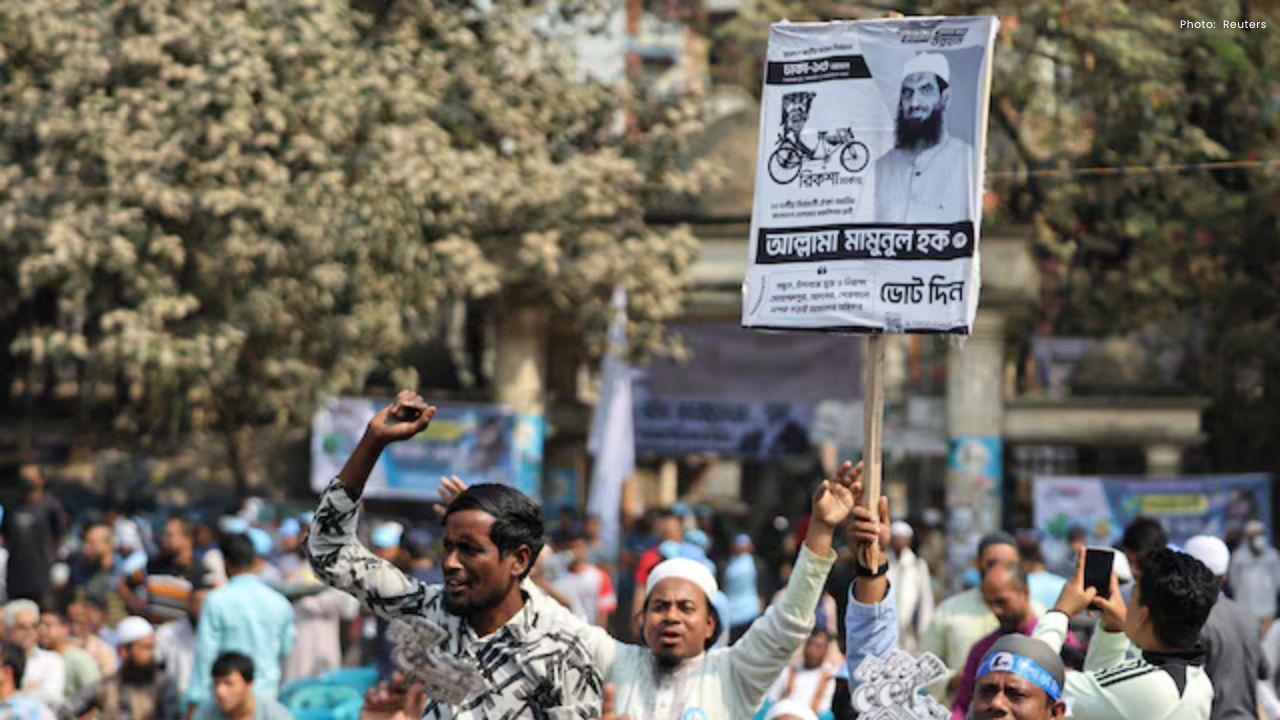
New political leaders and parties that are likely to gain power after the February 12 election have historically had cooler relations with India. Some of them have openly criticized New Delhi for sheltering Hasina and have accused India of interfering in Bangladesh’s internal matters. Campaign speeches and rallies have shown strong nationalist messages, with leaders saying Bangladesh must put its own interests first before any foreign partner.
During this period of tension with India, China has stepped up its outreach in Bangladesh. Chinese officials have been very active in meeting politicians, government officers, and business leaders. New agreements have been signed, including a defense deal to build a drone factory near Bangladesh’s border with India. Chinese-backed infrastructure and development projects worth billions of dollars are also being discussed and expanded.
China has already been Bangladesh’s largest trading partner for more than ten years. Trade between the two countries is worth around $18 billion each year, and most of Bangladesh’s imported goods come from China. Chinese firms are involved in roads, bridges, ports, power plants, and communication projects. Since the fall of the previous government, Chinese companies have invested hundreds of millions more dollars in the country.
In contrast, new Indian business deals in Bangladesh have slowed down. Indian companies that expanded during the previous government have not announced many fresh projects recently. Even so, trade between India and Bangladesh remains strong at over $13 billion a year. India continues to supply electricity and key goods. This shows that while politics may change quickly, economic links are harder to break.
The tension between Dhaka and New Delhi has also spread into public life and sports. Cricket, which is extremely popular in both countries, has become part of the dispute. Broadcast bans, tournament disagreements, and player controversies have added to the sense that relations are not as warm as before. Visa rules between the two countries have also become tighter, and official meetings have become less frequent.
Another major point of conflict is the legal case against the former prime minister. Bangladesh’s interim authorities have asked India to send her back to face court judgments related to a deadly crackdown during the unrest that removed her from power. India has not agreed to this request. This issue continues to create distrust and political anger.
Still, many experts warn against seeing the situation as a simple shift from India to China. Bangladesh sits in a very sensitive geographic position. India surrounds it on three sides, and the two countries share long land borders, rivers, trade routes, and security concerns. Border control, water sharing, transport access, and regional stability all require cooperation between Dhaka and New Delhi.
Foreign policy experts say Bangladesh is likely to follow a balanced approach. That means it will try to gain investment and support from China while also keeping working relations with India. This kind of balance is common among medium-sized countries that sit between larger powers. It allows them to get economic benefits from multiple sides without becoming too dependent on one partner.
China is seen by many Bangladeshi leaders as a reliable economic partner that focuses on projects and financing without commenting much on internal politics. India, on the other hand, is deeply connected through history, culture, and security ties, but also faces criticism inside Bangladesh over past political support and border issues. Public opinion, especially among young voters, shows growing sensitivity about foreign influence from any side.
The next government in Bangladesh will face a difficult test. It must attract foreign investment, control inflation, create jobs, and maintain stable borders. To do this, it will need good working ties with both China and India. Moving too far toward one and ignoring the other could create new risks.
The coming years will likely show a more competitive diplomatic space in Bangladesh, with China increasing its presence and India trying to rebuild trust. The smartest path for Dhaka may not be choosing one over the other, but managing both carefully. For a fast-growing country with big development needs, practical cooperation may matter more than political slogans.








Reopening of the Strait of Hormuz: New Regulations to Impact Global Trade
Iran reopens the strategic Strait of Hormuz with new regulations affecting oil transport and global

Top 10 Must-See Attractions in NYC for First-Time Explorers
Discover essential experiences for first-time visitors to NYC, including attractions, culture, and i

Starbucks Engages Boyu Capital for Major Chinese Expansion
Starbucks teams up with Boyu Capital, selling a majority stake to boost growth and adapt to the Chin

Three Individuals Charged in Massive Meth Trafficking Case in Malaysia
In Malaysia, a married couple and another suspect are charged with trafficking 510kg of meth, facing
Singapore Police Revisit Geylang Murder Scene with Suspect
In Geylang, police return a murder suspect to the scene of a crime involving the fatal stabbing of a