Post by : Saif Nasser
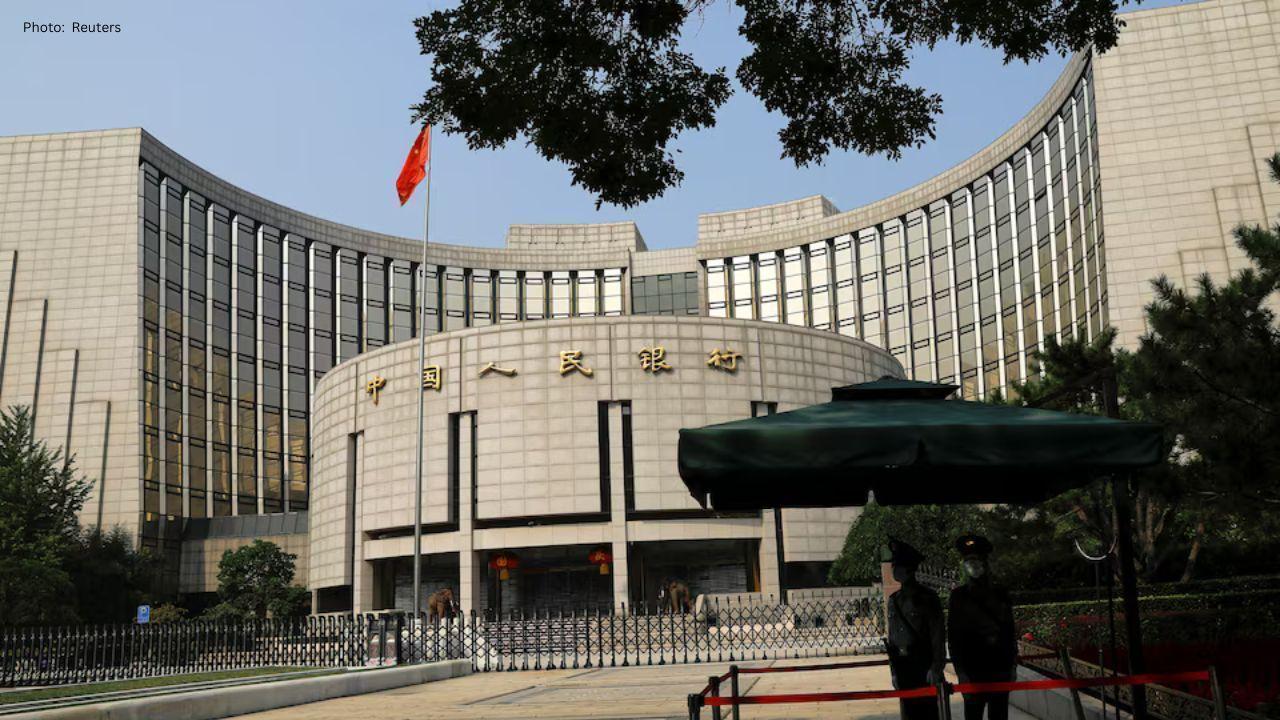
China has decided to keep its main benchmark lending rates unchanged for the seventh consecutive month, a move that signals confidence in meeting growth goals while showing caution over deeper economic risks. The decision, announced on Monday, was in line with market expectations and reflects Beijing’s careful approach to managing the economy during an uneven recovery.
The one-year loan prime rate, which influences corporate borrowing and short-term loans, was held at 3.00%. The five-year loan prime rate, which is closely linked to mortgage costs, remained unchanged at 3.50%. These rates guide how much interest banks charge businesses and households across the country.
By keeping rates steady, Chinese policymakers appear to believe that the economy is still on track to meet the government’s annual growth target. Many analysts expect this target to be around 5%. The decision also suggests that authorities do not see an urgent need for fresh monetary stimulus at this time, even though some sectors continue to struggle.
China’s central bank has been following what it calls a “cross-cyclical” policy approach, which aims to smooth economic ups and downs rather than reacting quickly with sharp policy changes. Another factor limiting immediate rate cuts is pressure on banks’ profit margins, which are already at very low levels. Further cuts could weaken the financial system if introduced too quickly.
Recent economic data shows a mixed picture. In November, factory output growth slowed, and retail sales also lost momentum. These signs point to weaker demand from both consumers and businesses. The ongoing property crisis continues to weigh heavily on confidence, making people cautious about spending and borrowing.
New bank lending in November rose less than expected, largely because household borrowing slowed sharply. Many families remain hesitant to take on new loans, especially for housing, due to uncertainty about jobs, incomes, and property prices. This hesitation limits the impact of stable interest rates on overall economic activity.
Earlier this month, Chinese leaders met at the annual Central Economic Work Conference, where they promised to maintain a proactive fiscal policy in the coming year. This means the government plans to use spending measures to support consumption and investment in order to keep growth stable. Officials also stressed the need for flexible use of policy tools, including interest rates and bank reserve requirements, if conditions require action.
Some economists believe that monetary easing could still come in early 2026. Analysts at major global banks expect a possible small policy rate cut and a reduction in banks’ reserve requirements to support government bond issuance and economic activity. However, these steps are now seen as less urgent, given current growth trends.
For now, China’s decision to hold lending rates steady highlights a wait-and-see strategy. Authorities are balancing the need to support growth with the risks of acting too aggressively. While the economy is not firing on all cylinders, policymakers appear confident that existing measures are enough for the moment, while keeping room to act if conditions worsen.









Mattel Revives Masters of the Universe Action Figures Ahead of Film Launch
Mattel is reintroducing Masters of the Universe figures in line with its upcoming film, tapping into

China Executes 11 Members of Criminal Clan Linked to Myanmar Scam
China has executed 11 criminals associated with the Ming family, known for major scams and human tra

US Issues Alarm to Iran as Military Forces Deploy in Gulf Region
With a significant military presence in the Gulf, Trump urges Iran to negotiate a nuclear deal or fa

Copper Prices Reach Unprecedented Highs Amid Geopolitical Turmoil
Copper prices soar to all-time highs as geopolitical tensions and a weakening dollar boost investor

New Zealand Secures First Win Against India, Triumph by 50 Runs
New Zealand won the 4th T20I against India by 50 runs in Vizag. Despite Dube's impressive 65, India