Post by : Saif Nasser
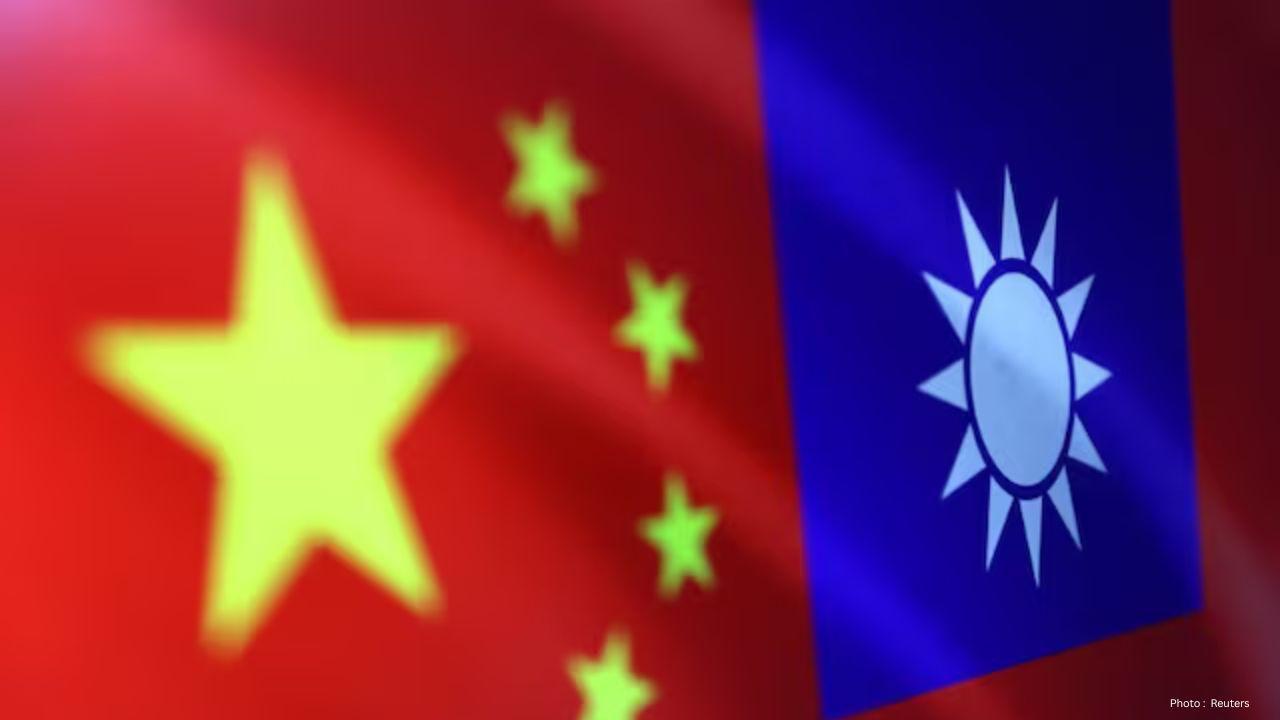
Taiwan’s top security official has issued a strong warning that China is concentrating more on expanding its power abroad than addressing the serious economic and social challenges it faces at home. Joseph Wu, head of Taiwan’s National Security Council, spoke at a public forum in Taipei on Tuesday, stressing that Taiwan will remain committed to defending itself against any form of aggression from Beijing while pursuing a peaceful yet firm approach in the region.
Wu noted that China has been increasing military and diplomatic pressure on Taiwan in recent years, including holding frequent military exercises near the island. These exercises, which often involve large-scale war games, have raised alarm in Taipei and among international observers, who worry about the potential for miscalculations that could escalate into conflict. Wu highlighted that despite China’s economic difficulties, the focus of the Chinese Communist Party leadership appears to be on political control and military assertiveness rather than addressing the pressing economic needs of its population.
He referred to the ongoing plenum, a key meeting of senior Chinese party officials, which has drawn attention globally. Wu pointed out that instead of taking steps to boost the economy or improve social conditions, Beijing recently expelled two top military leaders over alleged corruption. These officials were among the most senior officers to be purged in an anti-corruption campaign that began in 2023. Wu argued that such actions demonstrate that China prioritizes political loyalty and military discipline over the economic well-being of its citizens.
Wu also mentioned China’s massive military parade held on September 3 to mark the 80th anniversary of the end of World War Two. The parade, featuring advanced weaponry and thousands of troops, was widely covered by international media. Wu criticized the display, suggesting it highlighted China’s focus on projecting power and seeking global influence rather than addressing domestic challenges like slowing economic growth, rising unemployment, and social inequalities. According to Wu, the spectacle gave the impression that Beijing is more concerned with global dominance than with the immediate welfare of its population.
Taiwan, on the other hand, has consistently rejected China’s claims that the island is part of its territory. Beijing considers Taiwan a breakaway province and has repeatedly rejected Taiwan’s offers for dialogue under its own terms. Taiwan, a democratic society, insists that it has the right to govern itself independently. Wu emphasized that Taiwan’s government seeks to maintain the status quo across the Taiwan Strait, avoiding provocative actions but remaining prepared for defense. He stated that peace in the region must be ensured through strength, underscoring Taiwan’s commitment to strengthening its military capabilities and defense infrastructure.
The Taiwanese government has been gradually increasing its defense budget to improve readiness against potential threats from China. Wu highlighted that this approach is necessary to protect the sovereignty, democracy, and safety of Taiwan’s population. While Taiwan prefers peaceful engagement, it remains realistic about the risks posed by Beijing’s aggressive stance. Wu’s remarks reflect a broader concern among Taiwanese officials that China’s ambitions could lead to instability in the region if unchecked.
Analysts have noted that China’s economic challenges are significant. Despite being the world’s second-largest economy, China faces slowing growth, rising debt levels, and demographic pressures that could impact long-term stability. Wu argued that rather than focusing on domestic issues, Beijing is diverting resources and attention to military projects and political purges. He described the leadership’s actions as indicative of an expansionist mindset that prioritizes strategic power projection over economic problem-solving.
The Taiwan Strait remains one of the world’s most sensitive geopolitical regions. Increased Chinese military activity, including frequent incursions into Taiwan’s air defense identification zone, has heightened tensions. Wu’s statement reinforces Taiwan’s position that it will defend itself while seeking to avoid provocations that could escalate into a larger conflict. Taiwan has also been actively engaging with international partners to build support for its security and maintain regional stability.
Wu also criticized the way China manages its political and military leadership. The purge of top generals, while officially framed as an anti-corruption measure, is seen by analysts as a method to consolidate control and ensure loyalty within the military. Wu suggested that these actions signal to the world that China is prioritizing internal control and global power over solving pressing domestic problems, including economic slowdown and social inequality.
The security official stressed that Taiwan will continue to monitor China’s actions closely while enhancing its own defense capabilities. This includes investment in advanced weaponry, better training for military personnel, and strengthened intelligence operations to anticipate potential threats. Wu also mentioned that Taiwan’s commitment to democracy and self-governance remains unwavering, and the island will not accept attempts by China to interfere in its internal affairs.
International observers have noted that China’s focus on military power and expansionism comes at a time when the country faces significant economic challenges. Wu emphasized that Taiwan sees these priorities as a potential risk to regional peace and stability. By investing in defense and maintaining strong diplomatic ties with allies, Taiwan aims to deter any aggressive moves by Beijing while continuing to promote economic development and social progress within its own borders.
Wu’s comments also reflect a broader concern about China’s global ambitions. The country has been asserting its influence in multiple regions, including the South China Sea, Africa, and parts of Europe, often using a combination of economic pressure and military presence. Taiwan’s government views these actions as evidence of Beijing’s strategic priorities, which favor expansion and influence rather than addressing domestic economic and social issues.
Despite the challenges posed by China, Taiwan remains committed to maintaining peace and stability in the region. Wu made it clear that the island’s approach is not to provoke conflict but to ensure that it can defend itself effectively if necessary. By combining diplomatic efforts, military readiness, and international cooperation, Taiwan seeks to maintain a secure and stable environment for its citizens.
In conclusion, Taiwan’s top security official highlighted China’s focus on military expansion and political control over solving domestic economic problems. Joseph Wu stressed that Taiwan will remain vigilant and strengthen its defenses while continuing to seek peaceful engagement with China. The situation underscores the ongoing tension across the Taiwan Strait and the importance of international awareness and support for Taiwan’s security. Taiwan’s commitment to democracy, self-governance, and regional stability remains steadfast in the face of growing pressure from Beijing.









DAE Achieves Remarkable Growth in Q1 2026 With Record Revenue
Dubai Aerospace Enterprise announces impressive financial results for Q1 2026, reflecting a surge in

Price Increase for Sony PS5 in Southeast Asia Effective May 1
Sony announces a price increase for the PS5 across Southeast Asia starting May 1, 2026, impacting ga

Potential ‘Super El Niño’ in 2026: Understanding the Climate Risks
Could a Super El Niño emerge in 2026? Discover its implications and potential global climate impacts

Global Energy Crisis Intensifies: Markets React to Oil Supply Challenges
Markets are on edge as oil disruptions escalate, influencing prices and economic stability. Explore

Must-See Tourist Spots in London You Can't Overlook
Explore London's essential attractions, from royal landmarks to vibrant markets, ensuring an unforge

Ultimate Guide to Snagging Cheap Flights in 2026
Unlock the secrets to booking affordable flights in 2026 with insightful tips and strategies tailore




