Post by : Mina Rahman
This week, the Bank of Canada is anticipated to maintain its benchmark interest rate, concluding the year without adjustments due to surprising signs of economic robustness.
The last time the central bank adjusted its policy rate was in October, lowering it to 2.25 percent, with indications that this would likely signal the end of a prolonged easing cycle. Recent reports concerning inflation, production, and job growth have surpassed analysts' expectations, revealing that the Canadian economy has coped with U.S. tariffs more effectively than expected.
Following four rate cuts in 2025, totaling nine reductions since mid-2024, current market forecasts indicate that the central bank will hold rates steady for much of 2026, with the chance of a rate hike now outweighing that of another reduction.
Meanwhile, the U.S. Federal Reserve is projected to reduce its benchmark rate by a quarter point this week, decreasing the fed funds rate from 3.75 to 3.5 percent. Economists observe that the Fed's position remains restrictive, attributed to deteriorating labor conditions in the U.S.
Recent comments from members of the Fed suggest a possible cut, despite inflation rates staying above the target of 2 percent and delays in data due to the U.S. government shutdown.
As the new year approaches, uncertainty looms regarding the leadership of the U.S. central bank, with Kevin Hassett, a close associate of President Trump, speculated to be the top candidate, expected to advocate for reduced borrowing costs.
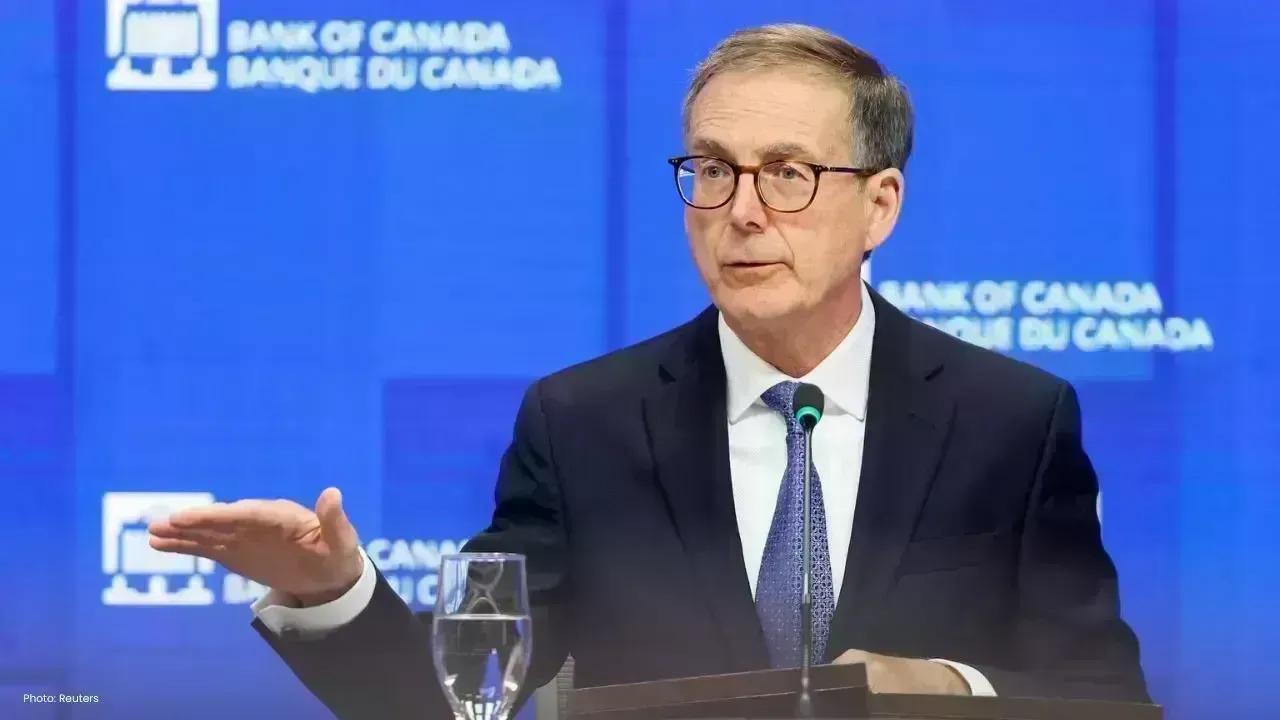
Contrastingly, conditions in Canada appear more straightforward. Bank of Canada Governor Tiff Macklem mentioned in October that rates were “around the right level” for maintaining inflation targets while allowing economic adjustments. He indicated that further easing would necessitate a significant downturn in the economic outlook.
Recent data supports this cautious approach, showing annual CPI inflation at 2.2 percent in October, with core inflation measures close to 3 percent. The job market reflects gradual recovery, adding 54,000 jobs in November and bringing the unemployment rate down to 6.5 percent.
Economic growth also stabilized in the third quarter, managing to avoid a technical recession. While much of the 2.6 percent annualized growth stemmed from lower imports, this figure was higher than predictions. Historical adjustments to GDP from 2022 to 2024 suggest stronger economic momentum than previously established.
Analysts assert that the firmer economic trend contributes to the persistence of core inflation and raise questions about the extent of prior easing if earlier data had been available.
As we look at 2026, risks remain, including a review of the USMCA trade agreement. However, policymakers stress that monetary policy is not the correct approach to address trade disruptions, highlighting the limitations of interest rates in facilitating adjustments within specific sectors.
The central bank's primary focus, they argue, is on mitigating spillover effects and supporting overall economic adjustment, rather than responding directly to tariffs or trade uncertainties.








Price Increase for Sony PS5 in Southeast Asia Effective May 1
Sony announces a price increase for the PS5 across Southeast Asia starting May 1, 2026, impacting ga

Potential ‘Super El Niño’ in 2026: Understanding the Climate Risks
Could a Super El Niño emerge in 2026? Discover its implications and potential global climate impacts

Global Energy Crisis Intensifies: Markets React to Oil Supply Challenges
Markets are on edge as oil disruptions escalate, influencing prices and economic stability. Explore

Must-See Tourist Spots in London You Can't Overlook
Explore London's essential attractions, from royal landmarks to vibrant markets, ensuring an unforge

Ultimate Guide to Snagging Cheap Flights in 2026
Unlock the secrets to booking affordable flights in 2026 with insightful tips and strategies tailore

The Impact of Consistent Small Investments on Wealth Building
Discover how investing small amounts regularly can positively transform your financial future over t




