Post by : Anees Nasser
Historically, a phone call promised a genuine human connection. However, the boundaries around what constitutes a human voice are faltering.
Today, advanced technology can produce voices imbued with breath, emotion, and regional accents—perfectly mimicking human speech. Machines can now deliver messages that feel warm, urgent, or concerned, and they can imitate real people's voices with uncanny precision.
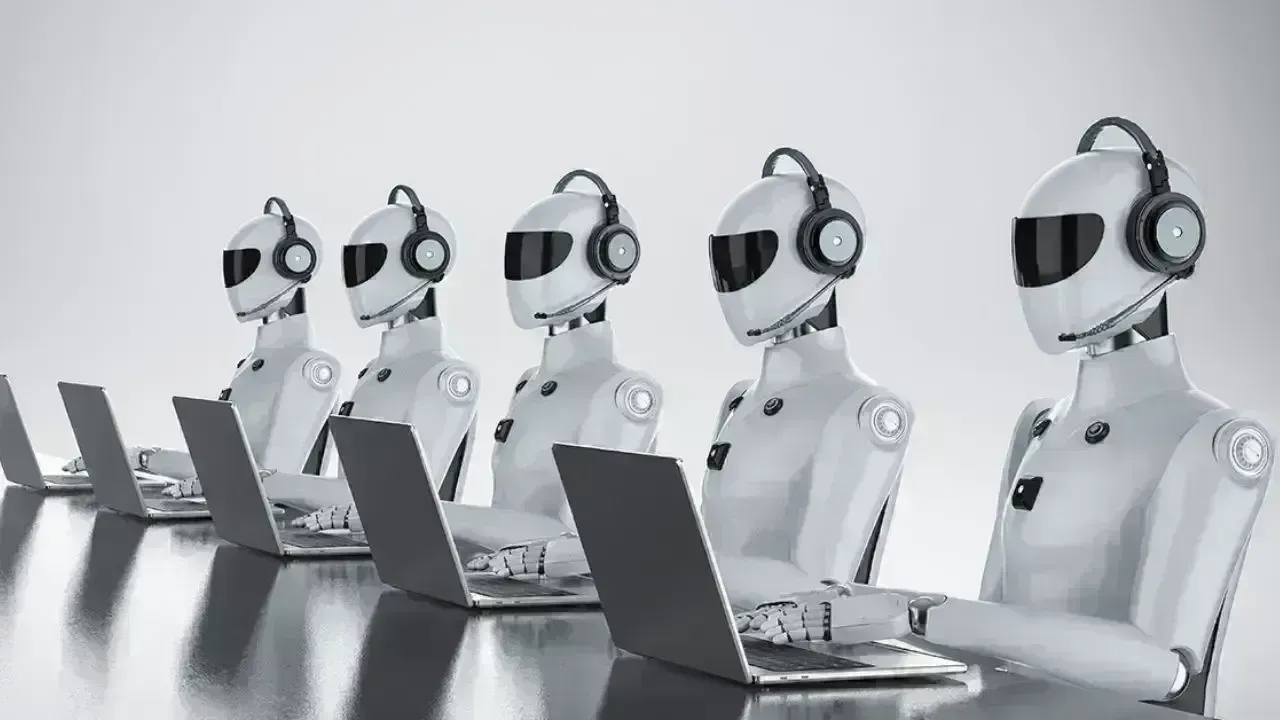
This technology is already infiltrating customer service systems.
When a service update or reminder call comes in, a vital question surfaces:
Is this voice a real person, or simply a program?
AI voice cloning encompasses technology that mimics human speech through artificial intelligence. By analyzing voice data, these systems can replicate speech patterns, emotional tones, and pronunciations with remarkable fidelity.
Crucially, this technology synthesizes speech on-the-fly rather than simply replaying recorded voices.
This ability to generate speech dynamically allows for:
Adaptive responses to inquiries
Contextual awareness during conversations
Real-time emotional tone adjustments
Language fluidity
Ongoing engagement
The interaction feels less robotic and more human-like.
The system analyzes speech to identify mathematical patterns, focusing on:
Pitch modulation
Speed and pacing
Emphasis and inflection
Moments of silence
Stress responses
Emotional variations
Once the AI is trained, it can convincingly recreate that voice conveying messages the original speaker never articulated.
Running customer support operations can be costly.
Firms invest heavily in call centers, staff training, and resources. AI voice systems offer a way to significantly cut these expenses.
Businesses opt for voice clones because they:
Can scale rapidly
Are available 24/7
Don’t require salaries or rest
Remain calm irrespective of conditions
Follow prescribed, secure scripts
Can manage multiple calls simultaneously
Are immune to fatigue
From a corporate standpoint, it appears to be a flawless solution.
Yet, from a consumer's perspective, it raises significant concerns.
Conventional automated systems often leave customers frustrated.
Press one. Press two. Repeat.
Voice cloning creates a more conversational atmosphere.
This approach can address:
Natural inquiries
Customer grievances
Unplanned dialogues
Language changes
Emotional responsiveness
Such advancements lead companies to ensure its widespread adoption.
The voice resonates as human.
The patience mirrors humanity.
The speed exceeds human capabilities.
The comfort that voice cloning provides is also its peril.
Humans inherently trust familiar voices.
Recognizable voices decrease natural defenses.
A serene tone enhances compliance.
A comforting accent fosters safety.
When a machine sounds like someone known, skepticism diminishes.
In customer service, consumers often expect reliability.
When a voice states it is “from your bank” or “providing an update”—that trust instantly activates.
While people learn to discern fake imagery, auditory deception poses a greater challenge.
The human brain has evolved to confer trust in spoken language.
When we hear:
Breath patterns
Emotional intonations
Natural pauses
we often assume authenticity.
Voice cloning utilizes this psychological shortcut.
It feels genuine because our nature encourages us to believe it is real.
Criminals are quick to exploit emerging technologies.
Voice cloning scams are increasingly prevalent worldwide.
Some common tactics include:
Imitating family members
Pretending to be company staff
Duplicating the voices of managers
Mimicking officials
Fabricating emergency scenarios
A scammer might clone a loved one's voice and make a distressing call.
The victim recognises familiarity.
Panic sets in, swiftly overshadowing logical thought.
Funds transfer rapidly.
The scam thrives.
In the past, identity theft revolved around physical documents.
Now, it revolves around voice.
Voices have become akin to passwords.
And they can be stolen without your awareness.
Trust in communication is faltering.
People increasingly question:
Unknown callers
Automated responses
Recorded notifications
Synthetic voices
This growing skepticism breeds an increase in communication anxiety.
The phone no longer feels secure.
When voices sound “too perfect,” they evoke discomfort.
Society risks developing a form of digital paranoia.
Voice cloning, while powerful, needs responsible application.
Adopting ethical practices requires:
Consent from individuals whose voices are utilized
Transparent communication to users
Avoidance of impersonation
Robust fraud deterrents
Clear policies regarding usage
User rights to opt-out
If a voice is synthetic, users must be informed; silence in this regard is deceptive.
When organizations clarify,
“This call features AI-generated voice assistance,”
they help preserve trust. Lack of transparency, however, risks credibility.
Individuals must exercise caution in their phone conversations.
Practical measures include:
Skepticism towards urgent requests via phone
Verifying requests through official channels
Hanging up and returning calls using known contact numbers
Establishing verification codes within families
Avoiding the sharing of sensitive information
Managing emotional responses during conversations
Questioning any sense of financial urgency
The era of automatic trust has concluded.
Many individuals lack an understanding of the advanced nature of AI-generated voices.
This topic remains unaddressed in educational systems.
There’s a pressing need to ensure digital literacy encompasses audio awareness, rather than just online safety.
Regulatory measures are progressing slowly, while risks escalate swiftly.
Regulators must:
Make identity voice cloning a criminal offense
Impose disclosure regulations
Establish penalties for misuse
Set standards for authentication
Create consent mechanisms
Without legal frameworks, chaos can ensue, and voice communication is too intimate to be left unguarded.
Internal communications will not remain untouched.
Voice cloning could be applied to:
Summaries of meetings
Operational training
Informational dialogues
Customer communications
However, it may also be misused for:
Fabricated management directives
Internal deceit
Impersonation
Corporate manipulation
Organizations need to implement rigorous voice verification systems, akin to password security.
Will we normalize the use of synthetic voices? Likely, as human adaptability is inherent.
Yet, this transition will come packed with anxiety.
People may become accustomed to uncertainty about speech authenticity.
This doesn’t signal progress, but rather a loss of what was once certain.
Technological developments should serve to enhance human experience, not obfuscate it.
Voice cloning bears the potential to assist:
Individuals with disabilities
Support for the elderly
Language accessibility
Emergency communications
Conversely, it could lead to:
Erosion of identity
Exploitation of trust
Perpetration of fraud
Even greater fear
Ultimately, the technology itself is neutral; however, its applications can be divisive.
Society remains unprepared—legally, socially, and emotionally—for voice cloning's impact.
This technology has crept in stealthily, masquerading as convenience.
Yet, beneath the surface lies a landscape filled with complications.
Until stringent safeguards are established, trust will continue to wane.
And as trust fades...
So does reliable communication.
Voice cloning is poised to be one of the decade’s most crucial discussions in technology.
Because when humanity can no longer depend on spoken voices...
What truly remains precious?
DISCLAIMER
This article aims to provide educational insights only. It should not be construed as legal or technical advice. Readers are encouraged to consult with professionals for security-related issues and to stay informed on the evolving regulations surrounding AI technologies.










Anticipated Dates for UAE Eid Al Adha 2026 Unveiled by Astronomical Experts
Experts predict Eid Al Adha 2026 in the UAE to start on May 27, prompting early holiday planning amo

DAE Achieves Remarkable Growth in Q1 2026 With Record Revenue
Dubai Aerospace Enterprise announces impressive financial results for Q1 2026, reflecting a surge in

Price Increase for Sony PS5 in Southeast Asia Effective May 1
Sony announces a price increase for the PS5 across Southeast Asia starting May 1, 2026, impacting ga

Potential ‘Super El Niño’ in 2026: Understanding the Climate Risks
Could a Super El Niño emerge in 2026? Discover its implications and potential global climate impacts

Global Energy Crisis Intensifies: Markets React to Oil Supply Challenges
Markets are on edge as oil disruptions escalate, influencing prices and economic stability. Explore

Must-See Tourist Spots in London You Can't Overlook
Explore London's essential attractions, from royal landmarks to vibrant markets, ensuring an unforge




