Post by : Saif Nasser
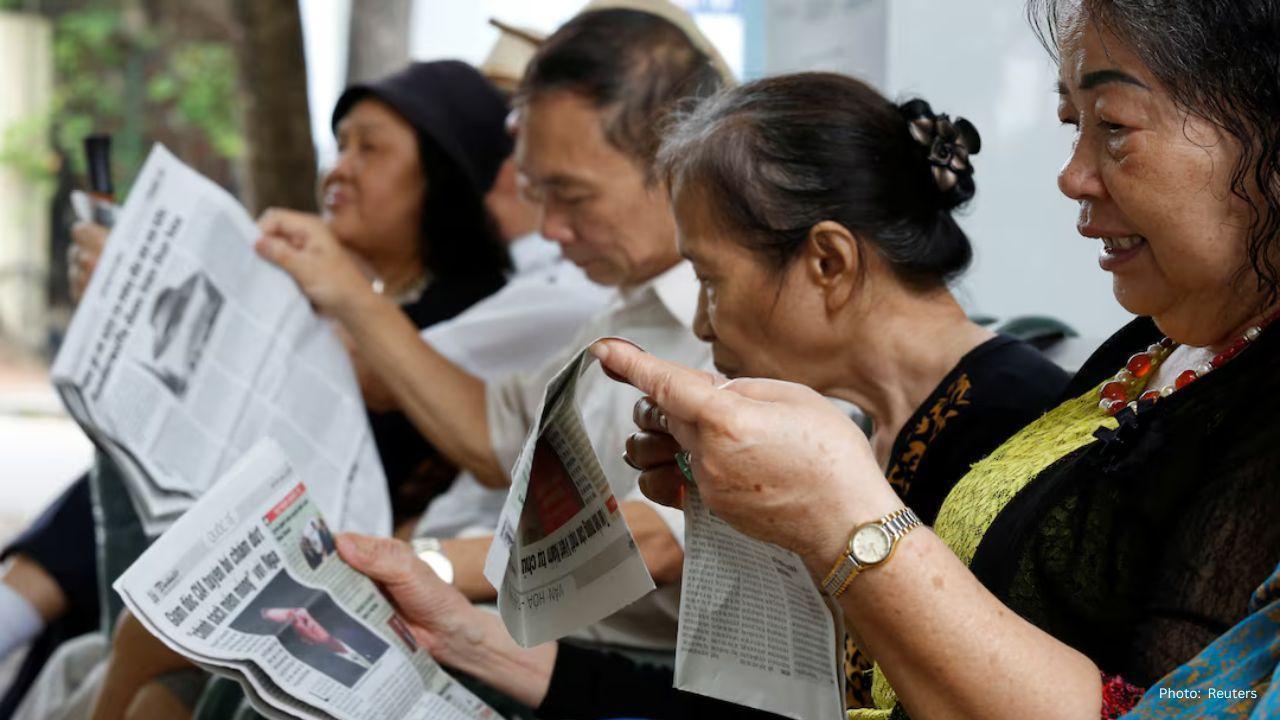
Vietnam’s parliament has approved major changes to the country’s press and state secrets laws, raising serious concerns among press freedom advocates. The new rules, adopted on Wednesday, make it harder for journalists to protect the identities of their sources and could increase legal risks for reporting.
Under the revised press law, which will take effect in July, journalists may be required to reveal sources at the request of authorities investigating any crime. Previously, reporters could only be asked to disclose sources in cases of “serious crimes,” and only judges had the authority to make such requests. The changes now allow the public security ministry and local police to order source disclosures, expanding the scope of government control over the media.
Aleksandra Bielakowska from Reporters Without Borders said the reforms are “an appalling further restriction to the legal framework governing press freedom in Vietnam.” She added that the new measures could make Vietnam “an almost impossible place for journalists to report freely.” Vietnam currently ranks 173rd out of 180 countries in the Reporters Without Borders World Press Freedom Index.
The press law changes come amid a broader clampdown on media in Vietnam. In recent months, the government has withdrawn passports from foreign journalists, temporarily banned Telegram messaging services, blocked the printed edition of The Economist, and expanded the powers of the public security ministry. Domestic media are already under state control, while foreign reporters face heavy surveillance, trip approval requirements, and restricted access to press events.
Bielakowska also highlighted that at least 28 journalists are currently imprisoned in Vietnam, often in harsh conditions, “simply for doing their jobs.”
In a separate move, Vietnam’s lawmakers amended the state secrets law, broadening the categories of information considered secret. The law, set to take effect in March, now includes additional state details such as leaders’ overseas programs, state compensation, and settlements of international investment disputes. Disclosing state secrets is punishable by fines and prison sentences, giving authorities even more tools to control information.
Press freedom advocates warn that together, these legal changes represent a serious threat to independent journalism in Vietnam. The amendments give the government additional power to suppress critical reporting and limit transparency, further tightening control over an already restricted media landscape.
These reforms come at a time when Vietnam faces increased scrutiny over human rights and media freedom. Observers fear that the new laws will discourage investigative reporting, limit public access to information, and reinforce state control over both domestic and foreign media operations.
In short, Vietnam’s updated press and state secrets laws mark a significant step in restricting journalistic freedom, giving authorities broad powers to demand source disclosures and classify more information as secret, which could have lasting effects on the country’s media landscape.






Mattel Revives Masters of the Universe Action Figures Ahead of Film Launch
Mattel is reintroducing Masters of the Universe figures in line with its upcoming film, tapping into

China Executes 11 Members of Criminal Clan Linked to Myanmar Scam
China has executed 11 criminals associated with the Ming family, known for major scams and human tra

US Issues Alarm to Iran as Military Forces Deploy in Gulf Region
With a significant military presence in the Gulf, Trump urges Iran to negotiate a nuclear deal or fa

Copper Prices Reach Unprecedented Highs Amid Geopolitical Turmoil
Copper prices soar to all-time highs as geopolitical tensions and a weakening dollar boost investor

New Zealand Secures First Win Against India, Triumph by 50 Runs
New Zealand won the 4th T20I against India by 50 runs in Vizag. Despite Dube's impressive 65, India