Post by : Saif Nasser
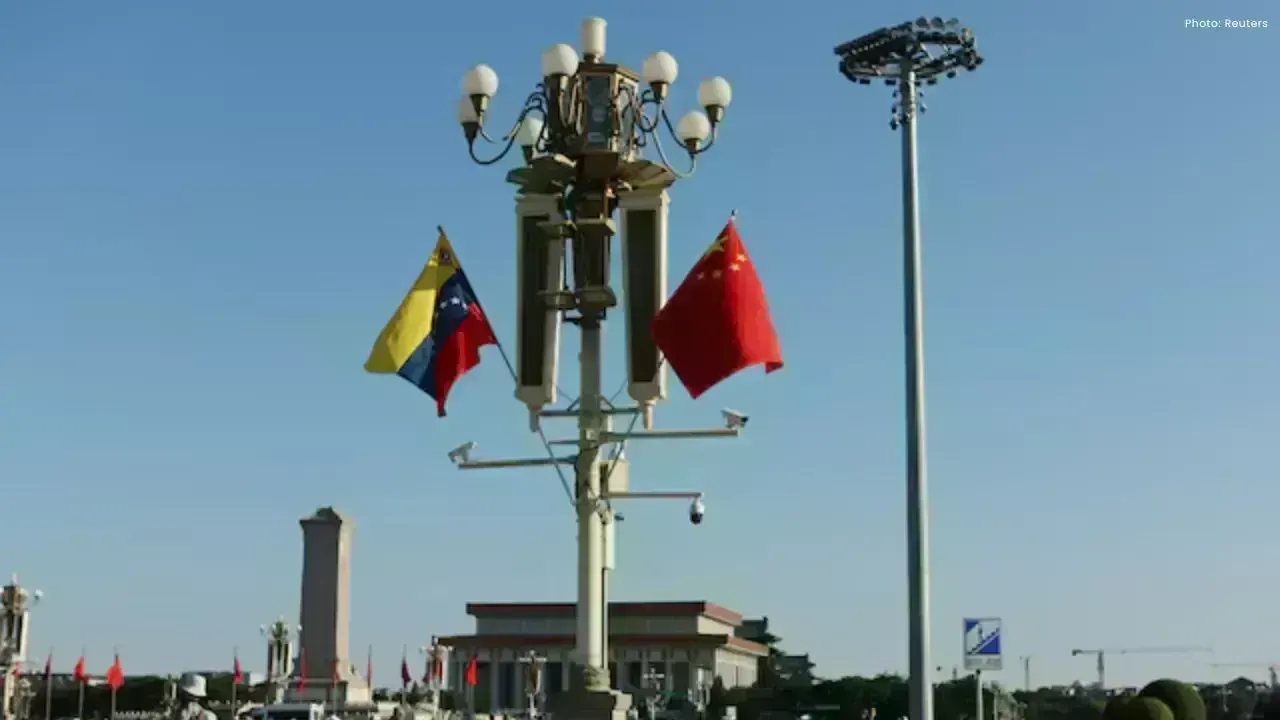
Venezuela’s long financial relationship with China is once again in the global spotlight, after recent U.S. actions disrupted the way Venezuela has been paying back its debt. At the heart of this issue lies oil, Venezuela’s most valuable resource and its main source of income. Understanding how much Venezuela owes China, and why oil is so deeply involved, helps explain the wider political and economic tensions around the country.
Over the last two decades, China became one of Venezuela’s biggest financial supporters. According to research group AidData, Chinese government-linked lenders committed about 106 billion dollars in loans to Venezuela between 2000 and 2018. These loans were mostly given when oil prices were high and Venezuela was seen as a strong energy partner. However, after years of economic crisis, mismanagement, and falling oil production, Venezuela defaulted on its debts in 2017.
Since then, the exact amount Venezuela still owes China has been hard to pin down. Estimates vary because Venezuela has not released clear debt figures for many years. AidData and investment bank Societe Generale estimate the remaining debt at around 10 billion dollars. JP Morgan places it slightly higher, between 13 and 15 billion dollars. What is clear is that China remains Venezuela’s largest single creditor.
One major reason oil is involved is because many of these loans were “oil-backed.” This means Venezuela agreed to repay China not mainly in cash, but by shipping crude oil and fuel instead. Most of these deals were arranged through China Development Bank and Venezuela’s state oil company, PDVSA. Even after Venezuela stopped paying many other creditors due to sanctions and default, oil shipments to China continued.
Under these arrangements, Venezuela sent oil cargoes to China, and the money earned from selling that oil went into accounts controlled by Beijing. From there, the funds were used to pay interest, and possibly some parts of the debt. PDVSA officials have said China allowed Venezuela a grace period starting in 2019, meaning the country did not have to pay back the main loan amounts right away. Instead, debt payments were covered through oil deliveries.
The lack of reliable data has made the situation confusing for outside observers. Venezuela has not published full debt statistics for decades. Its central bank last released partial figures in 2019. The International Monetary Fund has also not completed a full economic review of Venezuela since 2004. As a result, analysts have had to rely on oil export data, internal documents, and public statements to understand what is happening.
Recent U.S. actions have added another layer of uncertainty. Washington has taken control of proceeds from Venezuelan oil exports, saying the money will be held in a foreign account it oversees. For China to keep getting paid, the U.S. would need to send part of these funds to Beijing. However, statements from U.S. officials suggest this is unlikely, given ongoing political tensions.
China does have other interests in Venezuela beyond debt repayment. Its state oil company, CNPC, operates joint ventures with PDVSA, including one that produces over 100,000 barrels of oil per day. How these operations will be treated under U.S. control remains unclear.
In the end, Venezuela’s debt to China shows how deeply oil, politics, and finance are linked in global affairs. Oil allowed Venezuela to borrow heavily in the past, and it became the main way the country kept paying China after default. Now, with U.S. involvement reshaping oil flows, the future of this repayment system is uncertain. What happens next will not only affect Venezuela and China, but also the balance of power in global energy markets.






Price Increase for Sony PS5 in Southeast Asia Effective May 1
Sony announces a price increase for the PS5 across Southeast Asia starting May 1, 2026, impacting ga

Potential ‘Super El Niño’ in 2026: Understanding the Climate Risks
Could a Super El Niño emerge in 2026? Discover its implications and potential global climate impacts

Global Energy Crisis Intensifies: Markets React to Oil Supply Challenges
Markets are on edge as oil disruptions escalate, influencing prices and economic stability. Explore

Must-See Tourist Spots in London You Can't Overlook
Explore London's essential attractions, from royal landmarks to vibrant markets, ensuring an unforge

Ultimate Guide to Snagging Cheap Flights in 2026
Unlock the secrets to booking affordable flights in 2026 with insightful tips and strategies tailore

The Impact of Consistent Small Investments on Wealth Building
Discover how investing small amounts regularly can positively transform your financial future over t