Post by : Saif Nasser
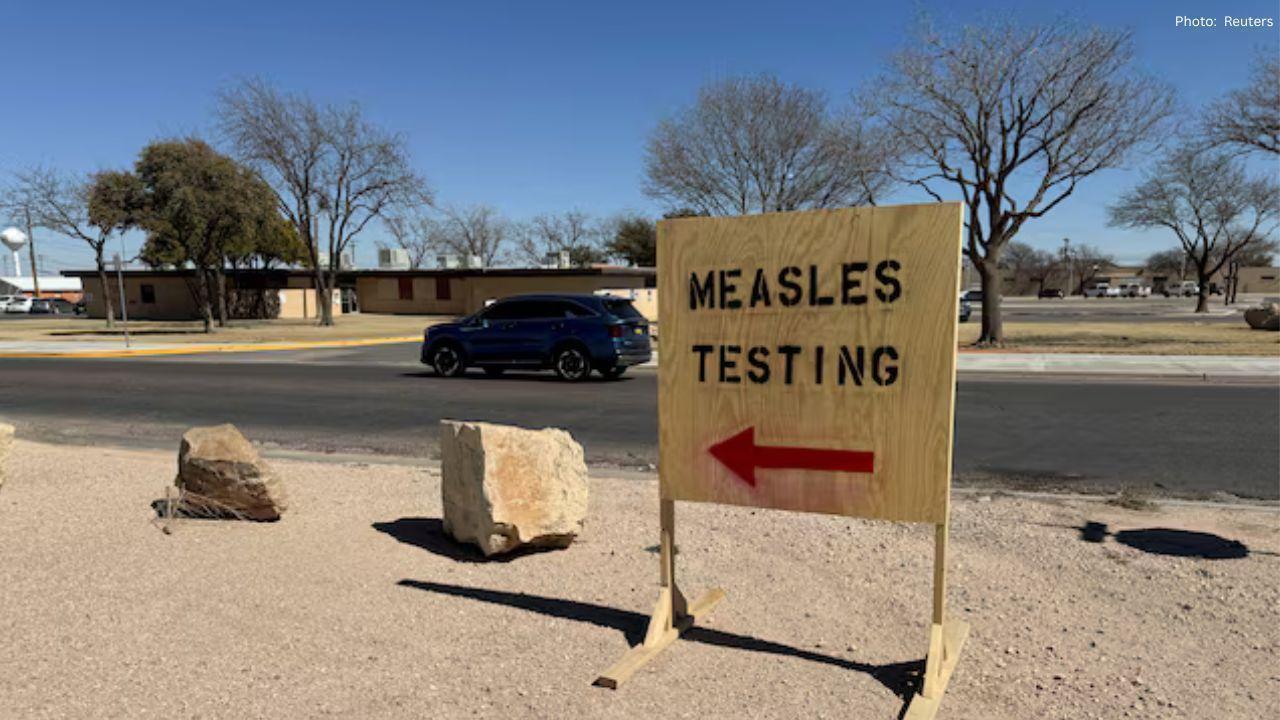
The United States is working hard to keep its long-held status as a country that has eliminated measles, even as infections increase sharply across several states. Health officials are now racing against time and data gaps to show that recent outbreaks are not connected and do not signal a return of the disease as a permanent threat.
Measles is considered eliminated in a country when there is no local spread of the same virus strain for at least one year. The United States achieved this status in 2000. However, new outbreaks in Texas, South Carolina, Utah, Arizona, and other areas have raised serious concerns.
According to the Centers for Disease Control and Prevention, weekly measles cases have increased five times compared to earlier periods. In total, more than 2,000 confirmed cases have been reported, the highest number seen in three decades. This has triggered a review by regional health authorities to decide whether the United States can keep its elimination status.
A major outbreak began in Texas in early 2025 and spread to other states. Later, separate outbreaks appeared along the Arizona-Utah border and in South Carolina. To keep its status, the United States must prove these newer cases are not linked to the Texas outbreak and were instead brought in by travelers from other countries.
Health experts say this is not an easy task. Tracking measles depends on patient interviews, travel history, and genetic testing of virus samples. Many patients provide incomplete information, and not all infections are reported. This makes it difficult to clearly map how the virus is spreading.
Scientists are now using advanced genetic testing to compare the full virus code from different outbreaks. Early findings suggest that the virus strains found in Utah and South Carolina are different enough from the Texas strain to be considered unrelated. The CDC says there is currently no clear evidence connecting the outbreaks.
Still, experts warn that gaps in data could hide links between cases. Some communities affected by measles do not fully trust public health authorities and may avoid testing or contact tracing. This increases the risk that infections go unnoticed and connections are missed.
Public health specialists say losing measles elimination status would be a serious blow. It would signal deeper problems in vaccination coverage, disease tracking, and public trust. Canada recently lost its measles-free status after failing to stop a long outbreak, showing how quickly progress can be undone.
Officials stress that vaccination remains the strongest defense. Measles is highly contagious but preventable with routine immunization. When vaccination rates fall, the virus finds new opportunities to spread.
In the coming months, health authorities will review all available evidence before making a final decision. The outcome will not only affect the United States’ global health standing but also serve as a warning about the importance of strong public health systems and community cooperation.










The Impact of Consistent Small Investments on Wealth Building
Discover how investing small amounts regularly can positively transform your financial future over t

7.5 Magnitude Earthquake Strikes Japan, Tsunami Alerts Issued
Japan experiences a hefty 7.5 quake, prompting tsunami alerts and safety measures. Stay updated on a

Reopening of the Strait of Hormuz: New Regulations to Impact Global Trade
Iran reopens the strategic Strait of Hormuz with new regulations affecting oil transport and global

Top 10 Must-See Attractions in NYC for First-Time Explorers
Discover essential experiences for first-time visitors to NYC, including attractions, culture, and i

Starbucks Engages Boyu Capital for Major Chinese Expansion
Starbucks teams up with Boyu Capital, selling a majority stake to boost growth and adapt to the Chin

Three Individuals Charged in Massive Meth Trafficking Case in Malaysia
In Malaysia, a married couple and another suspect are charged with trafficking 510kg of meth, facing