Post by : Raina Nasser
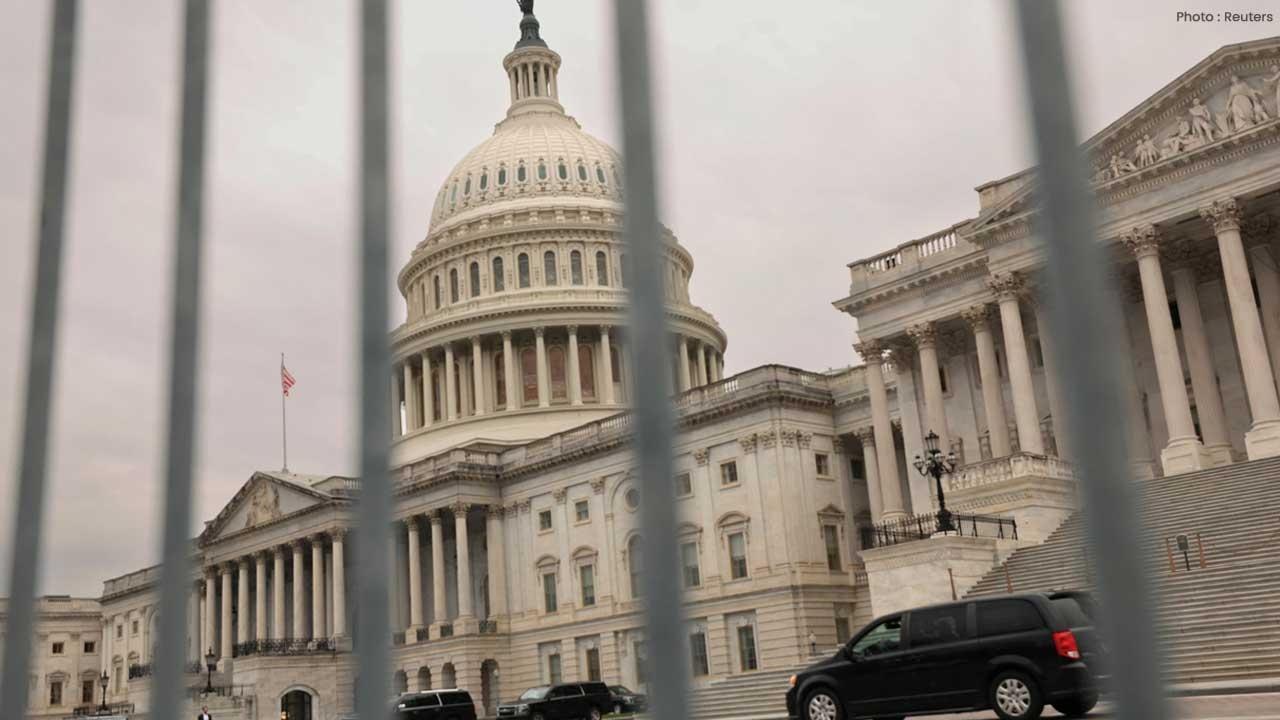
Washington has slid deeper into a political impasse as the US government shutdown moves into its fourth week, leaving many federal employees without pay and raising fears among families who rely on government-supported health programs.
Republican leaders launched a fierce message early in the dispute, accusing Democrats of seeking to finance health coverage for undocumented immigrants. That narrative was amplified by President Donald Trump, Vice President JD Vance, and House Speaker Mike Johnson. Independent fact-checks, however, noted that the specific benefits at issue do not extend to undocumented immigrants, even as the claim gained traction with conservative constituencies.
Democrats have countered with an appeal focused on protecting families and continuity of care. Their demand is straightforward — restore and extend health insurance subsidies that help millions afford coverage, then reopen the government. A Kaiser Family Foundation survey shows broad public backing for keeping those subsidies past 2025, a point Democrats cite to bolster their position.
The human consequences are mounting: furloughed or unpaid federal workers, beneficiaries anxious about losing assistance, and ordinary households facing uncertainty over prescriptions and care access as the stalemate persists.
Republicans have reframed their defense around procedure, saying they offered a "clean continuing resolution" and blaming Senate rules and the filibuster for blocking a quick resolution. Political analysts note that procedural explanations tend to have limited resonance with voters, who are more immediately concerned with paychecks and essential services than legislative intricacies. One observer compared trying to sell filibuster mechanics to the public to unpacking a dense legal appendix.
Public sentiment is mixed and fluid. A Reuters/Ipsos poll indicated half of Americans assign blame to Republicans, while 43% fault Democrats. Separate findings from Hart Research suggest a majority view Trump and his party as responsible. Meanwhile, President Trump's approval has ticked modestly, though analysts warn that sustained disruption could quickly alter public attitudes.
Commentators argue Democrats currently occupy the stronger emotional ground by centering health and economic security, whereas Republicans are leaning on procedural arguments and presidential popularity to maintain support. The longer the shutdown continues, the greater the risk it poses to the party that holds national power across the White House and Congress.
Both sides are already framing the standoff with an eye to the 2026 midterms. Democrats cast the impasse as evidence that Republican governance can produce hardship for working families; Republicans frame it as leverage to press for spending limits and tighter border controls.
Ultimately, the shutdown has become more than a budget dispute: it is a high-stakes confrontation between competing policy priorities and political strategies, with the practical toll borne by millions of Americans caught in the middle.









Mattel Revives Masters of the Universe Action Figures Ahead of Film Launch
Mattel is reintroducing Masters of the Universe figures in line with its upcoming film, tapping into

China Executes 11 Members of Criminal Clan Linked to Myanmar Scam
China has executed 11 criminals associated with the Ming family, known for major scams and human tra

US Issues Alarm to Iran as Military Forces Deploy in Gulf Region
With a significant military presence in the Gulf, Trump urges Iran to negotiate a nuclear deal or fa

Copper Prices Reach Unprecedented Highs Amid Geopolitical Turmoil
Copper prices soar to all-time highs as geopolitical tensions and a weakening dollar boost investor

New Zealand Secures First Win Against India, Triumph by 50 Runs
New Zealand won the 4th T20I against India by 50 runs in Vizag. Despite Dube's impressive 65, India