Post by : Mina Rahman
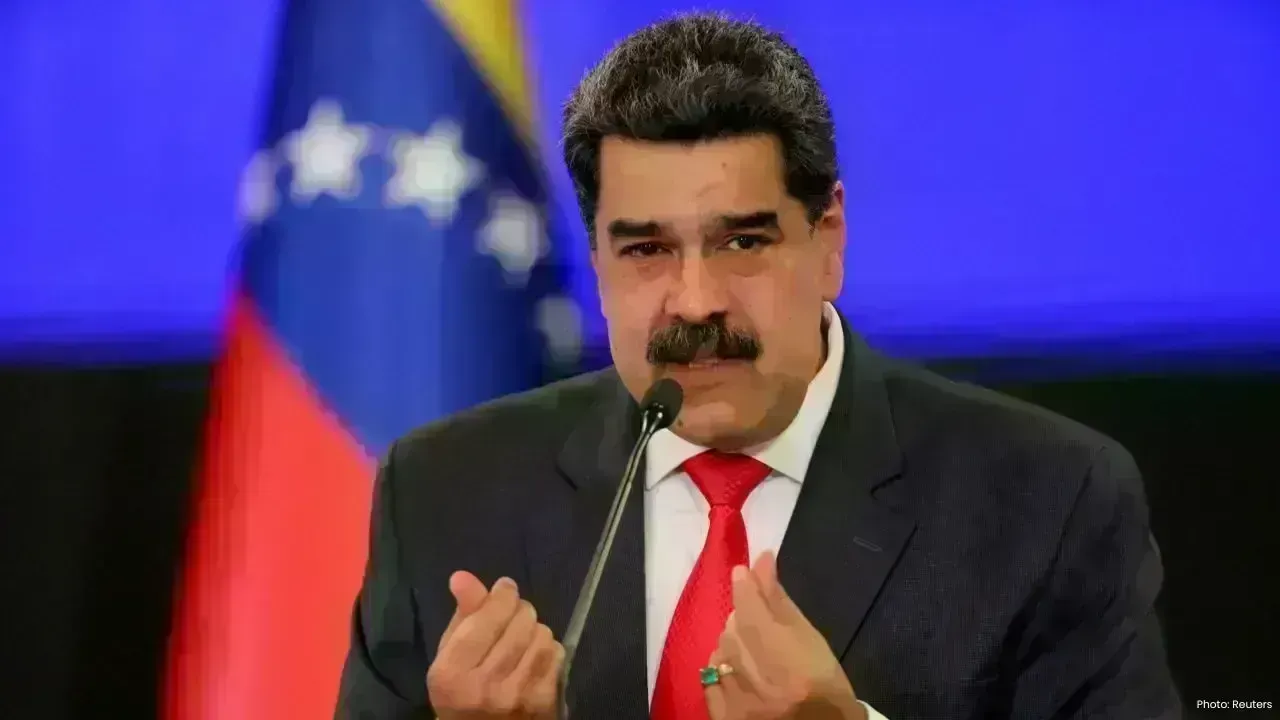
The U.S. Treasury Department has introduced a new set of sanctions focusing on several relatives and associates of Venezuelan President Nicolas Maduro, indicating a marked escalation in pressure directed at the Caracas government. This move coincides with an uptick in U.S. military activity in the waters off Venezuela, following aggressive maneuvers near the nation's coastline. Recent U.S. military operations have included assaults on vessels that reportedly caused over 100 deaths, the confiscation of a Venezuelan oil tanker, and the enforcement of a naval blockade on ports under U.S. sanctions.
As noted by the Treasury Department, the fresh sanctions target seven individuals linked to Maduro’s nephew, Malpica Flores, known as one of the so-called “narco-nephews” of the Venezuelan leader. Also included is Panamanian businessman Ramon Carretero. Washington claims that these actions aim to dismantle the networks that, in its view, support Maduro’s “illegitimate dictatorship.” The U.S. has consistently stated that its initiatives target corruption and drug trafficking as part of a broader strategy against the Venezuelan administration.
While the U.S. cites drug trafficking as the main justification for its military and economic measures, critics contend that the focus is increasingly shifting toward Venezuela’s vast oil reserves—the largest globally. Homeland Security adviser Stephen Miller, a prominent figure in the Trump administration, has made statements asserting that Venezuela’s oil “belongs to Washington,” labeling past nationalizations of the oil sector as “the largest theft of American wealth and property.” These comments have sparked debates over whether U.S. motivations are largely driven by control of natural resources rather than anti-drug initiatives.
President Maduro has vociferously condemned the sanctions and U.S. military maneuvers, denouncing them as efforts to enact regime change and to seize Venezuela’s oil. He insists that the United States is creating a false narrative to legitimize further intervention in his country, accusing the Trump administration of orchestrating an “eternal war” against Venezuela to destabilize his government and undermine its sovereignty over national assets.
In parallel, the European Union continues to enforce targeted sanctions against Venezuela, extending measures initially introduced in 2017 through 2027. These sanctions involve travel bans, asset freezes, and an arms embargo aimed at addressing human rights violations and state repression.
The latest U.S. sanctions represent a further escalation of international pressure on Maduro’s regime, which grapples with severe economic challenges, social upheaval, and rising dissatisfaction among Venezuelans. With military operations in progress and diplomatic strains intensifying, the scenario highlights the intricate dynamics between geopolitical interests, economic resources, and humanitarian issues in the region.






DAE Achieves Remarkable Growth in Q1 2026 With Record Revenue
Dubai Aerospace Enterprise announces impressive financial results for Q1 2026, reflecting a surge in

Price Increase for Sony PS5 in Southeast Asia Effective May 1
Sony announces a price increase for the PS5 across Southeast Asia starting May 1, 2026, impacting ga

Potential ‘Super El Niño’ in 2026: Understanding the Climate Risks
Could a Super El Niño emerge in 2026? Discover its implications and potential global climate impacts

Global Energy Crisis Intensifies: Markets React to Oil Supply Challenges
Markets are on edge as oil disruptions escalate, influencing prices and economic stability. Explore

Must-See Tourist Spots in London You Can't Overlook
Explore London's essential attractions, from royal landmarks to vibrant markets, ensuring an unforge

Ultimate Guide to Snagging Cheap Flights in 2026
Unlock the secrets to booking affordable flights in 2026 with insightful tips and strategies tailore




