Post by : Saif Nasser
The United States has decided to strengthen its fight against drug trafficking in Latin America. The Pentagon announced on Friday that it is setting up a new counter-narcotics joint task force to oversee and lead military operations in the region. This decision comes as U.S. forces have already started attacking suspected drug boats in the Caribbean, raising questions about legality and military power.
A New Mission to Stop Drug Trafficking
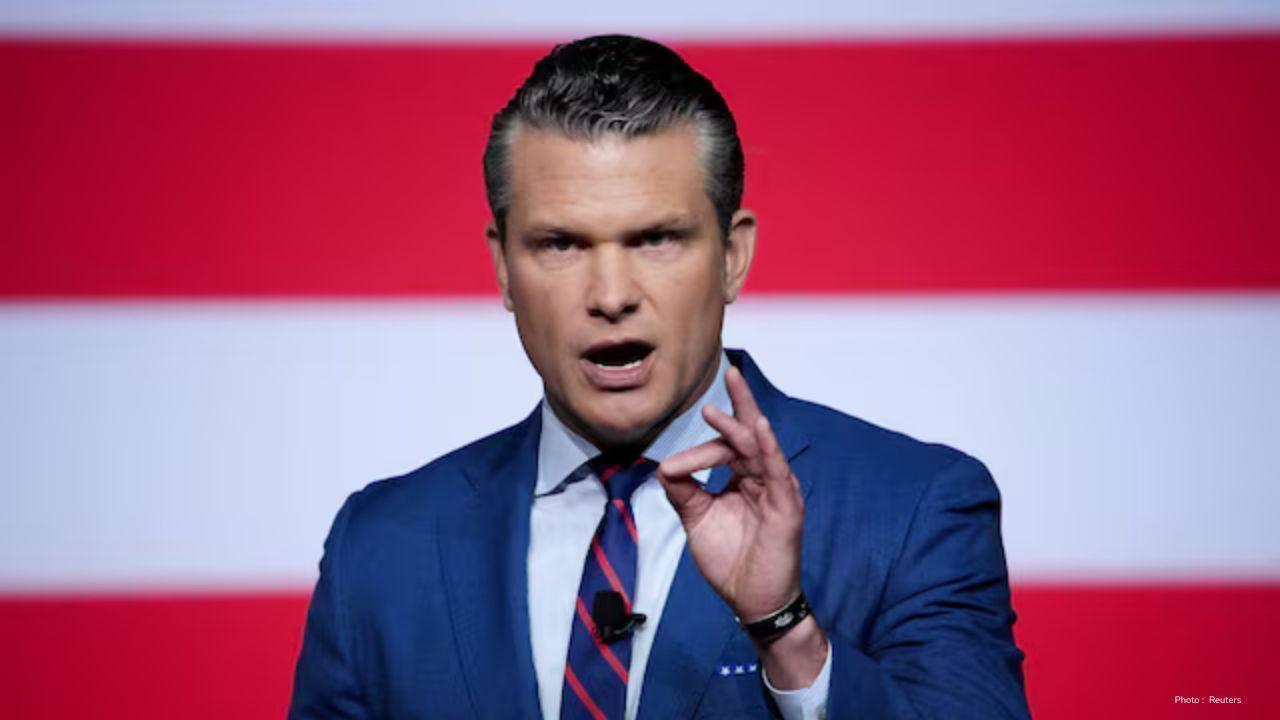
Defense Secretary Pete Hegseth said that this new task force has one main goal — to crush the drug cartels and protect the American people. Speaking through a post on social media platform X, he said, “The message is clear: if you traffic drugs toward our shores, we will stop you cold.”
The Pentagon said this task force will be led by the II Marine Expeditionary Force (II MEF), a strong Marine Corps unit based in Camp Lejeune, North Carolina. This unit is known for its ability to move quickly and handle major overseas operations. It will now take charge of coordinating U.S. military efforts to stop illegal drug movement across Latin America.
Admiral Alvin Holsey, head of the U.S. Southern Command, said the new team will “enhance our ability to detect, disrupt, and dismantle illicit trafficking networks faster and at greater depth — together with our U.S. and partner-nation counterparts.”
In simple words, this means the U.S. will work more closely with Latin American countries to track drug traffickers, stop their ships, and destroy their operations.
Focus on Maritime Operations
Marine Lieutenant General Calvert Worth, who leads the II Marine Expeditionary Force and will now head the new task force, explained that the focus will mainly remain on sea operations. “This is principally a maritime effort,” he said. “Our team will use patrol ships, aerial surveillance, and intelligence sharing to counter illicit traffic, uphold the rule of law, and better protect communities at home.”
According to reports, the U.S. military has already attacked and destroyed at least four boats suspected of smuggling drugs in the Caribbean Sea. These attacks have killed around 21 people.
Legal and Political Concerns
While the U.S. government says these operations are meant to protect the country from drugs, many experts and lawmakers are raising legal concerns.
Democratic lawmakers and several legal experts believe that President Donald Trump’s administration may be stretching the limits of the law. The concern is that the government is carrying out lethal military strikes without enough evidence or explanation.
So far, the Pentagon has not publicly shared what proof it has against the destroyed vessels or the people on board. It has also not revealed what kind of weapons were used in these attacks or how much drugs were found.
Some former military lawyers say that these killings may not meet the law of war standards. Normally, before attacking a target, the military must try non-lethal means first, such as firing warning shots or attempting to capture the suspects alive.
But in these operations, the drug boats were blown up directly, which raises questions about whether the right legal steps were followed.
Trump’s Expanding Military Policy
President Trump has taken a tough stance against drug cartels and illegal trafficking. He has even considered allowing military strikes inside Venezuela, where some drug operations are believed to be based.
However, this move would be a major shift in U.S. policy, as it could lead to direct confrontation with another nation’s territory — something that would be viewed as highly controversial under international law.
In a recent report to Congress, the Pentagon revealed that President Trump has declared that the United States is now engaged in a “non-international armed conflict” with drug cartels. This phrase means that the U.S. government sees the fight against cartels as a type of war, even though it is not against another country.
Such a declaration gives the President and the military greater authority to use force, but it also opens up debates about the limits of presidential power.
Human Rights and International Reactions
Human rights organizations and international observers are keeping a close watch on these developments. Many fear that expanding U.S. military action in Latin America could lead to civilian deaths, damage to fishing communities, and violations of international law.
Latin American governments have not yet made strong public statements on the new U.S. task force. However, in past years, some countries — especially Mexico and Colombia — have warned that direct military involvement by the U.S. could create more violence rather than reduce it.
Why This Matters
Drug trafficking has long been a major problem in the Americas. The United States is one of the world’s largest markets for illegal drugs, and most of the supply comes from Latin American nations. Powerful cartels use fast boats, planes, and hidden routes to move cocaine, meth, and other drugs across the Caribbean and Central America into the U.S.
While the U.S. has worked with Latin American countries for decades to fight this problem, the new military task force shows that Washington is taking an even more aggressive approach under President Trump.
Critics, however, argue that a military solution alone cannot end the drug crisis. They say the U.S. must also focus on reducing domestic drug demand, supporting treatment programs, and helping poor communities in Latin America find other economic opportunities besides the drug trade.
Balancing Security and Law
The debate over the legality of Trump’s anti-drug operations highlights a deeper question — how far should the U.S. military go in the name of national security?
Some defense officials believe that using force is the only way to stop powerful drug traffickers who act like armed militias. Others worry that such strikes blur the line between war and law enforcement, which could set a dangerous precedent for future conflicts.
Legal experts warn that once the government begins treating drug crimes as acts of war, it may become easier for future leaders to use military power without Congressional approval.
Disclaimer
The creation of a new U.S. counter-narcotics task force in Latin America marks a bold and risky step in America’s long battle against drug trafficking. Led by the Marine Corps from Camp Lejeune, the mission aims to destroy drug networks that threaten American communities.






Achieve Radiant Skin with This Simple Rice Flour Treatment
Transform your skincare routine! Discover how a rice flour mix can restore your skin's glow without

Meta Unveils Subscription Plans for Instagram, Facebook, and WhatsApp
Meta introduces new subscription plans for users of Instagram, Facebook, and WhatsApp, featuring enh

Suvarna Joy on Education Leadership, Resilience, and Building Purpose Through Adversity in the UAE
Suvarna Joy shares her journey of education leadership, motherhood, faith, and resilience within the

Anticipated Dates for UAE Eid Al Adha 2026 Unveiled by Astronomical Experts
Experts predict Eid Al Adha 2026 in the UAE to start on May 27, prompting early holiday planning amo

DAE Achieves Remarkable Growth in Q1 2026 With Record Revenue
Dubai Aerospace Enterprise announces impressive financial results for Q1 2026, reflecting a surge in

Price Increase for Sony PS5 in Southeast Asia Effective May 1
Sony announces a price increase for the PS5 across Southeast Asia starting May 1, 2026, impacting ga




