Post by : Saif Nasser
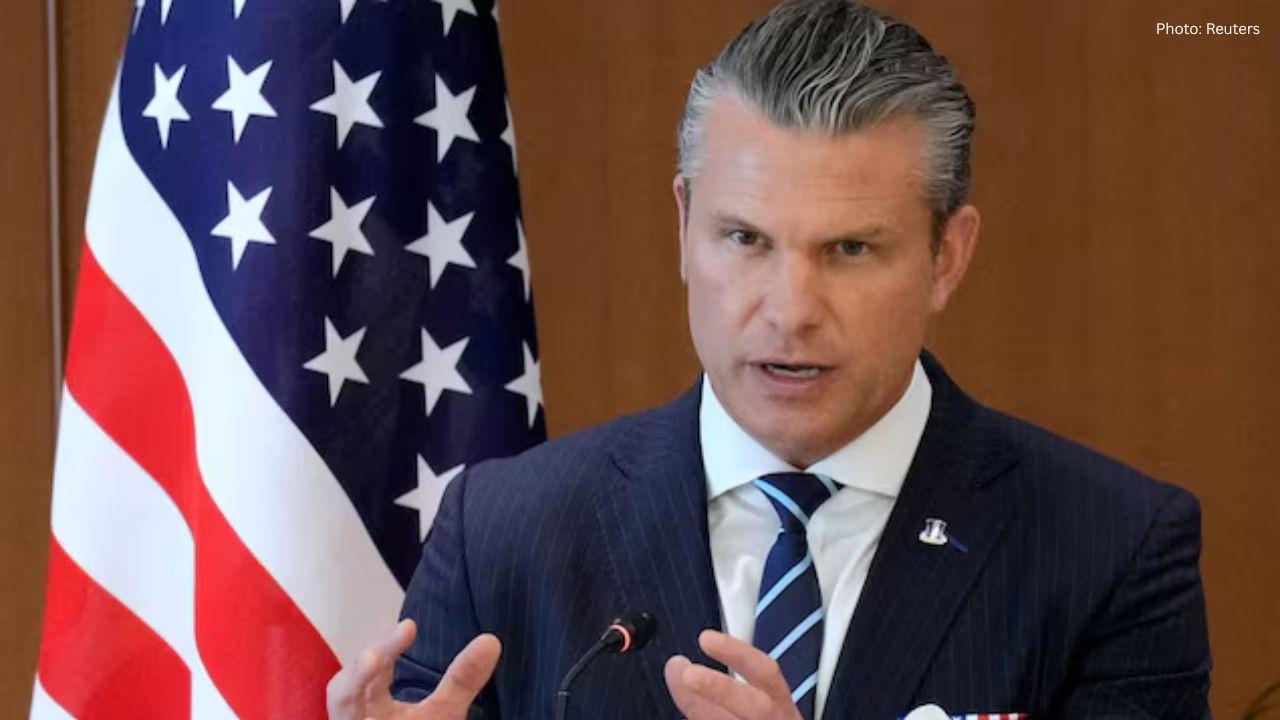
U.S. Defense Secretary Pete Hegseth arrived in South Korea on Monday for high-level security talks focused on the future role of American troops stationed on the Korean Peninsula. The visit comes at a time when the United States is looking to adjust its military presence in Asia to deal with growing threats from North Korea and China.
Hegseth’s trip includes attending the annual Security Consultative Meeting (SCM) in Seoul on Tuesday, where he will meet with South Korean Defense Minister Ahn Gyu-back. The SCM is the highest military meeting between the two allies and sets the direction for future cooperation, especially regarding North Korea’s nuclear and missile threats.
According to South Korea’s defense ministry, both sides will discuss combined military readiness, missile defense cooperation, and cybersecurity. The talks will also cover regional security challenges, including tensions in the South China Sea and growing concerns over China’s military activities near Taiwan.
The United States currently has about 28,500 troops stationed in South Korea. Their main mission has long been to help deter aggression from North Korea. However, U.S. officials are now exploring ways to make their deployment more flexible, allowing forces to operate beyond the Korean Peninsula if necessary.
This shift reflects Washington’s broader goal of maintaining a strong balance of power in the Asia-Pacific region. With rising Chinese influence and military expansion, the U.S. wants its forces to be ready for a wider range of missions — including potential support for Taiwan’s defense if a crisis arises.
Still, South Korea has shown caution toward this idea. Seoul prefers that U.S. forces remain focused on defending the peninsula rather than being used for operations elsewhere. Over the past 20 years, South Korea has worked to strengthen its own defense capabilities, aiming to eventually take full command of combined forces during wartime.
To meet future security needs, South Korea plans a major increase in its defense budget for 2026. The move also comes as U.S. President Donald Trump continues to press U.S. allies to pay more for hosting American troops. South Korea’s expanded spending will support new weapons programs, stronger cybersecurity measures, and joint military training with U.S. forces.
During his visit, Hegseth is also expected to tour the heavily fortified Demilitarized Zone (DMZ) — the thin strip of land that separates North and South Korea. He will visit the Panmunjom truce village, where the Korean War armistice was signed in 1953. The DMZ remains one of the most tense and symbolic borders in the world.
Despite multiple efforts by both Washington and Seoul to resume peace talks, North Korea has refused dialogue and continues to develop new missiles and weapons systems. Analysts say Pyongyang has made significant progress in its nuclear and conventional military programs over the past two years, raising regional tensions.
Both Trump and South Korean President Lee Jae Myung have expressed a willingness to engage with Pyongyang, but North Korea has ignored these calls and continued testing missiles that can strike both South Korea and Japan.
Hegseth’s visit highlights the deep military ties between the United States and South Korea, which have lasted for over seven decades. The alliance was forged during the Korean War and remains one of the cornerstones of U.S. security policy in Asia.
Officials in Seoul say that while the two countries may not agree on every issue — especially on how to manage U.S. troop deployment — they share the same goal of ensuring stability and peace in the region.
Analysts believe this year’s SCM will focus on modernizing military coordination, strengthening joint deterrence strategies, and preparing for new kinds of threats, including cyberattacks and drone warfare.
As tensions with both North Korea and China continue to rise, the U.S. sees its military partnerships in Asia — especially with South Korea and Japan — as key to maintaining regional stability.
Hegseth’s Asia tour began in Japan last week, where he met with Japanese Defense Minister Shinjiro Koizumi in Tokyo. The two discussed regional defense cooperation and reaffirmed their commitment to a “free and open Indo-Pacific.”









Mattel Revives Masters of the Universe Action Figures Ahead of Film Launch
Mattel is reintroducing Masters of the Universe figures in line with its upcoming film, tapping into

China Executes 11 Members of Criminal Clan Linked to Myanmar Scam
China has executed 11 criminals associated with the Ming family, known for major scams and human tra
US Issues Alarm to Iran as Military Forces Deploy in Gulf Region
With a significant military presence in the Gulf, Trump urges Iran to negotiate a nuclear deal or fa

Copper Prices Reach Unprecedented Highs Amid Geopolitical Turmoil
Copper prices soar to all-time highs as geopolitical tensions and a weakening dollar boost investor

New Zealand Secures First Win Against India, Triumph by 50 Runs
New Zealand won the 4th T20I against India by 50 runs in Vizag. Despite Dube's impressive 65, India