Post by : Saif Nasser
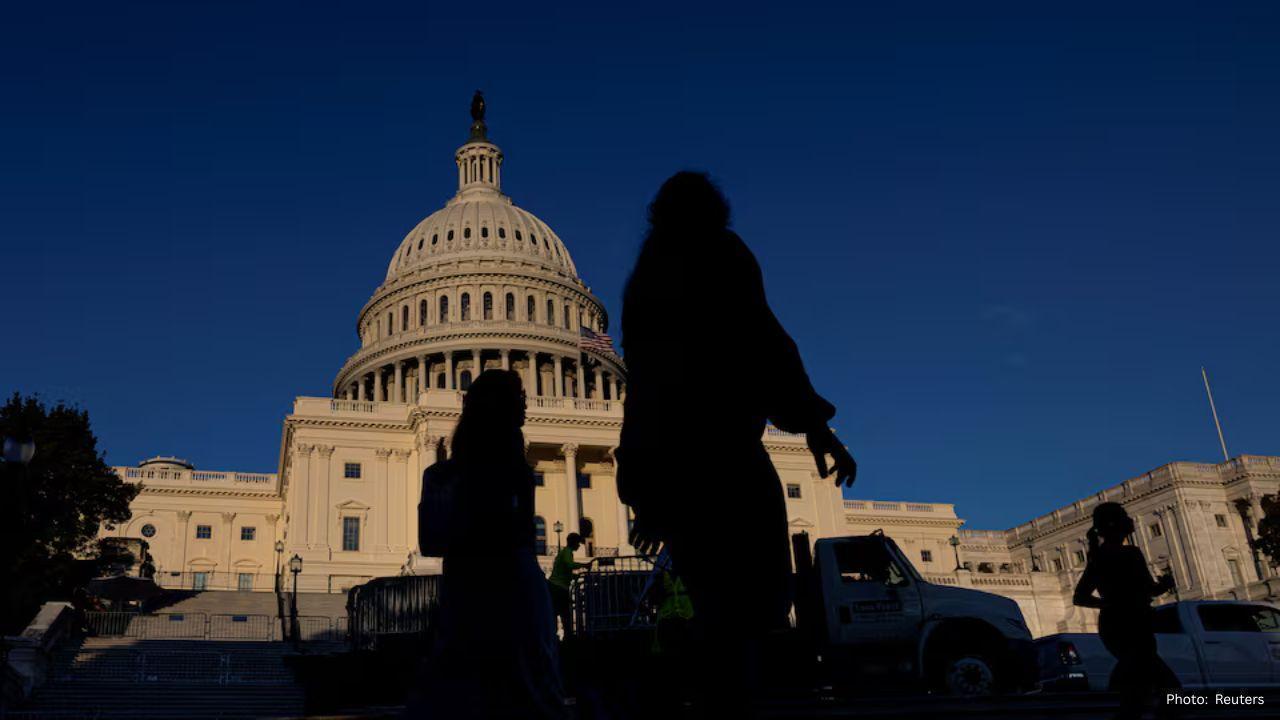
The United States Congress has passed a massive defense bill that will guide military policy and spending for the next year. Known as the National Defense Authorization Act for fiscal year 2026, the bill sets a record $901 billion defense budget and now heads to the White House. President Donald Trump has said he will sign it into law, even though parts of the bill go against his recent policy positions.
The bill was approved with strong support from both political parties. In the Senate, it passed by a vote of 77 to 20, while the House of Representatives had earlier approved it by a wide margin. Lawmakers said the vote continues a long tradition, as Congress has passed the defense bill every year for more than six decades.
A key part of the bill is its support for Ukraine and European security. The NDAA provides $800 million for Ukraine over the next two years through the Ukraine Security Assistance Initiative. This funding will be used to buy weapons from US companies to support Ukraine’s military as it continues to face conflict with Russia.
The bill also strengthens support for NATO and US allies in Europe. It includes $175 million for the Baltic Security Initiative to help Latvia, Lithuania, and Estonia improve their defenses. In addition, it limits the Pentagon’s ability to reduce US troop levels in Europe below 76,000 and protects the US role as NATO’s top military commander in the region.
These provisions stand in contrast to Trump’s recent National Security Strategy, which many observers see as more friendly toward Russia and more cautious about US involvement in Europe. By including these measures, Congress has shown it wants to maintain a strong US military presence overseas.
Beyond foreign policy, the defense bill includes several domestic measures. It authorizes a 4% pay raise for US troops and funds the purchase of new military equipment. It also changes how the Pentagon buys weapons, aiming to make the system faster and more efficient.
The NDAA repeals old laws that allowed the use of military force against Iraq in 1991 and 2002. This move is seen as an effort by Congress to reclaim its authority over decisions about war and peace. It also removes tough sanctions on Syria that were imposed under former leader Bashar al-Assad.
The bill includes a provision linked to Venezuela, requiring the defense secretary to share unedited videos of US military strikes on suspected drug traffickers. This comes as Trump has increased pressure on Venezuela’s government, including ordering a blockade of sanctioned oil tankers.
Not all ideas proposed by the president were included. The bill does not rename the Department of Defense as the Department of War, an idea supported by Trump. However, it does include some socially conservative measures, such as banning transgender women from competing in women’s sports at US military academies.
Overall, the passage of the defense bill shows that Congress can still work together on national security issues. It also highlights lawmakers’ willingness to challenge the president on key foreign policy decisions, especially when it comes to Ukraine, NATO, and Europe.









Mattel Revives Masters of the Universe Action Figures Ahead of Film Launch
Mattel is reintroducing Masters of the Universe figures in line with its upcoming film, tapping into

China Executes 11 Members of Criminal Clan Linked to Myanmar Scam
China has executed 11 criminals associated with the Ming family, known for major scams and human tra

US Issues Alarm to Iran as Military Forces Deploy in Gulf Region
With a significant military presence in the Gulf, Trump urges Iran to negotiate a nuclear deal or fa

Copper Prices Reach Unprecedented Highs Amid Geopolitical Turmoil
Copper prices soar to all-time highs as geopolitical tensions and a weakening dollar boost investor

New Zealand Secures First Win Against India, Triumph by 50 Runs
New Zealand won the 4th T20I against India by 50 runs in Vizag. Despite Dube's impressive 65, India