Post by : Priya
Photo:Reuters
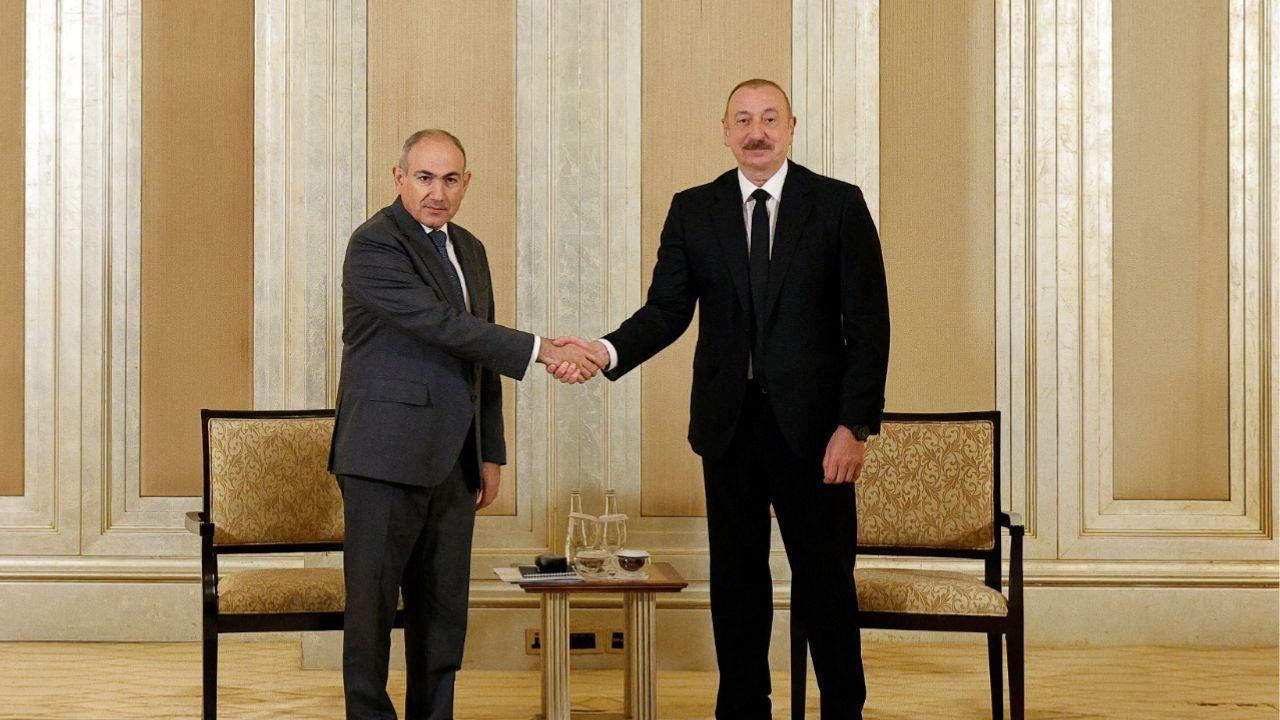
In a significant diplomatic effort aimed at resolving one of the most enduring and dangerous regional conflicts in the post-Soviet world, the United Arab Emirates (UAE) has hosted leaders from Armenia and Azerbaijan for high-level talks. This carefully organized meeting, held in the UAE's capital Abu Dhabi, symbolizes a hopeful shift in relations between the two countries that have fought multiple wars over the disputed Nagorno-Karabakh region.
A Meeting of Great Importance
The decision to host the leaders of Armenia and Azerbaijan — Armenian Prime Minister Nikol Pashinyan and Azerbaijani President Ilham Aliyev — reflects the UAE’s growing status as a diplomatic hub. The closed-door meeting in Abu Dhabi was the latest in a series of international efforts to bring lasting peace to the South Caucasus region, which has been shaken by years of violence, mistrust, and unresolved territorial disputes.
The UAE’s Ministry of Foreign Affairs described the meeting as “constructive and forward-looking,” noting that both sides agreed to continue dialogue and work toward de-escalation.
Observers around the world see the meeting as a positive sign — even though no official agreement was signed, the very act of sitting together and talking is a meaningful first step.
Historical Context of the Conflict
To understand the importance of this meeting, it is essential to look back at the roots of the Armenia-Azerbaijan conflict.
The conflict centers around Nagorno-Karabakh, a mountainous region that is internationally recognized as part of Azerbaijan but is home to a large ethnic Armenian population. After the fall of the Soviet Union in the early 1990s, the region declared independence, supported by Armenia. This led to a brutal war that lasted from 1992 to 1994, killing over 30,000 people and displacing nearly a million more.
A ceasefire was brokered in 1994, but tensions remained high. In 2020, a second war broke out, lasting 44 days. Over 6,500 people were killed before another ceasefire was arranged by Russia. During this war, Azerbaijan regained control of large parts of the disputed territory.
The peace talks in Abu Dhabi come nearly five years after this latest conflict and amid continued skirmishes along the border. The lack of a final peace treaty has kept the region unstable and relations tense.
UAE’s Role in International Diplomacy
The UAE has increasingly positioned itself as a mediator in regional and international conflicts. With its strategic location, financial power, and neutral foreign policy stance, the country has become a trusted space for dialogue between rivals.
Hosting talks between Armenia and Azerbaijan follows similar efforts by the UAE in recent years, such as its involvement in easing tensions in Sudan, its mediation between Ethiopia and Eritrea, and its humanitarian support for conflict zones like Gaza and Ukraine.
A UAE government official, speaking anonymously, stated:
"We are committed to peace, dialogue, and regional stability. Hosting these talks is part of our broader vision for a cooperative world order."
The UAE has strong diplomatic ties with both Armenia and Azerbaijan, making it a suitable host for such sensitive discussions.
The Talks – What Was Discussed?
While the detailed agenda of the meeting remains confidential, sources close to the event reported several key topics of discussion:
Border demarcation: Both countries have disputed borders, and recent months have seen minor military clashes. Establishing a clear border is vital to lasting peace.
Prisoner exchanges: Armenia has called for the release of prisoners held by Azerbaijan since the 2020 war. This humanitarian issue remains a major concern.
Return of displaced persons: Thousands of ethnic Armenians and Azerbaijanis were displaced due to decades of conflict. Their right to return safely is a top priority.
Economic cooperation: Talks also explored how both countries can benefit from joint infrastructure projects and trade initiatives once peace is secured.
Security guarantees: Armenia has expressed the need for international guarantees to prevent future conflicts. The UAE and other neutral actors could play a monitoring role.
While no formal agreement was reached, both sides reportedly agreed to continue discussions in a peaceful and respectful manner.
Reaction from the Region and the World
The response from the international community has been largely positive. The European Union, United Nations, United States, Russia, and Turkey all welcomed the talks and praised the UAE for hosting them.
European Council President Charles Michel said in a statement:
"Dialogue between Armenia and Azerbaijan is essential for long-term peace. The UAE’s support in facilitating these discussions is highly appreciated."
Russia, traditionally a key player in the region, supported the move, noting that any effort that contributes to regional peace is welcome.
Armenian and Azerbaijani citizens, while cautious, expressed hope that their leaders’ willingness to talk could finally bring peace. Social media reactions were mixed but leaned toward support for continued dialogue.
Challenges Ahead
Despite the positive tone of the meeting, many challenges remain. Decades of conflict have left deep wounds on both sides. Trust is low, and nationalist sentiments remain strong in both countries.
Several issues could still derail peace efforts:
Internal political pressure: Both leaders face domestic critics who may view concessions as weakness.
Foreign influence: Regional powers such as Turkey, Russia, and Iran have strategic interests in the South Caucasus, which could complicate peace efforts.
Lack of enforcement mechanisms: Without international peacekeepers or clear enforcement of agreements, there is a risk that any deal could fall apart.
Experts warn that sustained commitment, not just symbolic meetings, is needed to make real progress.
The Human Side of the Conflict
Beyond politics and diplomacy, the Armenia-Azerbaijan conflict has deeply affected ordinary people.
Families on both sides have lost loved ones. Children have grown up with the constant fear of war. Entire villages were destroyed, and many people remain displaced or unable to return home.
For many in Nagorno-Karabakh and surrounding regions, peace is not just a political goal — it is a matter of survival, dignity, and a better life.
Human rights groups have urged both governments to prioritize the needs of civilians, ensure freedom of movement, and respect basic rights, regardless of ethnic or national background.
Economic Impact and Opportunities
If peace can be achieved, the economic benefits for both Armenia and Azerbaijan could be massive.
Trade and transport: Both countries sit at the crossroads of Europe and Asia. Improved ties could allow new transport routes to open, boosting regional trade.
Energy cooperation: Azerbaijan is a major oil and gas producer. Peace could allow Armenia to benefit from energy partnerships and reduce its dependency on costly imports.
Tourism: The South Caucasus is rich in culture, history, and nature. Peace would open doors to tourism, bringing much-needed revenue to local communities.
Foreign investment: Global investors are more likely to invest in a peaceful and stable region. Peace could trigger infrastructure development, tech hubs, and industrial zones.
These potential gains add to the incentive for both sides to continue dialogue.
A Symbol of Regional Leadership
By hosting these talks, the UAE not only contributed to peace efforts but also strengthened its position as a regional leader in diplomacy.
The UAE has successfully used its wealth, stability, and strategic location to act as a bridge between East and West, North and South. Its neutral approach and active foreign policy make it a reliable partner in global peace efforts.
This event in Abu Dhabi could serve as a model for other conflict areas. Diplomacy — supported by neutral hosts — remains the best path to solving even the deepest disputes.








Mattel Revives Masters of the Universe Action Figures Ahead of Film Launch
Mattel is reintroducing Masters of the Universe figures in line with its upcoming film, tapping into

China Executes 11 Members of Criminal Clan Linked to Myanmar Scam
China has executed 11 criminals associated with the Ming family, known for major scams and human tra
US Issues Alarm to Iran as Military Forces Deploy in Gulf Region
With a significant military presence in the Gulf, Trump urges Iran to negotiate a nuclear deal or fa

Copper Prices Reach Unprecedented Highs Amid Geopolitical Turmoil
Copper prices soar to all-time highs as geopolitical tensions and a weakening dollar boost investor

New Zealand Secures First Win Against India, Triumph by 50 Runs
New Zealand won the 4th T20I against India by 50 runs in Vizag. Despite Dube's impressive 65, India