Post by : Shweta
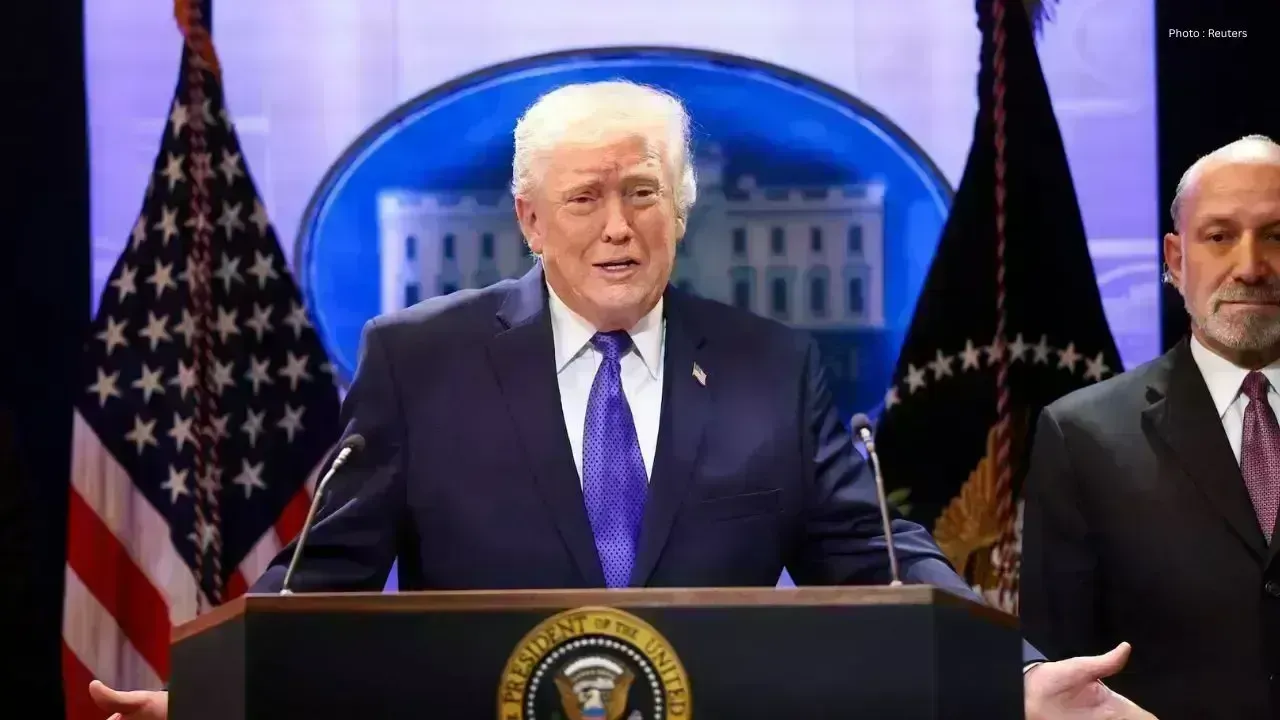
The administration of Donald Trump is encountering mounting criticism for integrating religious terminology into the discourse surrounding the conflict with Iran. Experts emphasize that utilizing faith as a justification for military actions risks merging political and religious spheres, thus threatening fundamental democratic values within the United States.
In recent weeks, prominent figures, including Defense Secretary Pete Hegseth, have started incorporating spiritual references into their public remarks regarding the conflict. Hegseth has reportedly invoked scripture during briefings and characterized U.S. troops in a spiritual light. Simultaneously, Trump's social media activity has drawn scrutiny for portraying him through religious symbolism.
Vice President JD Vance has engaged directly in the dialogue, countering remarks from Pope Leo XIV, who cautioned against the perils of using religion to rationalize violence. This exchange has underscored tensions both domestically and on a global scale, prompting reactions from various religious and political leaders worldwide.
Analysts state that while U.S. presidents have historically evoked faith during wartime, they typically do not frame conflicts as religious endeavors. Former leaders, such as George W. Bush, have revised their language post-concerns about the implications of religious framing, especially given its potential to escalate tensions in the Middle East.
Critics caution that portraying military engagements through a religious lens could foster narratives commonly employed in international disputes, wherein opposing factions assert divine endorsement. This phenomenon has been apparent in various contexts, including Iran, where religious justification has been a staple of political and military messaging.
There are also significant domestic implications. Analysts warn that pronounced religious messaging from government figures could undermine the separation of church and state. In a pluralistic society like the United States, such rhetoric might alienate individuals of diverse faiths or those who identify as non-religious.
Proponents of the administration argue that affirmations of faith are ingrained in American heritage and mirror the convictions of leaders and the populace alike. Nevertheless, detractors contend that the overt and political invocation of religion signifies a departure from established norms with potential long-lasting ramifications.
This debate surfaces at a juncture when the U.S. is grappling with intricate geopolitical dynamics. Analysts warn that weaving religious elements into wartime rhetoric could complicate diplomatic relationships and enhance misunderstandings on the world stage.
Ultimately, this controversy embodies a larger dialogue concerning the intersection of religion and politics and poses critical questions about whether its role in wartime enhances national unity or exacerbates domestic and international divisions.







Top 10 Must-See Attractions in NYC for First-Time Explorers
Discover essential experiences for first-time visitors to NYC, including attractions, culture, and i

Starbucks Engages Boyu Capital for Major Chinese Expansion
Starbucks teams up with Boyu Capital, selling a majority stake to boost growth and adapt to the Chin

Three Individuals Charged in Massive Meth Trafficking Case in Malaysia
In Malaysia, a married couple and another suspect are charged with trafficking 510kg of meth, facing
Singapore Police Revisit Geylang Murder Scene with Suspect
In Geylang, police return a murder suspect to the scene of a crime involving the fatal stabbing of a

Mattel Revives Masters of the Universe Action Figures Ahead of Film Launch
Mattel is reintroducing Masters of the Universe figures in line with its upcoming film, tapping into