Post by : Saif Nasser
The Trump administration has released a new National Security Strategy aimed at preventing a conflict with China over Taiwan and the South China Sea. The strategy focuses on building military strength, encouraging allies to contribute more to defense, and maintaining stability in a region vital for trade and technology.
China considers Taiwan part of its territory and has not ruled out using force to take control. The South China Sea is also a hotspot, with Beijing claiming nearly all the waters, despite protests from neighboring countries. Taiwan, a democratic island, relies heavily on U.S. support for its defense, though the United States does not have formal diplomatic relations with Taipei.
Trump’s updated strategy emphasizes Taiwan more strongly than his previous plan. The 2025 document mentions Taiwan eight times, highlighting its importance in trade and semiconductor production, which is critical to the global technology industry. It states that the U.S. will maintain a military capable of stopping aggression along a chain of islands from Japan to Southeast Asia. However, it stresses that the U.S. cannot act alone and needs allies to spend more and take an active role in regional defense.
The administration has already taken some steps to show support for Taiwan. Trump signed a law requiring regular reviews of U.S.-Taiwan relations and approved a $330 million sale of fighter jets and parts. These measures aim to strengthen Taiwan’s ability to defend itself without provoking China.
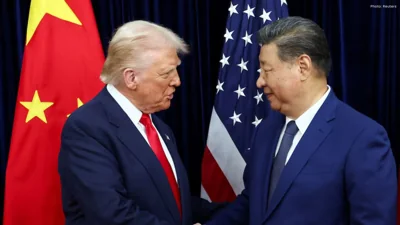
Trump has also sought to manage tensions with China directly. He is planning a trip to Beijing in April to discuss trade and regional issues with Chinese President Xi Jinping. At the same time, Trump has privately asked regional leaders, like Japanese Prime Minister Sanae Takaichi, not to escalate disputes over Taiwan, showing a careful balancing act between deterrence and diplomacy.
The strategy calls for allies, including Japan and South Korea, to increase defense spending and participate actively in collective security. The goal is to prevent any attempt to seize Taiwan and to ensure that the United States and its partners can respond quickly if tensions rise.
Analysts say this approach reflects a mix of military preparedness and diplomatic caution. It signals that the U.S. is committed to defending its interests and supporting Taiwan, while also trying to avoid direct confrontation with China.
In conclusion, Trump’s new strategy highlights the importance of Taiwan in global security and technology. It combines stronger military readiness with diplomacy and emphasizes shared responsibility among U.S. allies. As tensions rise in East Asia, this approach will be closely watched by governments, businesses, and the people of Taiwan, who depend on stability in the region for their safety and future.









Mattel Revives Masters of the Universe Action Figures Ahead of Film Launch
Mattel is reintroducing Masters of the Universe figures in line with its upcoming film, tapping into
China Executes 11 Members of Criminal Clan Linked to Myanmar Scam
China has executed 11 criminals associated with the Ming family, known for major scams and human tra
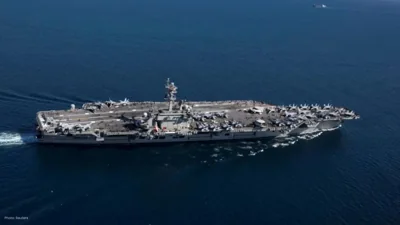
US Issues Alarm to Iran as Military Forces Deploy in Gulf Region
With a significant military presence in the Gulf, Trump urges Iran to negotiate a nuclear deal or fa

Copper Prices Reach Unprecedented Highs Amid Geopolitical Turmoil
Copper prices soar to all-time highs as geopolitical tensions and a weakening dollar boost investor

New Zealand Secures First Win Against India, Triumph by 50 Runs
New Zealand won the 4th T20I against India by 50 runs in Vizag. Despite Dube's impressive 65, India