Post by : Mina Rahman
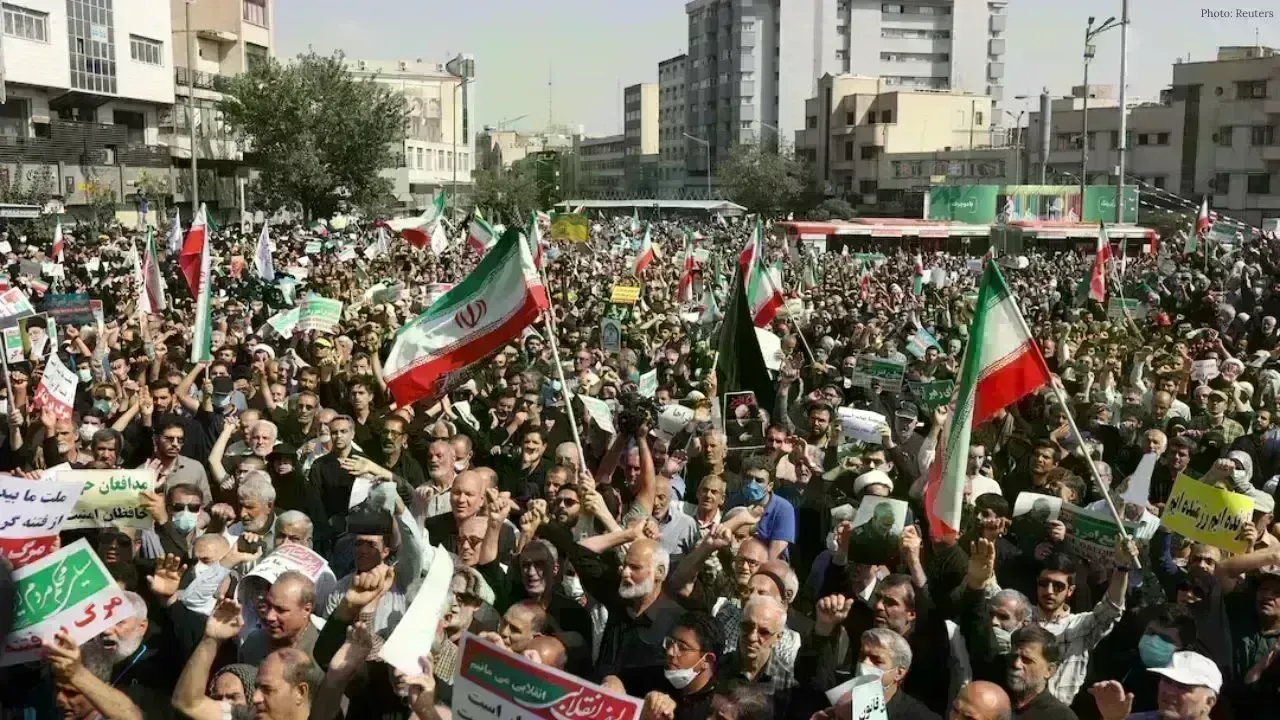
Protests expressing discontent with Iran’s Islamic regime have surged dramatically in Tehran, with thousands of individuals taking to the streets in response to a dire economy, rising living costs, and persistent oppression from state authorities. The protests, characterized by vociferous anti-government chants, reveal a growing public outrage toward the theocratic governance led by Supreme Leader Ayatollah Seyyed Ali Hosseini Khamenei.
As protests intensified during the night, authorities initiated a shutdown of internet services and international phone lines throughout the nation. The administration, under President Masoud Pezeshkian, issued stern warnings, with judicial and security officials threatening severe repercussions against those demonstrating. Nevertheless, chants of “freedom, freedom” resonated in various neighborhoods across the capital.
Many of the protestors appear motivated by calls from exiled Crown Prince Reza Pahlavi, who encouraged Iranians to gather in protest at 8 PM local time each evening. As the designated hour approached, numerous districts in Tehran erupted into synchronized chants. Reports from eyewitnesses indicated large crowds defying a regime long known for punishing dissent.
Slogans such as “Death to the dictator” and “Death to the Islamic Republic” echoed through the streets. In an unexpected twist, some demonstrations even featured support for Iran’s former monarchy, with chants like “This is the last battle” and “Pahlavi will return.” Such expressions, which previously were highly dangerous, now reflect the depth of public frustration fueled by economic devastation and stringent social controls.
Reza Pahlavi criticized the government’s immediate strategy to counter the protests by cutting off all communication channels. He claimed the authorities aimed to isolate Iran by disabling the internet and landline connections, potentially tampering with satellite communications as well. He also urged Western leaders to intervene, advocating for the restoration of communication to enable the Iranian populace's voices to resonate worldwide.
Protest activities extended beyond Tehran, with demonstrations spreading to other urban areas and rural locales. Many markets and bazaars closed in a show of solidarity. Human rights organizations report that the unrest has turned deadly, with at least 42 fatalities and over 2,270 individuals detained across the country.
As the momentum for pro-monarchy slogans grows, it remains uncertain whether demonstrators genuinely desire a return to monarchic rule or simply yearn for life prior to the 1979 Islamic Revolution. What is indisputable is that the pervasive dissatisfaction has reached a critical threshold, with many Iranians boldly demanding essential change.





Achieve Radiant Skin with This Simple Rice Flour Treatment
Transform your skincare routine! Discover how a rice flour mix can restore your skin's glow without

Meta Unveils Subscription Plans for Instagram, Facebook, and WhatsApp
Meta introduces new subscription plans for users of Instagram, Facebook, and WhatsApp, featuring enh

Suvarna Joy on Education Leadership, Resilience, and Building Purpose Through Adversity in the UAE
Suvarna Joy shares her journey of education leadership, motherhood, faith, and resilience within the

Anticipated Dates for UAE Eid Al Adha 2026 Unveiled by Astronomical Experts
Experts predict Eid Al Adha 2026 in the UAE to start on May 27, prompting early holiday planning amo

DAE Achieves Remarkable Growth in Q1 2026 With Record Revenue
Dubai Aerospace Enterprise announces impressive financial results for Q1 2026, reflecting a surge in

Price Increase for Sony PS5 in Southeast Asia Effective May 1
Sony announces a price increase for the PS5 across Southeast Asia starting May 1, 2026, impacting ga




