Post by : Priya
Photo:Reuters
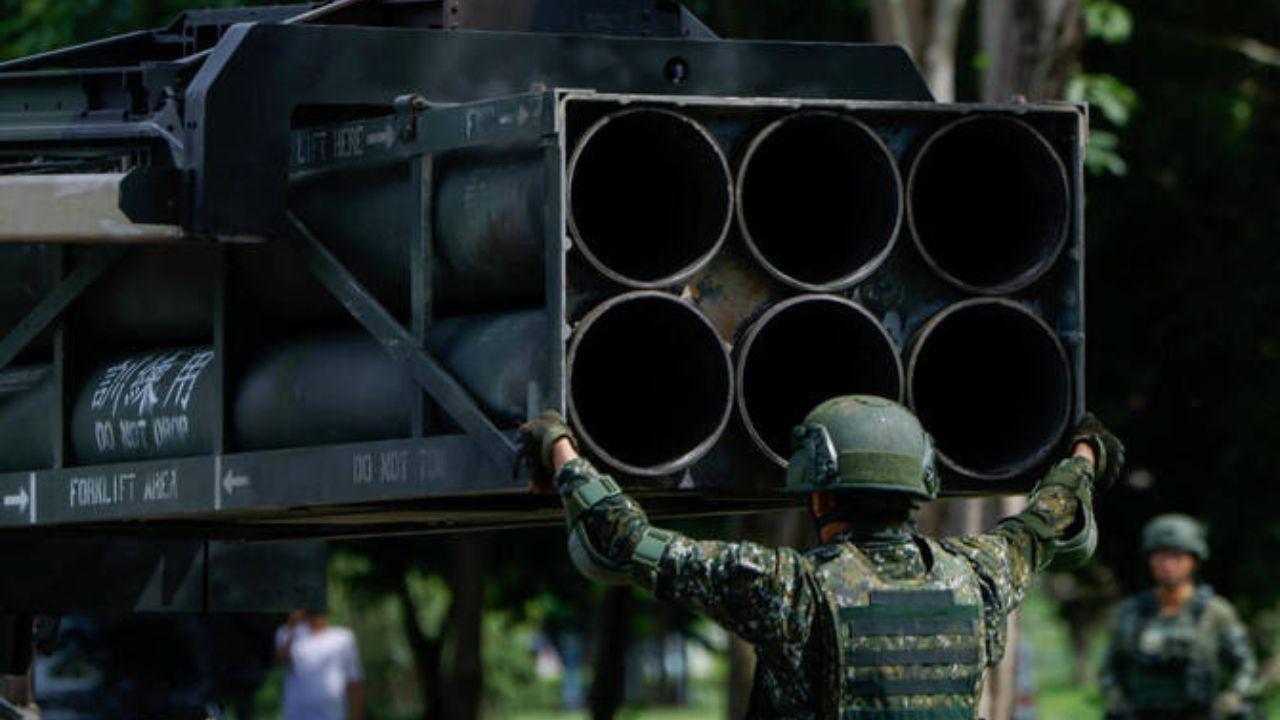
In recent weeks, Taiwan has made international headlines by deploying advanced High Mobility Artillery Rocket Systems (HIMARS) during its annual military exercises. This move was not only a significant step in Taiwan’s military development but also a powerful political signal at a time of rising tensions in the Indo-Pacific region. The use of these powerful US-made rocket systems in a live-fire drill reflects Taiwan's determination to defend itself against potential threats, particularly from neighboring China.
Understanding the HIMARS System
HIMARS, or the High Mobility Artillery Rocket System, is a highly advanced mobile rocket launcher developed by the United States. Built by Lockheed Martin, HIMARS is designed for precision, mobility, and rapid deployment. Mounted on a standard military truck, it can fire a variety of rockets and missiles with high accuracy over long distances.
Each HIMARS unit can launch six rockets in rapid succession and reposition before the enemy can strike back, giving it both offensive power and battlefield survivability. It has been used effectively in several conflict zones, especially in Ukraine, where it played a key role in countering Russian advances. Taiwan’s acquisition and active deployment of this system marks a strategic leap in its defensive capabilities.
Taiwan’s Military Posture in the Face of Growing Threats
For decades, Taiwan has lived under the shadow of a possible military confrontation with China. Beijing claims Taiwan as its own territory and has not ruled out the use of force to bring the self-governed island under its control. As China continues to modernize and expand its military, Taiwan has responded by enhancing its own defense systems.
Taiwan’s military has focused on creating a “porcupine strategy”—a defense plan that would make any attempted invasion extremely difficult and costly. The idea is not to match China’s military in numbers, but to make Taiwan a hard target using smart weapons, modern training, and a well-prepared population. HIMARS fits perfectly into this strategy.
The Annual Drills and HIMARS Deployment
The annual Han Kuang exercises are the largest and most important military drills conducted by Taiwan. These drills simulate different types of threats, including missile attacks, amphibious landings, and air raids. In 2025, for the first time, HIMARS was included in the live-fire phase of the exercise.
The live drill took place in southern Taiwan and involved launching HIMARS rockets at mock enemy positions. The rockets struck their targets with precision, and the military broadcast the operation live to showcase its success. This was not only a test of equipment but also a demonstration aimed at domestic and international audiences.
Military experts noted that the use of HIMARS in Taiwan’s drills significantly increases the island’s deterrence capabilities. With its long range and fast deployment, HIMARS could strike enemy vessels, missile launchers, or advancing troops before they get too close to Taiwan’s shores.
China’s Response and Regional Reactions
Unsurprisingly, China reacted strongly to Taiwan’s HIMARS drill. A spokesperson for Beijing’s Ministry of Foreign Affairs called the exercises “a dangerous provocation” and accused Taiwan of trying to seek independence through military means. China has repeatedly warned the United States and other countries not to provide arms to Taiwan.
Following the drill, Chinese warplanes and navy vessels increased their presence around Taiwan. These moves are part of what has become a regular pattern: for every defense step Taiwan takes, China responds with military displays of its own.
However, the regional reaction was mixed. Japan and South Korea, both close allies of the US and neighbors of Taiwan, expressed support for stability in the Taiwan Strait. Southeast Asian nations, while careful not to take sides, highlighted the importance of peace and the need to avoid escalating tensions.
US-Taiwan Military Cooperation
Taiwan's acquisition of HIMARS is part of a larger arms deal approved by the US in recent years. Washington has been providing Taiwan with defensive weapons, including air defense systems, coastal missile batteries, and surveillance equipment.
The US government maintains a policy of “strategic ambiguity,” meaning it does not officially recognize Taiwan as an independent country but supports its ability to defend itself. Under the Taiwan Relations Act, the US is committed to supplying arms to Taiwan to help it maintain a sufficient self-defense capability.
President Joe Biden and top US officials have also made it clear that they oppose any unilateral change to the status quo, especially by force. The sale and deployment of HIMARS further solidify the military partnership between Washington and Taipei.
Domestic Opinion and Public Support
Within Taiwan, the response to the HIMARS deployment has been largely positive. Many citizens support stronger defenses, especially as China's military threats become more frequent. Government officials and defense experts have praised the drills as a step forward in making Taiwan more secure.
Polls in Taiwan show that a majority of the population favors military readiness, especially when paired with international support. The HIMARS drills have boosted confidence in the military’s capabilities and helped reassure the public that the island is taking concrete steps to protect itself.
Taiwan’s Broader Defense Strategy
Beyond HIMARS, Taiwan is working on several key defense projects. It is investing in new submarines, anti-aircraft missile systems, and unmanned drones. Taiwan is also building a strong cyber defense and enhancing joint training between branches of the military.
The government has introduced mandatory military training for young adults and increased the length of service to ensure readiness. Civil defense programs are being developed to teach citizens how to respond during a potential conflict.
All of these steps reflect Taiwan’s “overall defense concept”—a strategy that combines traditional military power with innovative, asymmetric warfare tactics. HIMARS is just one piece of this complex puzzle.
The Global Stakes
Why does this matter to the rest of the world? The Taiwan Strait is one of the most important waterways in global trade. Nearly half of the world’s container ships pass through this area, and Taiwan is a major player in the production of semiconductors, which power everything from phones to fighter jets.
If a conflict were to break out, it would not only affect Taiwan and China but also cause economic and security problems for countries across Asia, Europe, and the Americas. This is why many nations are closely watching Taiwan’s military developments and China's reactions.
The deployment of HIMARS is more than just a defense upgrade. It is a symbol of Taiwan’s resolve and a reminder of the delicate balance that defines the region’s peace.
Risks of Escalation and the Need for Dialogue
Despite the need for defense, experts warn that too many military moves on either side could lead to miscalculation. If a missile drill or aircraft flyover is misunderstood, it could trigger a dangerous confrontation.
Many global leaders, including those from the European Union and United Nations, have called for dialogue and peaceful resolution of the Taiwan issue. Taiwan has also expressed its willingness to talk, but only as equals and without pressure.
Maintaining peace in the Taiwan Strait will require open communication, mutual understanding, and a respect for the island's democratic values.







DAE Achieves Remarkable Growth in Q1 2026 With Record Revenue
Dubai Aerospace Enterprise announces impressive financial results for Q1 2026, reflecting a surge in

Price Increase for Sony PS5 in Southeast Asia Effective May 1
Sony announces a price increase for the PS5 across Southeast Asia starting May 1, 2026, impacting ga

Potential ‘Super El Niño’ in 2026: Understanding the Climate Risks
Could a Super El Niño emerge in 2026? Discover its implications and potential global climate impacts

Global Energy Crisis Intensifies: Markets React to Oil Supply Challenges
Markets are on edge as oil disruptions escalate, influencing prices and economic stability. Explore

Must-See Tourist Spots in London You Can't Overlook
Explore London's essential attractions, from royal landmarks to vibrant markets, ensuring an unforge

Ultimate Guide to Snagging Cheap Flights in 2026
Unlock the secrets to booking affordable flights in 2026 with insightful tips and strategies tailore