Post by : Saif Nasser
Switzerland, a country long known for its neutrality and stability, is facing a serious warning from its top military leader. The head of the Swiss armed forces has said clearly that Switzerland cannot defend itself if it faces a full-scale military attack. His comments have sparked fresh debate about defence spending and national security in a changing world.
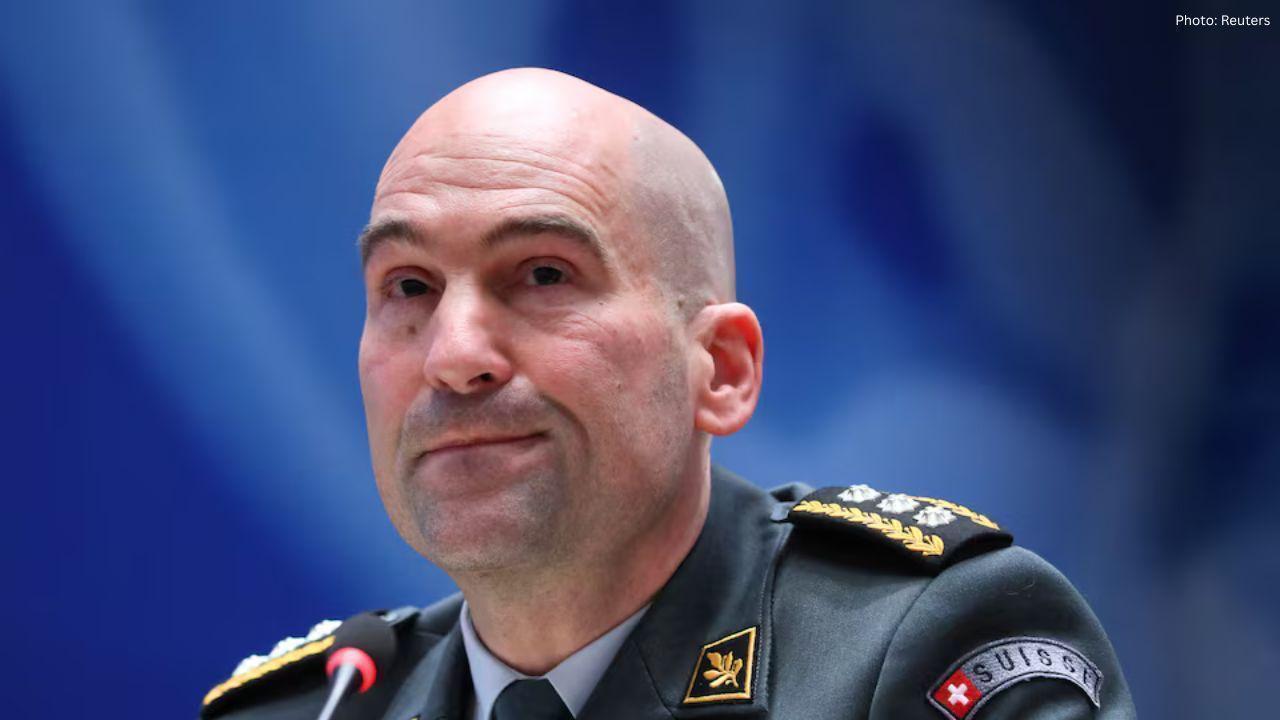
Lieutenant General Thomas Suessli, who is stepping down as army chief at the end of the year, made the remarks in an interview with a Swiss newspaper. He said that while the country is prepared for smaller threats, such as cyber attacks or sabotage by non-state groups, it is not ready to face a major military assault from another country.
According to Suessli, the Swiss army has serious gaps in equipment and readiness. In a real emergency, only about one-third of Swiss soldiers would be fully equipped to fight. This, he said, is a troubling reality given the growing security risks in Europe, especially after Russia’s invasion of Ukraine.
Switzerland has already begun increasing its defence budget. The government is modernising artillery systems, upgrading ground forces, and replacing old fighter jets with new F-35A aircraft made by Lockheed Martin. However, these plans have faced criticism. Costs have risen, and some politicians question whether heavy military spending is wise at a time when public finances are under pressure.
Suessli also challenged the common belief that Switzerland’s neutrality alone keeps it safe. He said many people wrongly assume that staying neutral means a country will not be attacked. History, he noted, shows that several neutral countries were still drawn into wars because they were not properly armed.
“Neutrality only has value if it can be defended,” Suessli said. Without strong military capabilities, neutrality offers little real protection.
At present, Switzerland spends about 0.7% of its gross domestic product on defence. The government has promised to slowly raise this to around 1% by 2032. This level is still far below the 5% defence spending target agreed by NATO countries. At the current pace, Suessli warned, the Swiss military would only be fully ready by around 2050, which he believes is far too late given today’s threats.
His warning comes as Europe faces rising tensions, cyber threats, and efforts by foreign powers to destabilise the region. Switzerland’s distance from active war zones and lack of recent war experience, Suessli said, have made it harder for the public to understand these risks.
The message from the outgoing army chief is clear: Switzerland must act faster and invest more if it wants to protect its people and its neutrality in an increasingly uncertain world.







Achieve Radiant Skin with This Simple Rice Flour Treatment
Transform your skincare routine! Discover how a rice flour mix can restore your skin's glow without

Meta Unveils Subscription Plans for Instagram, Facebook, and WhatsApp
Meta introduces new subscription plans for users of Instagram, Facebook, and WhatsApp, featuring enh

Suvarna Joy on Education Leadership, Resilience, and Building Purpose Through Adversity in the UAE
Suvarna Joy shares her journey of education leadership, motherhood, faith, and resilience within the

Anticipated Dates for UAE Eid Al Adha 2026 Unveiled by Astronomical Experts
Experts predict Eid Al Adha 2026 in the UAE to start on May 27, prompting early holiday planning amo

DAE Achieves Remarkable Growth in Q1 2026 With Record Revenue
Dubai Aerospace Enterprise announces impressive financial results for Q1 2026, reflecting a surge in

Price Increase for Sony PS5 in Southeast Asia Effective May 1
Sony announces a price increase for the PS5 across Southeast Asia starting May 1, 2026, impacting ga




