Post by : Saif Nasser
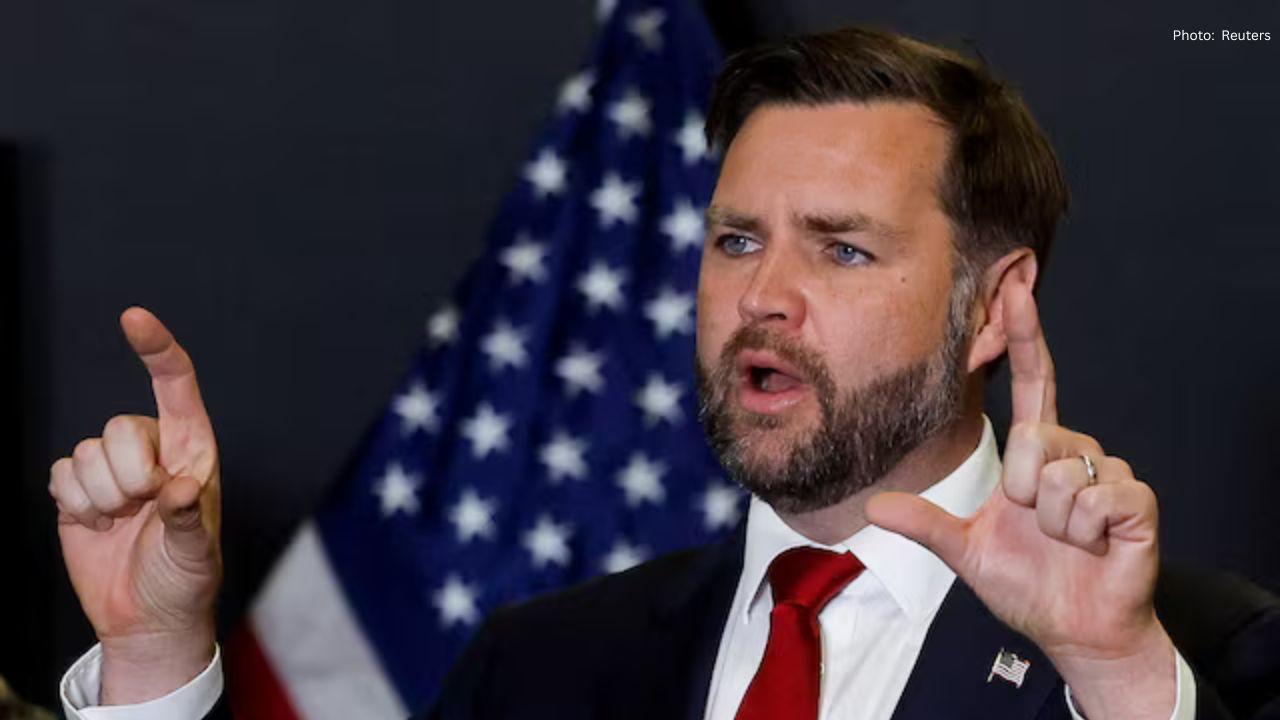
The U.S. Supreme Court is once again set to revisit the country’s campaign finance rules, and this time the case involves Vice President JD Vance. The court has a long history of cutting back laws that limit political spending, arguing that such limits restrict free speech. With a strong conservative majority, many experts believe the court may continue this pattern.
The case dates back to 2022, when JD Vance was running for the U.S. Senate in Ohio. Vance, along with two Republican Party committees, challenged rules passed by Congress in the 1970s. These rules limit how much money political parties can spend in direct coordination with candidates running for federal office. A lower court upheld the limits, but the Republicans appealed, bringing the dispute to the Supreme Court.
The Biden administration had previously defended such spending rules, but President Donald Trump’s administration is now backing Vance’s position and wants the limits removed. The court will hear arguments next week, and a decision is expected by June.
Legal scholars say the court’s history shows a strong leaning toward weakening spending laws. Jessica Levinson, a professor at Loyola Law School, said that the Supreme Court has spent more than twenty years cutting away at campaign finance protections. She argued that the court often sees such laws as violations of free speech.
One of the most famous examples is the 2010 Citizens United ruling. In that case, the court said that corporations and outside groups could spend unlimited money in elections as long as they were not coordinating with campaigns. This decision led to the rise of Super PACs, which can raise and spend huge amounts of money. Later decisions in 2014 and 2022 further reduced limits on what individuals and candidates can contribute or repay.
Republicans argue that these rulings strengthen free speech by removing barriers to political participation. Democrats and reform advocates say the opposite. They believe the rulings give wealthy donors too much influence in U.S. elections and weaken fairness.
The current case is known as National Republican Senatorial Committee v. Federal Election Commission. It focuses on a section of the Federal Election Campaign Act of 1971. The law tries to prevent corruption by limiting how much money parties can spend on behalf of candidates they work with directly. Spending that is not coordinated is treated as independent and does not face the same limits.
The coordinated spending limits depend on the population of the state where the candidate is running. For example, Senate candidates in 2024 had limits ranging from about $123,000 to $3.7 million, while House candidates had limits between $62,000 and $123,000. The idea is to prevent wealthy donors from using political parties as a back door to give more money to candidates than they are allowed to give directly.
Tara Malloy, a lawyer with the Campaign Legal Center, explained that these limits are important because they stop big donors from hiding large contributions through party committees. Without limits, she warned, corruption could become easier and harder to track.
For many years, the Justice Department defended these rules in court. But the political landscape has changed, and under Trump’s leadership, the department has refused to defend the law in this case. Instead, a court-appointed lawyer, Roman Martinez, will speak in favor of keeping the limits. Martinez has argued that without them, political parties could easily be used to bypass donation caps. He also reminded the court that real examples of corruption linked to such loopholes can be found throughout modern U.S. history.
Martinez has also suggested that the Supreme Court could dismiss the case without making a major ruling. This would allow the court to avoid overturning yet another long-standing precedent. Some experts believe the justices may consider this option if they want to avoid further public criticism over their role in shaping election rules.
The case highlights a larger debate in the United States: how much money should be allowed in politics, and at what point does free speech clash with fair elections? For now, the country waits to see whether the Supreme Court will make another major change to the campaign finance system or take a quieter path. The outcome could affect political campaigns for years to come.









Mattel Revives Masters of the Universe Action Figures Ahead of Film Launch
Mattel is reintroducing Masters of the Universe figures in line with its upcoming film, tapping into
China Executes 11 Members of Criminal Clan Linked to Myanmar Scam
China has executed 11 criminals associated with the Ming family, known for major scams and human tra

US Issues Alarm to Iran as Military Forces Deploy in Gulf Region
With a significant military presence in the Gulf, Trump urges Iran to negotiate a nuclear deal or fa

Copper Prices Reach Unprecedented Highs Amid Geopolitical Turmoil
Copper prices soar to all-time highs as geopolitical tensions and a weakening dollar boost investor
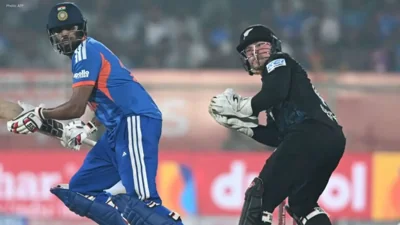
New Zealand Secures First Win Against India, Triumph by 50 Runs
New Zealand won the 4th T20I against India by 50 runs in Vizag. Despite Dube's impressive 65, India