Post by : Saif Nasser
Spain has announced a major step to protect children online. Prime Minister Pedro Sanchez said the government plans to ban access to social media for children under the age of 16. Social media companies will also be required to introduce proper age-check systems to make sure the rule is followed.
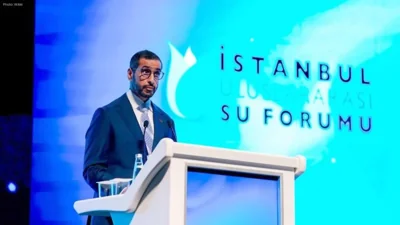
The announcement was made during a speech by Sanchez at the World Government Summit in Dubai. He said children are being exposed to online spaces that are often full of danger, including hate speech, violent content, pornography, and false information. According to him, young users are not meant to face these risks on their own.
Sanchez explained that the internet today often feels like a lawless place. He said the government will no longer accept a situation where children are left unprotected online. His goal, he said, is to bring order and safety to the digital world, especially for young people.
The Spanish government has raised concerns many times about the harmful impact of social media on children and teenagers. Officials believe constant exposure to negative content can affect mental health, behavior, and learning. This new plan is part of a broader effort to create a safer digital environment.
Spain is not acting alone. Sanchez said the country has joined a group of European nations working together on digital safety rules. He called this group the “Coalition of the Digitally Willing.” The idea is to make sure rules can be enforced across borders, since social media platforms operate globally. The group is expected to meet soon, although details about its members have not yet been shared.
The move follows a similar decision by Australia, which recently became the first country to ban social media use for children under 16. Other countries, including Britain and France, are closely watching these developments and may take similar steps.
In addition to the age ban, Spain plans to introduce new laws to hold social media company leaders responsible for illegal and hateful content on their platforms. The government also wants to make it a crime to use algorithms to push illegal material or manipulate what people see online.
Another proposal includes creating systems to track hate speech more effectively. Sanchez stressed that age checks must be real and reliable, not simple tick boxes that are easy to bypass.
The government plans to begin the law-making process as early as next week. If approved, the changes could place Spain among the strictest countries in Europe when it comes to online safety for children.
Supporters of the plan say it is a necessary step to protect young minds. Critics, however, argue that enforcement could be difficult and that parents should also play a key role. Still, the Spanish government believes strong laws are needed to match the growing power of digital platforms.
As debates continue across the world, Spain’s decision shows that governments are taking children’s online safety more seriously than ever before.








DAE Achieves Remarkable Growth in Q1 2026 With Record Revenue
Dubai Aerospace Enterprise announces impressive financial results for Q1 2026, reflecting a surge in

Price Increase for Sony PS5 in Southeast Asia Effective May 1
Sony announces a price increase for the PS5 across Southeast Asia starting May 1, 2026, impacting ga

Potential ‘Super El Niño’ in 2026: Understanding the Climate Risks
Could a Super El Niño emerge in 2026? Discover its implications and potential global climate impacts

Global Energy Crisis Intensifies: Markets React to Oil Supply Challenges
Markets are on edge as oil disruptions escalate, influencing prices and economic stability. Explore

Must-See Tourist Spots in London You Can't Overlook
Explore London's essential attractions, from royal landmarks to vibrant markets, ensuring an unforge

Ultimate Guide to Snagging Cheap Flights in 2026
Unlock the secrets to booking affordable flights in 2026 with insightful tips and strategies tailore




