Post by : Saif Nasser
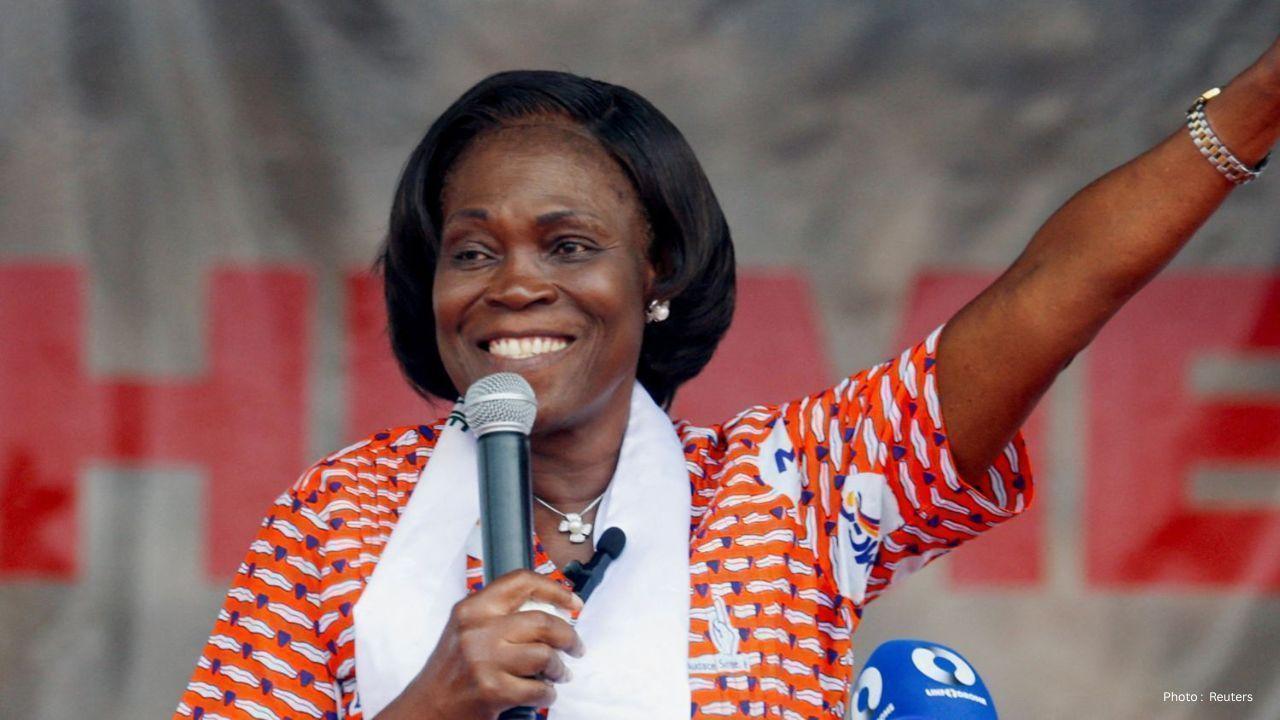
Simone Gbagbo, once the first lady of Ivory Coast and one of the country’s most controversial political figures, is now running for president. The 76-year-old politician, known widely as the “Iron Lady,” is entering Saturday’s presidential race, hoping to make a comeback in national politics after years away from power.
Simone Gbagbo is the most well-known opponent challenging current President Alassane Ouattara, who is expected to win a fourth term. Her decision to run marks a new chapter in her long and eventful career — one that has seen her rise from a union leader to the heart of the Ivorian presidency, and then fall into imprisonment after a civil war.
A Former First Lady’s Return
Simone Gbagbo was once a key political partner of her former husband, Laurent Gbagbo, who ruled Ivory Coast from 2000 to 2011. Their time in power was marked by conflict, especially during the 2002–2007 civil war and again after the 2010 election, when Laurent Gbagbo refused to accept defeat to Ouattara.
The crisis that followed claimed about 3,000 lives and ended with the couple’s arrest at their home in Abidjan. Laurent Gbagbo was later sent to the International Criminal Court (ICC) in The Hague, while Simone Gbagbo faced trial in Ivory Coast.
In 2015, she was sentenced to 20 years in prison for crimes against the state. But three years later, President Ouattara granted her amnesty as part of efforts to promote national unity and reduce political tension.
Founding a New Political Party
After being released, Simone Gbagbo began to rebuild her political career independently. In 2022, she created her own political group, the Movement of Skilled Generations (MGC), which she describes as a social democratic party focused on justice, reconciliation, and national development.
Her campaign promises include bringing peace to the country and giving voice to those who feel left out of the political process. “Ivory Coast needs healing, and that healing must begin with truth and forgiveness,” she said during a recent campaign event in Abidjan.
Political analyst Arthur Banga told Reuters that even though Simone Gbagbo’s new party has a small base of supporters, her candidacy is important. “She may not win this time,” he said, “but she is preparing for the future. After this election, she could become the main leader of the opposition.”
A Lifetime in Opposition Politics
Simone Gbagbo’s political journey began long before she became first lady. In the 1970s, she was a trade union activist and a strong voice against the single-party rule of President Félix Houphouët-Boigny, the country’s founding leader.
In the 1980s, she helped her husband create the Ivorian Popular Front (FPI), a party that became the main opposition to the government. When she married Laurent Gbagbo in 1989, they became one of Africa’s most politically powerful couples.
She entered parliament in 1995, winning a seat in the National Assembly. Her husband became president five years later, fulfilling their long fight to bring multi-party democracy to Ivory Coast. But their rule later became associated with corruption, conflict, and political violence.
From Prisoner to Presidential Candidate
After her release from prison, Simone Gbagbo surprised many by staying active in politics. She often spoke about reconciliation, women’s empowerment, and the need for economic independence. Her supporters see her as a strong and experienced leader who has suffered and learned from her past.
“I have seen war, I have seen pain, and I want no Ivorian to go through that again,” she told supporters at a recent campaign rally. “My goal is peace and justice for every citizen.”
Her critics, however, remain cautious. Some accuse her of playing a role in past violence, while others say her ideas are outdated in a country that has changed rapidly over the last decade.
A Vision for Reconciliation and Change
Simone Gbagbo’s campaign centers on rebuilding national unity. She has promised to introduce a general amnesty to release political prisoners and allow exiled Ivorians to return home. She also plans to start a “truth and reconciliation” process to help the country move beyond decades of political division.
Another major point in her platform is economic independence. She wants to replace the CFA franc — a currency linked to the euro and used by many West African countries — with a new regional currency to promote “true monetary freedom.”
She has also expressed support for countries in the Alliance of Sahel States (AES), including Mali, Burkina Faso, and Niger, where military governments have taken power in recent years. These nations have tense relations with President Ouattara, making Simone Gbagbo’s position both bold and controversial.
Backing from Former Allies
Her campaign recently gained a boost when Charles Blé Goudé, a close former ally of Laurent Gbagbo, publicly supported her. Like the Gbagbos, Blé Goudé was once tried by the ICC but was acquitted in 2019.
He praised Simone Gbagbo’s courage and leadership. “She is not just a politician,” he said. “She is a woman who has stood tall through trials that would have broken most people.”




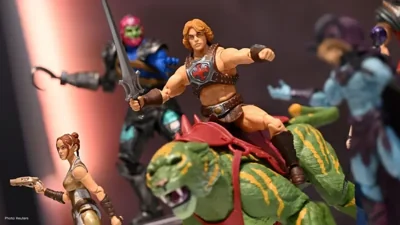
Mattel Revives Masters of the Universe Action Figures Ahead of Film Launch
Mattel is reintroducing Masters of the Universe figures in line with its upcoming film, tapping into
China Executes 11 Members of Criminal Clan Linked to Myanmar Scam
China has executed 11 criminals associated with the Ming family, known for major scams and human tra

US Issues Alarm to Iran as Military Forces Deploy in Gulf Region
With a significant military presence in the Gulf, Trump urges Iran to negotiate a nuclear deal or fa

Copper Prices Reach Unprecedented Highs Amid Geopolitical Turmoil
Copper prices soar to all-time highs as geopolitical tensions and a weakening dollar boost investor
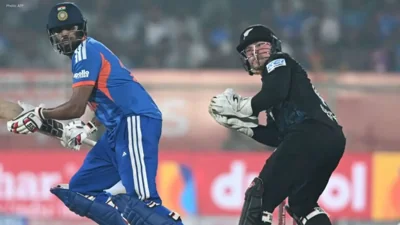
New Zealand Secures First Win Against India, Triumph by 50 Runs
New Zealand won the 4th T20I against India by 50 runs in Vizag. Despite Dube's impressive 65, India