Post by : Saif Nasser
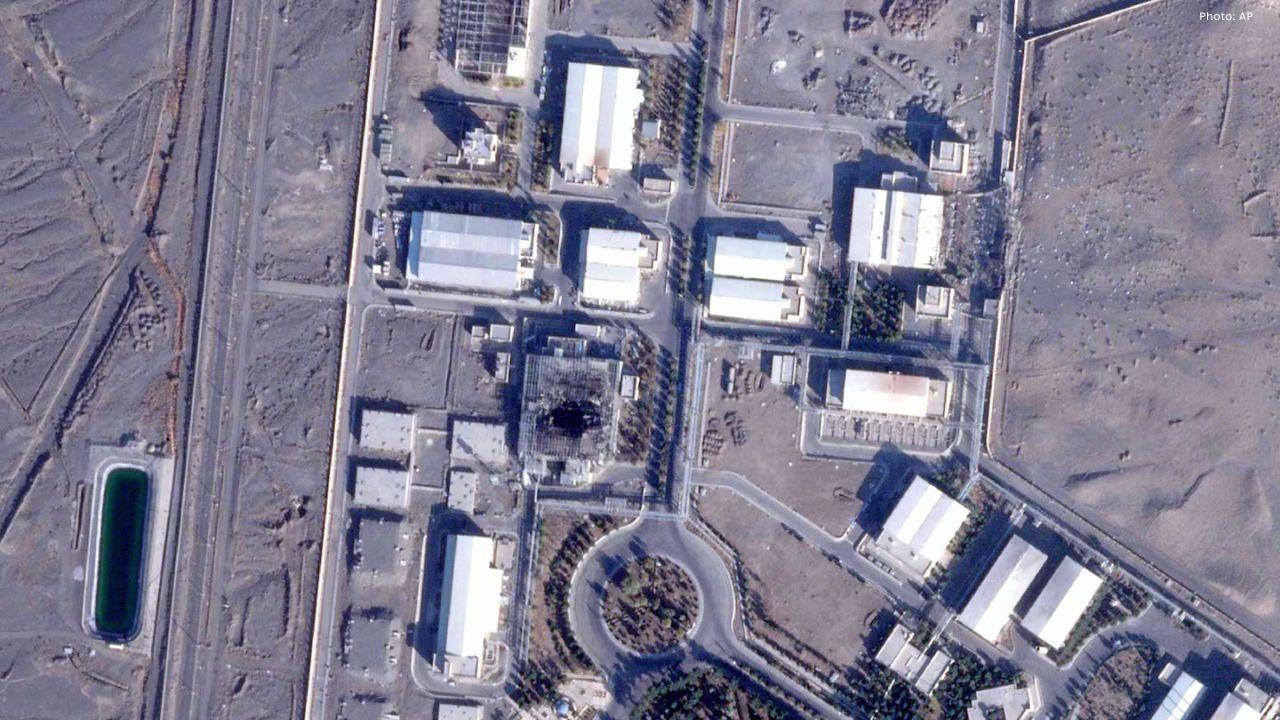
New satellite images have revealed fresh activity at two of Iran’s most sensitive nuclear sites, raising new concerns as tensions rise over the government’s violent crackdown on nationwide protests. The images show new roofs built over damaged facilities at Natanz and Isfahan, sites that were heavily hit last year during strikes by Israel and the United States.
The images, provided by Planet Labs, mark the first major visible activity at Iran’s nuclear locations since the 12-day conflict last June. Experts say the construction does not look like normal rebuilding. Instead, it appears designed to block satellites from seeing what is happening on the ground, at a time when international inspectors are not allowed access.
Iran has not explained the purpose of the new structures, and the International Atomic Energy Agency has not commented. Since the attacks, Iran has denied inspectors access to the sites, making satellite imagery the only way for the outside world to monitor developments.
Analysts believe Iran may be trying to quietly search through the rubble to recover any remaining nuclear materials or equipment that survived the strikes. Some experts suggest this could include highly enriched uranium that may have been stored at the facilities before they were hit. By covering the damaged areas, Iran may be trying to prevent Israel or the United States from learning what remains.
Natanz and Isfahan have long been at the center of Iran’s nuclear program. Natanz, located south of Tehran, was Iran’s main uranium enrichment site, where advanced centrifuges were used to enrich uranium to levels close to weapons grade. Isfahan played a key role in producing the uranium gas fed into those centrifuges. Both sites were badly damaged during last year’s attacks.
Satellite images show that Iran began building a roof over the destroyed enrichment building at Natanz in December and completed it by the end of the month. The site’s electrical systems still appear destroyed, suggesting the facility is not operational. Nearby, digging continues at a mountain area close to Natanz, where experts believe Iran may be building a new underground nuclear facility.
At Isfahan, a similar roof has been built over a damaged structure near the edge of the complex. The original purpose of that building is not publicly known, but Israeli officials previously said the area was linked to centrifuge manufacturing. Satellite images also show tunnels near Isfahan being filled with dirt, a move Iran has used in the past to protect sites from airstrikes.
Experts agree that the goal of this activity is secrecy rather than repair. They say Iran appears focused on recovering materials or equipment without revealing what it finds. This has increased worries among Western nations, especially as Iran has refused to cooperate fully with international nuclear watchdogs.
At the same time, Iran has been working to rebuild parts of its missile program. Satellite photos show renewed construction at the Parchin military complex near Tehran, including a site known as “Taleghan 2,” which Israel destroyed in 2024. Intelligence experts believe the site was used for high-explosive testing linked to nuclear weapons research. The rebuilding effort appears fast and includes stronger structures that could resist future attacks.
These developments come as U.S. President Donald Trump continues to demand that Iran return to nuclear talks. He has warned that failure to reach a deal could lead to military action, while also increasing U.S. naval presence in the region. However, it remains unclear whether Washington plans to strike again.
The situation remains tense and uncertain. With protests continuing inside Iran, inspectors kept away from nuclear sites, and signs of hidden activity seen from space, fears are growing that the nuclear issue could once again push the region toward a dangerous confrontation. The coming weeks may prove critical in determining whether diplomacy or further conflict lies ahead.









DAE Achieves Remarkable Growth in Q1 2026 With Record Revenue
Dubai Aerospace Enterprise announces impressive financial results for Q1 2026, reflecting a surge in

Price Increase for Sony PS5 in Southeast Asia Effective May 1
Sony announces a price increase for the PS5 across Southeast Asia starting May 1, 2026, impacting ga

Potential ‘Super El Niño’ in 2026: Understanding the Climate Risks
Could a Super El Niño emerge in 2026? Discover its implications and potential global climate impacts

Global Energy Crisis Intensifies: Markets React to Oil Supply Challenges
Markets are on edge as oil disruptions escalate, influencing prices and economic stability. Explore

Must-See Tourist Spots in London You Can't Overlook
Explore London's essential attractions, from royal landmarks to vibrant markets, ensuring an unforge

Ultimate Guide to Snagging Cheap Flights in 2026
Unlock the secrets to booking affordable flights in 2026 with insightful tips and strategies tailore




