Post by : Bianca Suleiman
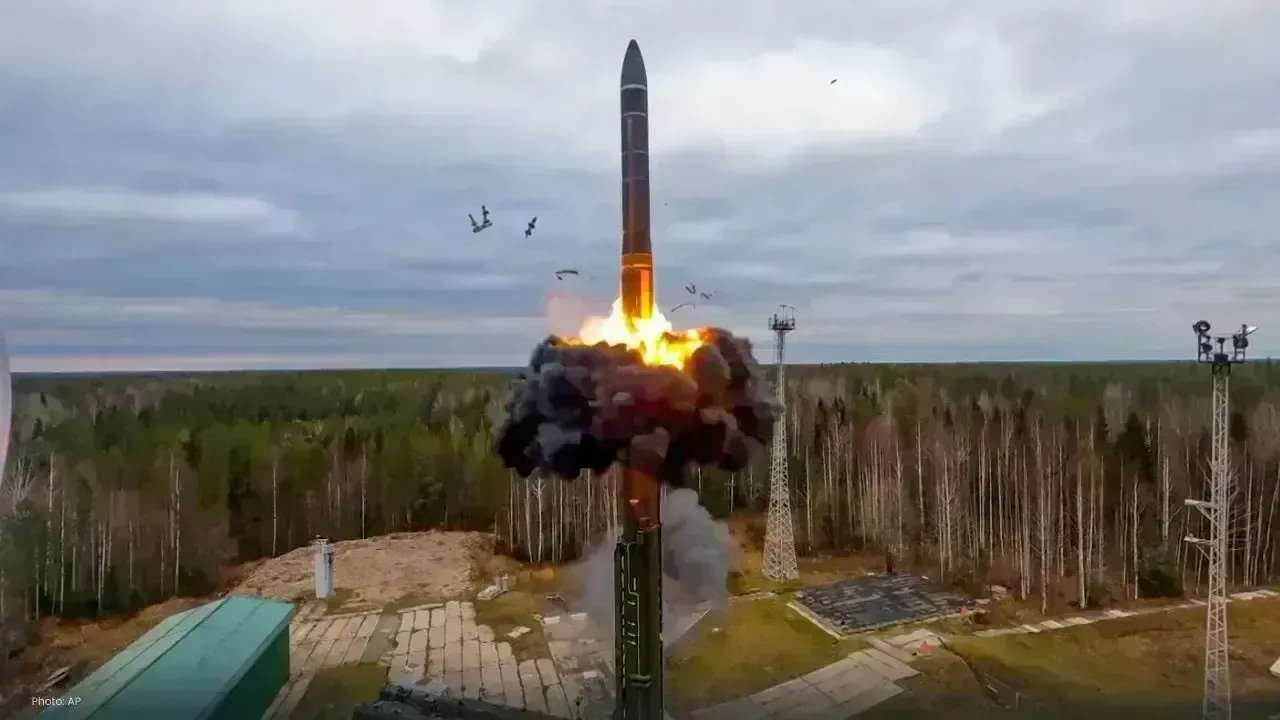
Heightened global anxiety arises as the United States and Russia contemplate a possible return to nuclear testing, reviving apprehensions about a potential arms race. Recent statements from both nations have sparked intense scrutiny from the global community, underscoring the fragile nature of international nonproliferation efforts.
President Donald Trump announced via his social media account that the Department of Defense would be instructed to initiate nuclear weapons testing “on an equal basis” with other nations, indicating a possible first for the U.S. in over thirty years. In response, President Vladimir Putin cautioned that any nuclear tests conducted by the U.S. or other signatories of the Comprehensive Nuclear-Test-Ban Treaty (CTBT) would prompt Russia to enact analogous measures.
The CTBT, which took decades to negotiate and was adopted by the U.N. General Assembly in 1996, forbids nuclear explosions and has established a widely accepted standard against atomic testing. Although 187 countries have signed the treaty and 178 have ratified it, it has yet to come into effect, pending ratification from 44 critical states. Among these, nations like China, Egypt, Iran, Israel, and the U.S. have signed but not ratified, while India, Pakistan, and North Korea stand outside the agreement altogether. Russia retracted its ratification in 2023, citing issues of fairness in global adherence.
The treaty also established the Comprehensive Nuclear-Test-Ban Treaty Organization (CTBTO), comprising 307 monitoring stations globally. Utilizing seismic, hydroacoustic, infrasound, and radionuclide technology, these stations are capable of detecting nuclear tests and delivering vital verification data. This network has effectively identified all six of North Korea’s nuclear tests conducted from 2006 to 2017.
Experts caution that a return to nuclear testing could extend far-reaching ramifications. Daryl Kimball from the Arms Control Association noted, “It opens the door for states with limited nuclear experience to perform full-scale tests, possibly fine-tuning warhead designs.” Nations such as China and India may also find reasons to pursue testing, particularly as significant test activities have historically been dominated by the U.S. and Russia.
However, not all planned tests are explosive. U.S. officials have clarified that the anticipated activities will involve subcritical tests—experiments that use fissile material without igniting a self-sustaining chain reaction. These experiments remain within the technical confines of international oversight, but low-yield hydronuclear tests could present undetectable challenges, thereby creating a “verification gap” in monitoring.
As tensions escalate, the CTBTO plays an essential role in the international nuclear monitoring framework, guaranteeing that any nuclear explosions can be identified and that states maintain confidence in compliance, particularly as aspirations for nuclear advancements resurface.









Mattel Revives Masters of the Universe Action Figures Ahead of Film Launch
Mattel is reintroducing Masters of the Universe figures in line with its upcoming film, tapping into

China Executes 11 Members of Criminal Clan Linked to Myanmar Scam
China has executed 11 criminals associated with the Ming family, known for major scams and human tra

US Issues Alarm to Iran as Military Forces Deploy in Gulf Region
With a significant military presence in the Gulf, Trump urges Iran to negotiate a nuclear deal or fa

Copper Prices Reach Unprecedented Highs Amid Geopolitical Turmoil
Copper prices soar to all-time highs as geopolitical tensions and a weakening dollar boost investor

New Zealand Secures First Win Against India, Triumph by 50 Runs
New Zealand won the 4th T20I against India by 50 runs in Vizag. Despite Dube's impressive 65, India